

Six decades, six republics, countless political dramas, and one recurring lesson: independence was only ever the beginning
Nigeria gained independence from British rule on 1 October 1960, closing one long chapter of colonial rule and opening another, far more complicated one. The years that followed were anything but a straight path to stable democracy.
It was three republics, several coups, a civil war, sixteen years under military boots, and a Fourth Republic now well into its third decade, still working out its own contradictions.
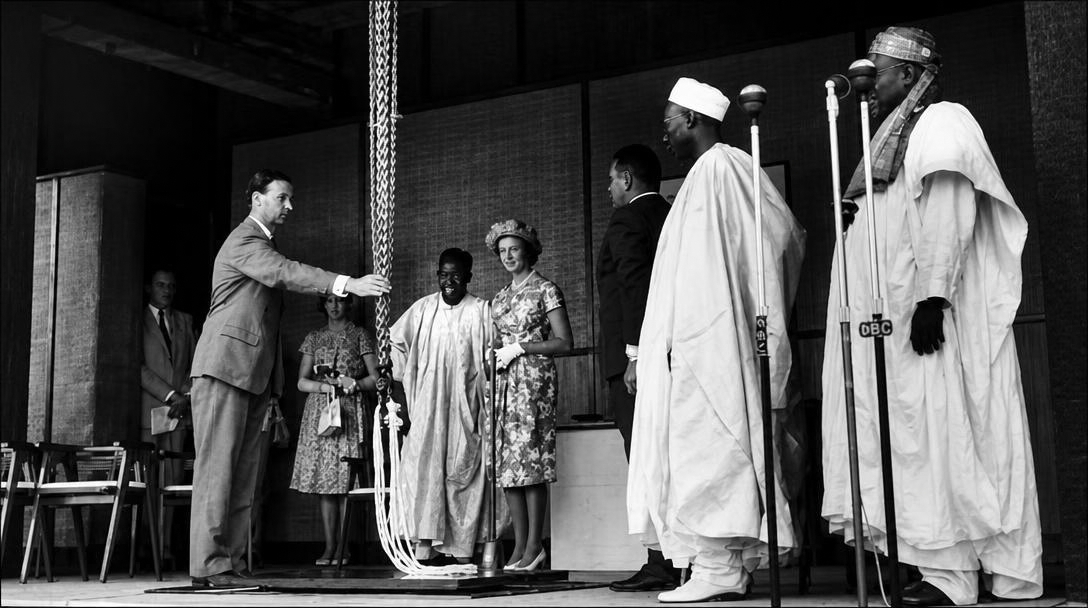
Nigeria’s turbulent political journey since 1960
The First Republic and its short life
Independence didn’t arrive with full sovereignty attached. Nigeria initially adopted a parliamentary system with strong regional autonomy, a prime minister running the government and a ceremonial governor-general standing in for the Crown.
Nnamdi Azikiwe took that ceremonial role on 16 November 1960, while Abubakar Tafawa Balewa served as prime minister. Some regions technically remained under residual British authority until October 1963, when Nigeria formally declared itself the Federal Republic of Nigeria and cut the last ties.
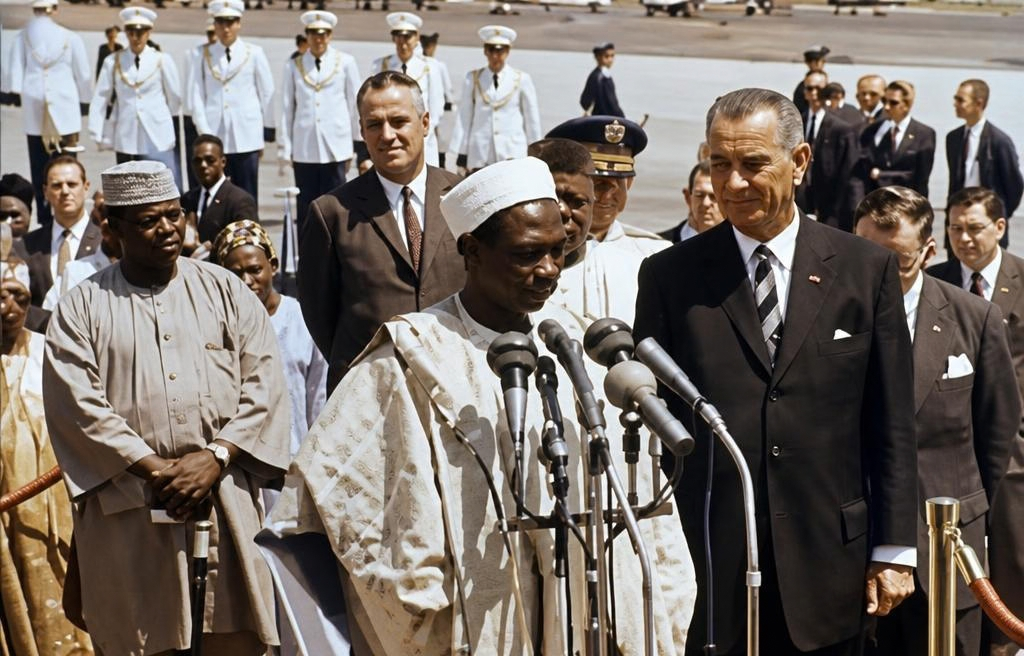
That declaration also reshaped the system of government itself, moving away from the British model toward something closer to the American presidential structure, merging the ceremonial and executive roles into one office. Azikiwe was elected Nigeria’s first president that same year.
The First Republic carried real hope: Nigerians were electing their own leaders for the first time. But ethnic tension, regional rivalry and deepening political mistrust proved impossible to contain, and the republic collapsed within its first decade.
Coups, civil war and the long military era
On 15 January 1966, a group of soldiers, most of them of Igbo descent and led by Chukwuma Kaduna Nzeogwu and Emmanuel Ifeajuna, staged a coup that killed Prime Minister Tafawa Balewa. Johnson Aguiyi-Ironsi emerged as Nigeria’s first military head of state in the aftermath.
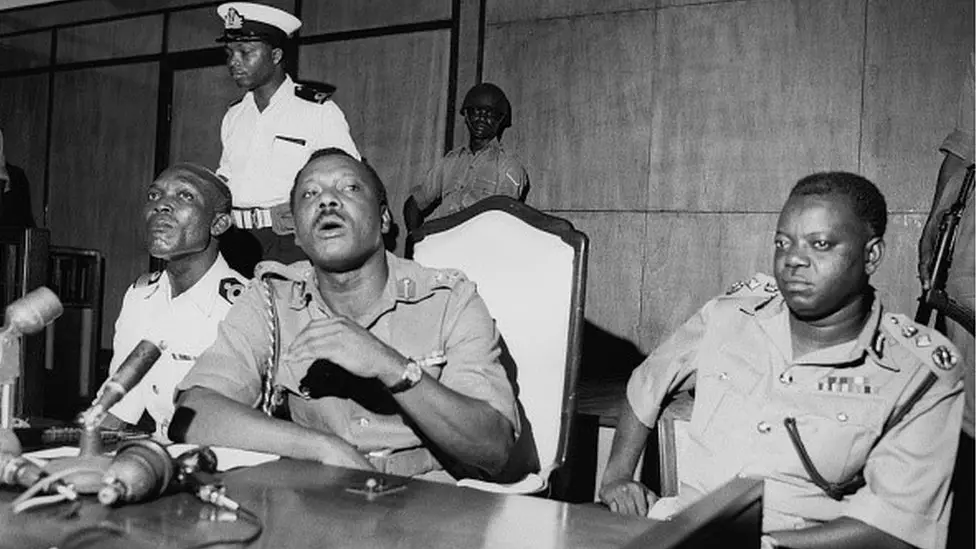
That didn’t settle anything. A countercoup followed in July 1966, widely perceived in the north as a response to an Igbo-led plot, killing Aguiyi-Ironsi and Western Region Governor Adekunle Fajuyi. The unravelling that followed tipped Nigeria into civil war, a devastating conflict that lasted from 1967 to 1970 and left scars the country is still reckoning with.
Military rule didn’t end with the war. It continued for nearly a decade afterward. A constituent assembly wasn’t convened to draft a new constitution until 1977, publishing its work in September 1978, finally clearing the runway for a return to civilian government.
The Second Republic, and back to the barracks
Nigeria tried again in 1979. Multiple parties contested, and Shehu Shagari of the National Party of Nigeria won the presidency. The optimism didn’t last. Allegations of electoral fraud, worsening economic conditions and political instability piled up until another coup, in 1983, shut the Second Republic down.
Major General Muhammadu Buhari took over, only to be removed himself less than two years later, in August 1985, by General Ibrahim Babangida, in a takeover justified at the time by accusations of authoritarian overreach and human rights abuses under Buhari’s government.
Babangida’s era brought a genuine, if temporary, loosening: greater press freedom, the release of political detainees held without charge. But it ended in one of the most consequential decisions in Nigeria’s political history.
In 1993, after what is widely regarded as the freest and fairest election Nigeria had held to that point, Moshood Abiola of the Social Democratic Party (SDP) emerged as the apparent winner, but Babangida annulled the result and stepped aside rather than hand over power.
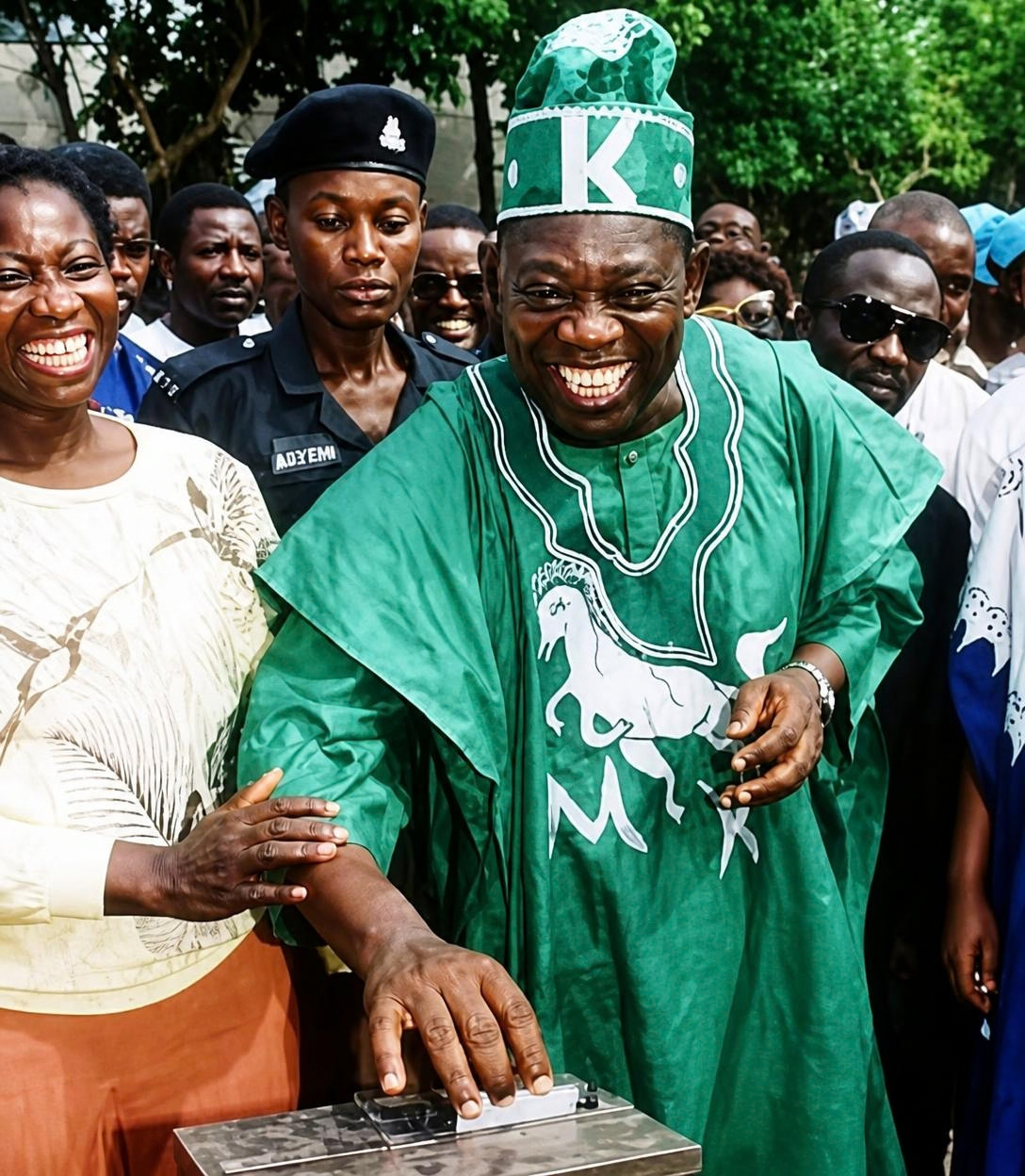
What followed was chaos dressed up as transition. The short-lived Third Republic barely got off the ground before another coup cut it down. Ernest Shonekan briefly held the presidency in an interim capacity, only to be pushed aside on 17 November 1993 when Defence Minister Sani Abacha took full control.
Abacha’s rule brought sustained repression and international condemnation, ending only with his sudden death from heart failure on 8 June 1998. General Abdulsalami Abubakar took over and, notably, actually followed through on a promised transition.
The Fourth Republic: 1999 to now
Abubakar appointed the Independent National Electoral Commission in August 1998 and oversaw a staggered set of elections at local, state and federal levels between December 1998 and February 1999.
Olusegun Obasanjo won the presidency, and in May 1999, Abubakar handed over power peacefully, closing out sixteen years of uninterrupted military rule.

Obasanjo’s presidency opened the Fourth Republic, which has, for all its troubles, held together far longer than any of its predecessors. Umaru Musa Yar’Adua followed him into office, and after Yar’Adua’s death, his vice president, Goodluck Jonathan, took over.
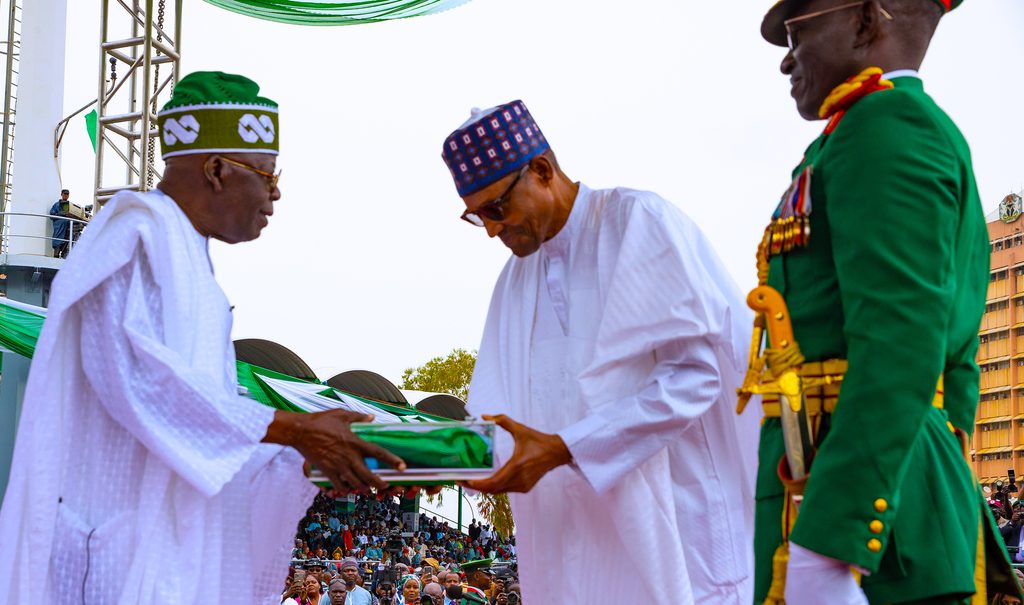
Muhammadu Buhari returned to power in 2015, this time through the ballot rather than a coup, and won re-election in 2019. President Bola Tinubu was inaugurated in 2023 alongside Vice President Kashim Shettima, and the Fourth Republic rolls on.
What the last six decades actually add up to
It would be good to say Nigeria’s story since 1960 has been one of steady progress. It hasn’t been that simple.
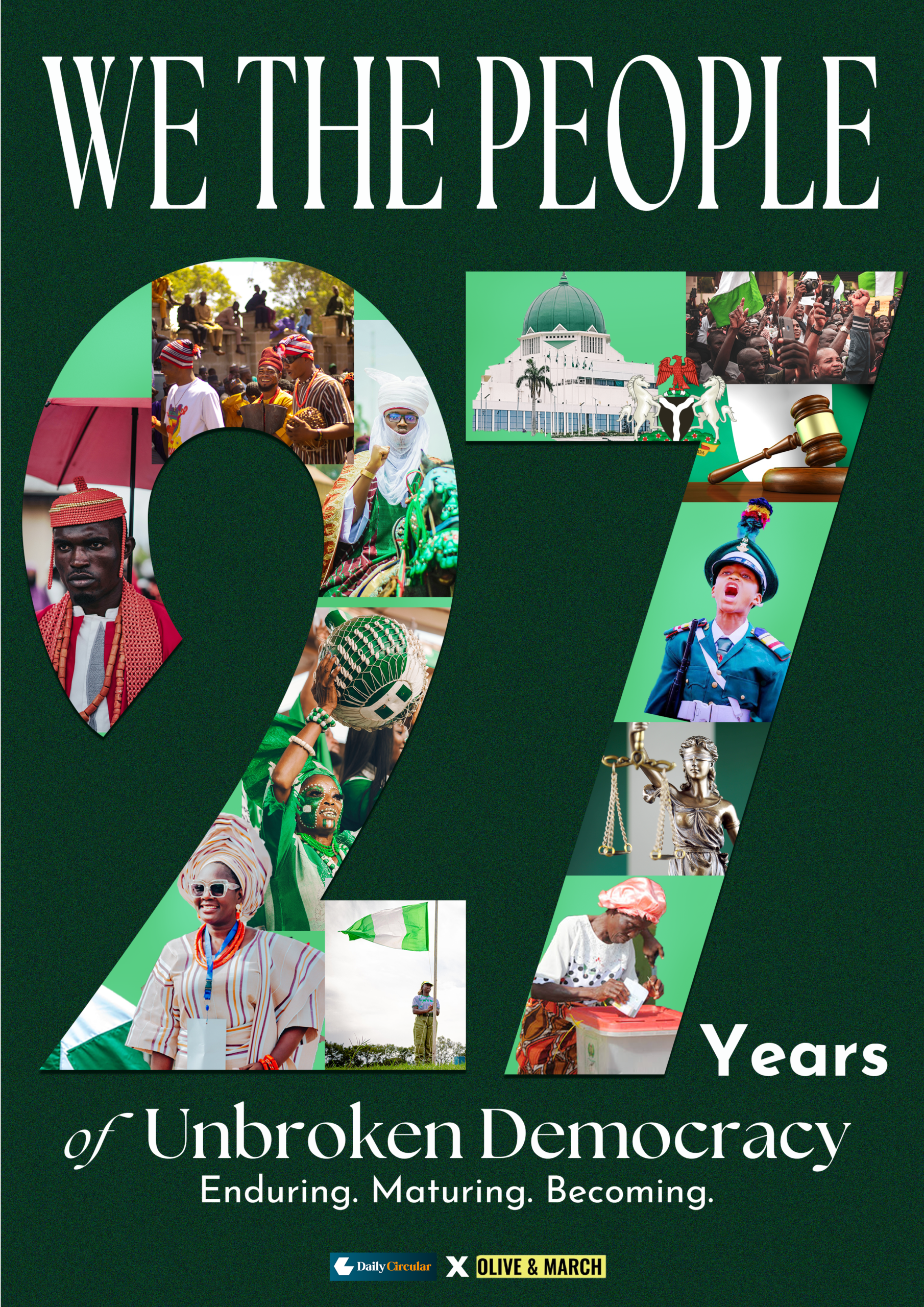
The Fourth Republic still has to contend with corruption, human rights concerns, ethnic and religious tensions, and insecurity. Many of these are old fault lines that have troubled Nigeria through earlier republics. But there is one important difference this time: the democracy has endured.
More than 25 years on, the Fourth Republic has outlasted every previous attempt at civilian rule. The economy has been through its share of turbulence too, but there have also been periods of real growth and transformation.
So perhaps independence was never the end of Nigeria’s story. It was the beginning of the argument. Sixty-six years, six republics, several coups and one civil war later, Nigerians are still arguing over what kind of country they want to build. The difference is that, for now, the argument is being settled mostly at the ballot box rather than down the barrel of a gun.