

The proposed strategy is expected to coordinate military operations, intelligence and security spending, but its cost, implementation timetable and measurable targets have not been made public.
President Bola Tinubu’s proposed five-year strategic defence plan to tackle terrorism, banditry, kidnapping and other security threats is ready, the All Progressives Congress (APC) Presidential Campaign Council has said.
The council’s spokesperson, Dele Alake, disclosed this in a statement on Sunday, saying the framework would strengthen Nigeria’s security architecture and improve the effectiveness of the military and other security agencies.
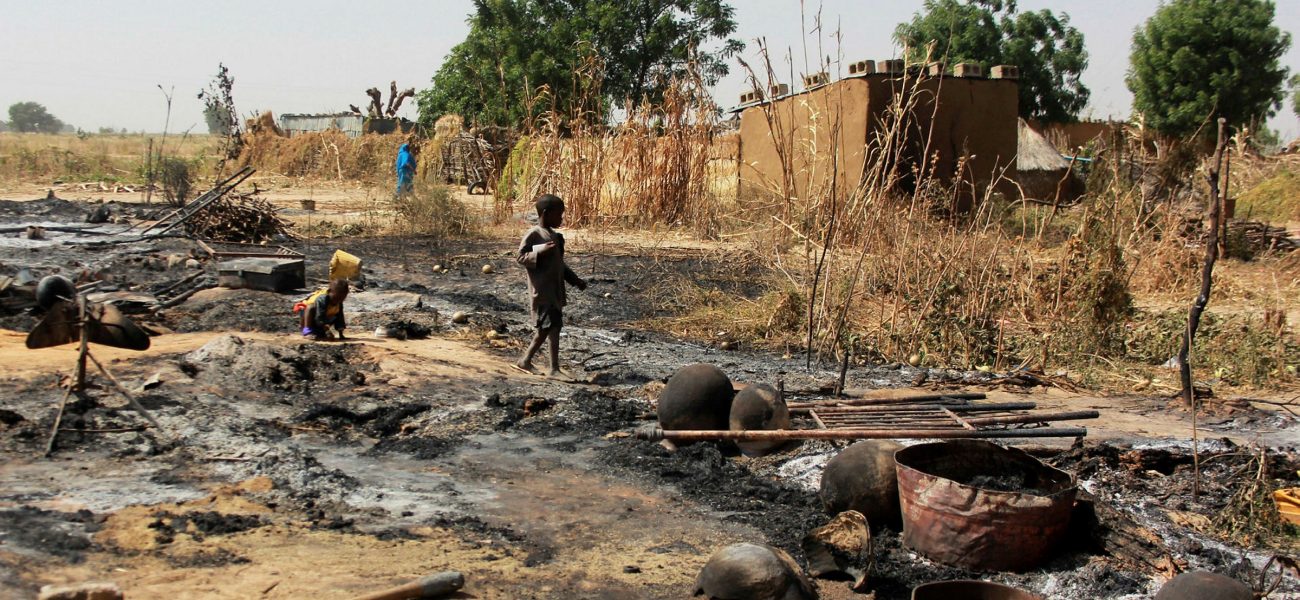
The announcement comes as Nigeria continues to grapple with the Boko Haram insurgency, which began in 2009, as well as banditry, mass kidnappings and other forms of violent crime across the country.
According to Mr Alake, the proposed Five-Year Strategic Defence Operations Plan will align national defence priorities, operational requirements, military capability development and expenditure with Nigeria’s current and anticipated security challenges.
He said the strategy would promote a more coordinated, intelligence-led, technology-driven and prevention-focused approach to tackling insecurity.
However, the council did not publish the full document or provide a specific implementation date, projected cost, funding arrangements or measurable targets for assessing its success.
Tinubu’s five-year security plan follows August directive
The announcement follows President Tinubu’s directive in August for the preparation of a National Threat Assessment and a rolling five-year Strategic Defence Operations Plan.
In a statement issued by the State House on 20 August, the president said the framework was needed to improve coordination among defence, intelligence and security agencies.
He constituted an 11-member committee, coordinated by his Special Adviser on Homeland Security, Adeyinka Famadewa, to prepare the assessment and plan.
The committee was directed to submit both documents for the president’s consideration and approval within 90 days. The proposed plan was expected to identify security threats, set operational priorities, establish capability requirements and provide an implementation timetable.
It was also expected to form the basis of a multi-year defence expenditure and procurement plan.
While the APC campaign council now says the framework is ready, it has not clarified whether the president has formally approved it or when the complete document will be made public.
Recruitment, military expansion and new facilities
Mr Alake said the Tinubu administration had recorded the elimination of more than 15,000 Boko Haram insurgents and bandits in the last three years.
He also claimed that more than 130,000 Boko Haram fighters and their dependants had surrendered through Operation Safe Corridor, the federal government’s rehabilitation programme for former insurgents.
The figures were also cited by National Security Adviser Nuhu Ribadu at an APC summit. However, the campaign council’s statement did not provide a breakdown of the figures or explain how many of those who surrendered were fighters as opposed to dependants.
The council described the figures as evidence of the administration’s two-pronged approach, combining military operations with non-military interventions.
On military expansion, Mr Alake said Tinubu had created four additional Army divisions and restructured existing formations to improve operational coverage and response times.
The president also approved two additional Army training depots in Osogbo, Osun State, and Amasiri-Edda, Ebonyi State. Each facility is designed to accommodate 6,000 recruits, giving them a combined capacity of 12,000 soldiers at a time.
According to Mr Alake, 5,210 recruits are currently undergoing training at the Osogbo facility.
He added that the president had approved the recruitment of 28,000 additional soldiers and 50,000 police officers.
However, these are not entirely new commitments. Tinubu approved the recruitment of 28,000 additional military personnel in July 2026, while the police recruitment target was raised to 50,000 after he authorised an additional 20,000 officers in November 2025.
The APC’s 2027–2031 manifesto also includes plans to recruit 30,150 personnel for the Nigeria Security and Civil Defence Corps, alongside the previously announced military and police expansion.
Questions over funding and implementation
The campaign council also highlighted a 700-unit military barracks project in Ikere-Ekiti, Ekiti State, as part of the administration’s investment in military accommodation and operational infrastructure.
Mr Alake said the five-year framework would prioritise intelligence gathering, surveillance and coordination, while directing security spending towards identified threats and operational needs.
He said the plan was expected to improve combat readiness, address capability gaps, optimise resources and reduce unnecessary expenditure.