

The commission says it has removed AI-generated images from the voters’ register and will discipline implicated officials, but its policy on artificial intelligence is still being finalised.
The Independent National Electoral Commission (INEC) has removed artificial intelligence-generated photographs uploaded to Nigeria’s national voters’ register and flagged officials linked to the practice in about 10 states for disciplinary action.
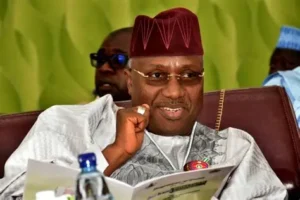
INEC National Commissioner and Chairman of its Information and Voter Education Committee, Mohammed Haruna, disclosed this on Wednesday during a webinar organised by the PUNCH Media Foundation.
The webinar, titled ‘AI, Misinformation and Nigeria’s 2027 Elections: Safeguarding the Truth, Protecting the Vote’, examined the growing risks artificial intelligence and misinformation pose to the credibility of the electoral process ahead of the 2027 general elections.
Haruna described the appearance of AI-generated photographs in the voters’ register as a major challenge facing the commission.
“We have already seen one of the challenges, which is that a lot of AI-generated photographs were posted onto the voters’ register, which, as we have said, we have had to take down,” he said.
He acknowledged that INEC had limited control over photographs manipulated by members of the public before submission. However, he said the commission could take action where its own personnel were involved.
“But the ones involving our own staff, where it is our own staff that did so, that one is within our control. We are in the process of addressing it. They have been flagged,” Haruna said.
The commissioner disclosed that INEC had identified the officials across about 10 states and intended to take disciplinary action against them.
“We have their names across about 10 states, and obviously, they are going to face disciplinary action,” he added.
He did not disclose the number of officials involved, identify the affected states or specify the disciplinary measures being considered.
INEC’s AI policy still being finalised
Haruna also disclosed that the commission had developed a policy to guide its use of artificial intelligence in the electoral process but was yet to finalise the document.
He said the rapid evolution of the technology had created new regulatory challenges, noting that even advanced democracies were still working towards comprehensive frameworks for its use.
“As you know very well, it is new territory out there. Even the most advanced countries don’t have what you might call concrete, specific policies about AI because these things are evolving,” he said.
Haruna added that INEC had outlined how it intended to deploy the technology and would soon make its policy available for public consideration.
“But we have at least some ideas of what we want to do and how we want to use that. We have that policy. Very soon, we will concretise it, and we will be able to share it with the media,” he said.
INEC’s voters’ register faces further scrutiny
The latest disclosure comes weeks after concerns emerged over suspicious photographs in the preliminary register of voters published on INEC’s website.
On October 28, the commission said it had begun investigating suspected AI-generated images identified during the display of the preliminary register. It explained that the online version published on October 26 did not reflect all the data-cleaning activities already under way.
INEC also said it was examining possible technical and procedural lapses that could have allowed the images to appear in the register.
The commission had scheduled December 15, 2026, for the certification of the final register, after completing its verification, adjudication and data-cleaning processes.
The latest disclosure provides an update on the removal of the images and the identification of officials allegedly involved. However, questions remain about the number of affected records, how the images passed through the registration process and the safeguards INEC will introduce to prevent a recurrence.
With the 2027 general elections approaching, the commission’s ability to verify registration information and demonstrate accountability for irregularities will remain central to public confidence in the voters’ register.