

From a $3m climate-smart agriculture agreement to a UK energy partnership, Nigeria has used the global climate summit to pursue investment, showcase local innovations and push its energy transition agenda. Here is what the country has done so far.
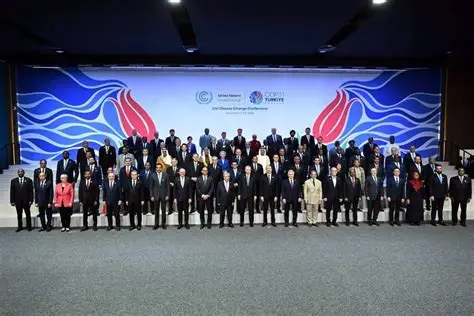
Nigeria has taken its climate and development priorities to the 31st United Nations Climate Change Conference (COP31) in Antalya, Türkiye, with government officials, regulators, state governments, businesses and civil society groups participating in discussions, presenting projects and pursuing international partnerships.
The conference, holding from November 9 to 20, has provided a platform for Nigeria to advance discussions on climate finance, food security, methane reduction, energy transition and environmental resilience.
Among the developments so far are a $3m agreement for climate-smart greenhouse farming in Kano, a new energy partnership with the United Kingdom, the presentation of a $2.2bn gas-flare investment opportunity and efforts by Nigerian states to attract international funding for climate projects.
Here is a breakdown of Nigeria’s key engagements at COP31 as of November 16.
1. Nigeria signs energy transition partnership with the UK
One of the major developments is the signing of a non-binding Memorandum of Understanding between Nigeria and the United Kingdom under the UK-Nigeria Energy Security and Transition Partnership.
The agreement is intended to strengthen cooperation on energy security and the country’s transition to cleaner energy.
At the announcement, Minister of State for Foreign Affairs, Sola Enikanolaiye, said Nigeria’s transition must be just, orderly and equitable, taking into account the country’s energy needs, development priorities and national circumstances.
Nigeria also reaffirmed its commitment to achieving net-zero emissions by 2060 and ending routine gas flaring by 2030, while maintaining that natural gas would serve as a transition fuel.
A key part of the engagement is the UK-Nigeria Methane Partnership, which is expected to support improved methane monitoring, reporting and verification, leak detection and repairs, as well as efforts to reduce gas flaring and venting across the oil and gas, waste and agricultural sectors.
However, the MoU is non-binding. Its practical value will depend on the projects, financing, technical support and implementation arrangements that follow.
2. Nigeria secures $3m for greenhouse farming in Kano
Nigeria has also secured a $3m investment agreement for a climate-smart greenhouse farming project in Kano State.
The pilot project, signed under the Special Agro-Industrial Processing Zones programme, will involve the Bank of Agriculture, the programme and Turkish company Direkci Group.
The plan is to establish about 1,000 climate-adapted greenhouses for tomato production.
Under the arrangement, the Bank of Agriculture will provide $1.5m through a structured financing mechanism for participating farmers, while Direkci Group will contribute another $1.5m in private-sector financing, alongside greenhouse technology, engineering, installation and technical support.
The initiative is expected to prioritise women and smallholder farmers through access to financing, productive assets, technical mentorship and market connections.
The partners have also scheduled a joint performance review after nine months. If agreed performance milestones are met, the project could be expanded commercially, with greenhouse systems and equipment valued at a minimum of $30m.
The agreement is one of the more concrete investment developments to emerge from Nigeria’s participation. However, the proposed expansion remains conditional on the project’s performance and agreed acquisitions.
3. Nigeria showcases methane monitoring and gas investment opportunities
Nigeria’s oil and gas sector has featured prominently in its COP31 engagements, particularly through efforts to reduce methane emissions and attract investment into gas-flare commercialisation.
At a side event hosted by the Nigerian Upstream Petroleum Regulatory Commission (NUPRC), the commission presented the Nigerian Oil and Gas Industry Emission Tracker (NOGIET).
The satellite-linked platform combines methane plume detection, maps of oil blocks and pipelines, and facility-level emissions data. It is designed to help regulators identify emission hotspots, compare reported figures with observed activity and strengthen compliance monitoring.
The platform was developed with the Stakeholder Democracy Network and financial and technical support from the Global Methane Hub. It is intended for joint use by the NUPRC and the Nigerian Midstream and Downstream Petroleum Regulatory Authority.
Although the platform was formally handed over to the NUPRC in Abuja in October, its unveiling at the Nigerian Pavilion brought it into the country’s COP31 programme.
At another engagement, NUPRC Chief Executive Oritsemeyiwa Eyesan presented the Nigerian Gas Flare Commercialisation Programme as an investment opportunity.
She said flare sites covered by the programme could support projects using up to 250 million standard cubic feet of gas daily, with the potential to unlock about $2.2bn in investment.
The commission also cited assessments by the Clean Air Task Force indicating that methane-abatement measures could reduce Nigeria’s emissions by approximately 533 kilotonnes annually.
Eyesan further presented Nigeria’s potential to develop carbon capture, utilisation and storage projects, citing an estimated storage capacity of 3.4 billion tonnes of carbon dioxide across 606 depleted fields in the Niger Delta.
These are investment opportunities and technical estimates, not funds already secured or emissions reductions already achieved.
The need for implementation is particularly important given that Nigeria flared 203.9 billion standard cubic feet of gas in 2025, according to NUPRC data. The regulator also faces questions about enforcement of anti-flaring rules and the accuracy of emissions reporting.
4. NNPC presents progress on methane reporting
The Nigerian National Petroleum Company Limited (NNPC) also used COP31 to showcase its progress in measuring and reporting methane emissions.
The company said it had moved from Level 1 to Level 3 under the Oil and Gas Methane Partnership 2.0 framework, following improvements in emissions data and operational practices.
Speaking at a session convened by the Oil and Gas Decarbonisation Charter, NNPC Foundation Managing Director Chinedu Igwe said the company had also carried out leak detection and repair work on one of its assets, which was approaching Level 4 reporting.
NNPC participated in discussions on decarbonising Africa’s energy value chain, presenting natural gas as part of its transition strategy alongside renewable energy investments and efforts to reduce emissions.
It also held exploratory discussions with the Inclusive Climate Action Fund and ANTAN Producing Limited on possible project financing and development.
The company said its agenda included eliminating routine gas flaring and reducing methane emissions by 2030, while adopting low-carbon technologies, renewable energy and carbon capture solutions.
These are company-reported developments and targets. Their impact will ultimately depend on independently verifiable emissions data and measurable reductions.
5. Lagos and Oyo take climate investment opportunities to COP31
Nigeria’s state governments have also used the conference to attract funding and partnerships for environmental projects.
Lagos State presented an estimated $25bn to $50bn climate investment opportunity spanning more than 300 prospective projects.
The investment pipeline covers renewable energy, clean cooking, sustainable transport, waste management, water resources, climate-resilient infrastructure, agriculture and green enterprise.
The state also held Lagos Climate Investment Day on November 13, bringing together government officials, investors, financial institutions and development partners to explore financing opportunities.
Its climate investment framework is anchored in the State-Determined Contributions Framework, which links development priorities across clean energy, water and climate resilience, circular economy, infrastructure and food systems.
The proposed investment figure represents an opportunity the state is seeking to mobilise, not money already committed by investors.
Oyo State, meanwhile, presented its Climate Action Plan for 2026 to 2040 at the Nigerian Pavilion.
Led by the Commissioner for Environment and Natural Resources, Ademola Aderinto, the delegation participated in investment forums, negotiation sessions and side events to seek partnerships with international development organisations and investors.
The state also held a dedicated side event to present its climate investment prospects and discuss possible areas of collaboration.
6. Nigeria and Türkiye agree to deepen economic cooperation
Beyond the climate negotiations, Nigeria also used the conference to strengthen its bilateral relationship with Türkiye.
Following a meeting between Enikanolaiye and Türkiye’s Deputy Minister of Foreign Affairs for Africa, Musa Kulaklikaya, both countries agreed to convene a Joint Economic Commission in the first quarter of 2027.
The proposed commission is expected to provide a framework for expanding trade, investment and cooperation in energy, infrastructure and defence.
Nigeria also invited Turkish investors to participate in major infrastructure projects, including the Trans-Saharan Gas Pipeline and the Nigeria-Morocco Gas Pipeline.
The two countries discussed regional stability in West Africa, while Nigeria acknowledged Türkiye’s role in supporting capacity-building, including the training of Nigerian special forces.
Although these engagements took place on the sidelines of COP31, they form part of Nigeria’s wider diplomatic and economic activities at the summit.
7. Nigerian disability groups push for inclusive climate finance
Nigeria’s participation has not been limited to government officials and business engagements. Civil society groups and researchers have also used the conference to draw attention to communities and people often left out of climate discussions.
The Coalition of Organisations of Persons with Disabilities on Climate Change called for formal recognition of a Disability Constituency within the United Nations climate change process.
The coalition also demanded better access to climate finance for persons with disabilities and called on governments to integrate disability inclusion into climate policies, negotiations and decision-making.
It argued that persons with disabilities face additional risks during floods, droughts and other climate-related emergencies because of inaccessible early-warning information, evacuation facilities and emergency services.
At Nigeria’s Pavilion, researcher Adebayo Jimoh presented findings on the impact of sea incursion on persons with disabilities in coastal communities in Ondo State.
His research focused on Ilaje and Ese-Odo local government areas, where flooding, coastal erosion and saltwater intrusion have affected livelihoods and displaced residents.
The presentation highlighted the need for climate interventions to consider the experiences of vulnerable groups, including people who may face additional barriers during environmental emergencies.
What happens after COP31?
Nigeria’s engagements at COP31 cover several important areas, from food production and energy security to emissions monitoring, coastal resilience and climate finance.
The $3m greenhouse farming agreement offers a specific project with defined financing contributions. The UK partnership creates a framework for cooperation, while the NUPRC’s methane tracker provides a tool for improving emissions monitoring. Lagos and Oyo are also seeking investors for projects that could strengthen their climate resilience.
But the value of these engagements cannot be measured by the number of meetings held, agreements signed or investment figures announced.
The UK partnership is non-binding. The Kano greenhouse project still needs to be delivered. Lagos’s investment pipeline is not the same as money secured, and the $2.2bn gas-flare opportunity remains dependent on investors and project execution.
For Nigeria, the next test is whether these commitments translate into functioning projects, better climate resilience, lower emissions, stronger food production and investments that improve people’s lives.
COP31 runs until November 20. Nigeria’s final set of outcomes and any further agreements will therefore need to be assessed as the conference concludes.
As COP31 continues until 20 November, this article will be updated to reflect further announcements, agreements and developments involving Nigeria.