


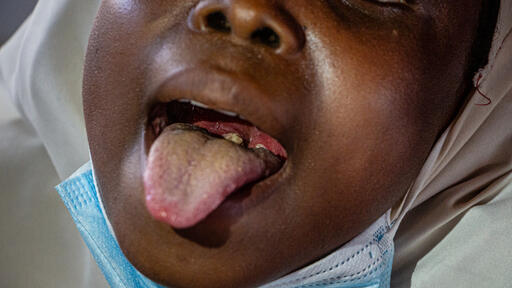
In most of the world, diphtheria is a relic. Widespread childhood vaccination wiped it out as a public health threat across North America, Europe, and much of Asia decades ago, and many doctors in those regions will now go an entire career without seeing a single case. The case is different in Nigeria; in 2026 alone, health authorities have logged over 10,000 confirmed cases, with dozens of child deaths reported in Kano State in recent weeks. The gap comes down to one thing: vaccination coverage.

Where other countries pushed routine immunisation high enough to starve the bacteria of new hosts, millions of Nigerian children remain unvaccinated or only partly protected, kept out of reach by insecurity, vaccine hesitancy, displacement, and hard-to-access communities. That gap is why a disease the rest of the world has moved past keeps coming back here.
What exactly is diphtheria?
Diphtheria is caused by the bacterium Corynebacterium diphtheriae. It mainly attacks the throat and nose, producing a toxin that can form a thick, greyish membrane across the tonsils, throat, and nasal passages. This membrane can block the airway, making it hard to breathe or swallow. The same toxin can also travel through the bloodstream and damage the heart, nerves, and kidneys, which is why the disease can be fatal even after the throat infection is treated.
How does it spread?
Diphtheria is highly contagious. It spreads mainly through respiratory droplets released when an infected person coughs or sneezes, and through close, direct contact with an infected person’s secretions or skin sores. Crowded households, schools, markets, and displacement camps make transmission easier, since the bacteria pass quickly between people who share close quarters. Children, especially those who are unvaccinated or only partially vaccinated, are the most vulnerable group.
Is there a cure?
Yes, diphtheria is treatable, but speed matters enormously. Doctors treat it with diphtheria antitoxin, which neutralizes the toxin circulating in the body, alongside antibiotics such as penicillin or erythromycin to clear the bacteria itself. The earlier treatment starts, the better the outcome. Delayed treatment allows the toxin to cause lasting heart and nerve damage, which is why case fatality rates climb sharply when patients arrive at hospitals late. The most effective protection, however, is prevention: the diphtheria toxoid vaccine, usually given as part of routine childhood immunization, dramatically reduces both infection and death.
Why diphtheria keeps recurring in Nigeria

Nigeria’s repeat outbreaks trace back largely to gaps in routine immunization. More than two million Nigerian children remain under-immunized, including many who have never received a single dose of the vaccine, leaving large pockets of the population exposed. Health officials point to a combination of vaccine hesitancy, insecurity in parts of the north, hard-to-reach rural communities, and population displacement as factors that make it difficult to vaccinate every child. Officials also note that improved disease surveillance is partly why more cases are being detected now, since outbreaks that once went unnoticed in remote areas are increasingly being picked up and reported.
Where and when outbreaks spread the most
Diphtheria outbreaks in Nigeria have consistently concentrated in the north, particularly Kano, Bauchi, Borno, Katsina, and Yobe states. The 2026 outbreak has again been concentrated mainly in Kano, Borno, and Bauchi, where inadequate vaccination coverage continues to drive transmission. Densely populated urban centres and crowded, unsanitary living conditions create ideal environments for the bacteria to pass from person to person. Historically, cases tend to build through the dry season and into the early months of the year, when dust, dry air, and close indoor gatherings can aggravate respiratory transmission, though outbreaks can flare at any time immunization coverage drops.
Ending Nigeria’s recurring diphtheria outbreaks depends on closing the immunization gap. Health authorities have repeatedly called for vaccination coverage of at least 80 percent to build the community protection needed to stop the disease from finding new hosts. Until that target is reached in every state, diphtheria will likely keep resurfacing wherever unvaccinated children live in close, crowded conditions.