

Power Minister Joseph Tegbe says Nigeria will measure electricity progress by communities and people connected to power, not just megawatts generated.
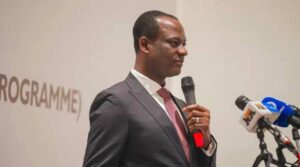
Minister of Power Joseph Tegbe says Nigeria’s power sector will now measure success by the number of communities and people connected to electricity, rather than the megawatts generated.
Tegbe spoke on Friday during the inauguration of the governing board of the Rural Electrification Agency (REA) in Abuja.
The minister said the shift would move the focus of the sector from generation figures to the actual impact of electricity access on communities and livelihoods.
From megawatts to people: what the new metric means

The minister’s announcement has direct implications for how REA prioritises its programmes, allocates resources and reports results, shifting accountability from generation capacity figures that have long dominated Nigeria’s energy discourse to the lived experience of communities without reliable electricity.
“We are moving from just counting kilowatts and megawatts to how many communities and people were powered in the country,” Tegbe said.
“REA is fundamentally an institution for expanding opportunity. Every mini-grid inaugurated, every solar home system deployed, every market, school, primary healthcare center, farm, or productive enterprise electrified represents an investment in human capital, economic inclusion and national prosperity.”
Tegbe said the implementation of the Electricity Act and ongoing reforms in the Nigerian Electricity Supply Industry (NESI) had made the agency’s role even more critical, describing REA as the link between government policy and grassroots impact by extending electricity access beyond urban centres to underserved communities across the country.
The one question the board must always ask
The minister issued a clear directive to the newly inaugurated board on how it should approach every decision that comes before it.
“Most importantly, I encourage you to continually ask one fundamental question whenever decisions come before the board: ‘How does this improve the lives and livelihoods of ordinary Nigerians?'” Tegbe said.
“If that question remains our compass, I have no doubt that the agency will continue to exceed expectations.”
He urged the board to provide strategic direction, strengthen institutional governance, protect public resources, and deepen partnerships with development institutions and the private sector.
The seven-member board: who is on it
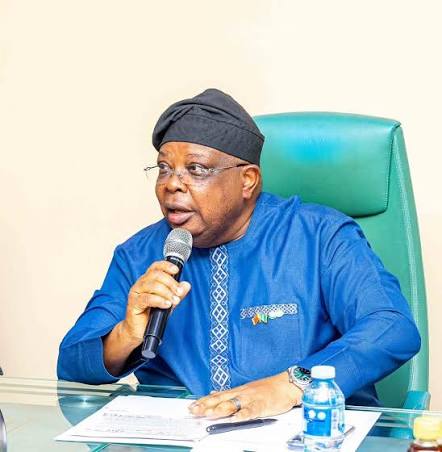
The newly inaugurated governing board is chaired by Ayodele Fayose, former governor of Ekiti State. The non-executive members are Ahmadu Abubakar and Ilyasu Makinta. Abba Aliyu, REA’s managing director, and the agency’s three executive directors complete the seven-member board.
Fayose pledges to tackle grassroots power challenges and secure funding
Speaking on behalf of the board, Fayose thanked President Bola Tinubu for the appointment and pledged to support the agency in expanding electricity access, framing the board’s mandate in terms that went beyond technical delivery.
“Our assignment is beyond providing electricity. It is about ensuring that Nigerians feel the impact of energy,” Fayose said.
He acknowledged that many of the country’s power challenges are concentrated at the grassroots and said the board would work to mobilise the resources needed to deliver electricity to more communities. He also promised to work towards securing adequate funding to enable the agency to implement its short and long-term electrification programmes.