

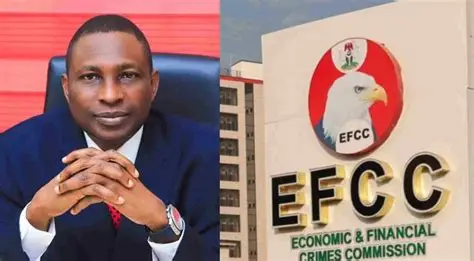
EFCC Chairman Ola Olukoyede says the agency has forfeited over half a billion dollars in cash and assets to the Nigerian government in three years, citing cases involving a former CBN governor and ex-Attorney-General Abubakar Malami.
The Economic and Financial Crimes Commission (EFCC) has forfeited cash and assets worth more than $500 million to the Nigerian government over the past three years.
EFCC Chairman Ola Olukoyede disclosed this on Wednesday, August 26, 2026, while delivering a lecture at the 43rd Cambridge International Symposium on Economic Crime in the United Kingdom.
“Within three years of my assumption of office, we’ve been able to forfeit both cash and assets worth over half a billion dollars to the government,” Olukoyede said.
How the Forfeitures Work
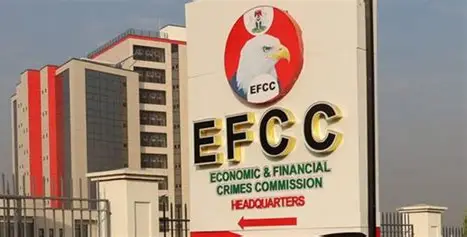
Olukoyede explained that Nigeria’s legal framework allows the EFCC to pursue forfeiture of assets suspected to be proceeds of crime without waiting for a criminal conviction, a system he said mirrors those in Australia and Canada.
“We have similar to what is obtainable in Australia and Canada that empowers us to apply the forfeiture to proceeds of what is suspected to be proceeds of crime,” he said, adding that the process begins with an ex parte application to the High Court based on probable suspicion.
Key Cases Cited
Olukoyede cited the recent forfeiture of an aircraft linked to a member of a monitoring committee for a power project in Nigeria, who he said had collected a bribe of about $30 million. “He forfeited that about three months ago and it has been added to the presidential air fleet at the moment,” Olukoyede said, noting the forfeiture was secured within two months of the commission’s court application.
He also disclosed the forfeiture of a property comprising about 753 housing units from a former governor of the Central Bank of Nigeria (CBN), against whom he said criminal charges remain pending in three courts. Although Olukoyede did not name the former governor in his remarks, the case corresponds to Godwin Emefiele, whose properties in Lekki and Ikoyi (Lagos) and Agbor (Delta State) were the subject of a Supreme Court ruling in July 2026 restoring their forfeiture to the Federal Government after an earlier legal challenge.
Olukoyede further disclosed that an investigation opened last year into former Attorney-General of the Federation Abubakar Malami, based on suspicion of criminal abuse of office, had led investigators to trace 57 properties allegedly linked to him over his eight years in office. “We’ve been able to forfeit about 48,” he said a figure that matches a Federal High Court ruling in Abuja on July 15, 2026, which ordered the final forfeiture of 48 of those properties, including residential and commercial holdings, to the Federal Government.
Olukoyede also cited the forfeiture of a private university linked to a director in the Federal Ministry of Health, saying the official voluntarily surrendered the property following an EFCC investigation.
Olukoyede attributed the commission’s success in securing non-conviction-based forfeitures to three factors: its investigators’ ability to trace assets, cooperation from the judiciary, and access to credible intelligence. “We also have some of the best investigators around the world,” he said, noting that many EFCC investigators had trained at leading institutions internationally.
A Push for Whistleblower Incentives
Olukoyede used the lecture to call for stronger protection and incentives for whistleblowers, particularly those who provide information leading to the recovery of Nigerian assets hidden abroad.
“The citizens must be encouraged with your whistleblower protection,” he said. “If any of you is privy to where Nigerian asset is stolen or taken to anywhere in the world, we have an incentive for you. Between 2.5 and 5 percent is going to go back to you upon recovery.”
He argued that stronger incentives would help the government access the kind of intelligence needed to trace assets concealed through complex financial arrangements, especially those moved outside Nigeria.