


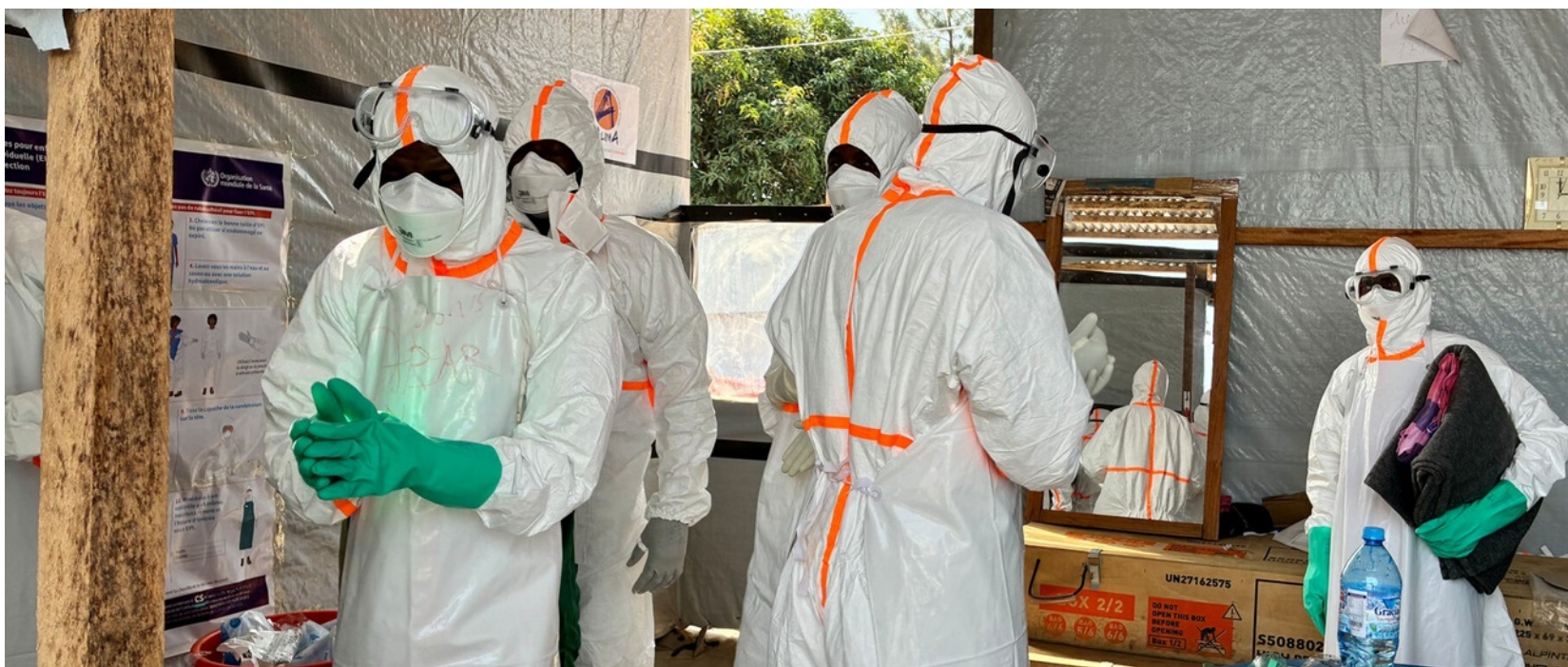
Mohamed Janabi says Nigeria now has no active case, with 52 contacts still under monitoring after the patient’s husband left with her
The World Health Organisation (WHO) says Nigeria’s Ebola patient was evacuated to Switzerland because she and her husband are Swiss citizens and her condition had stabilised.
WHO Regional Director for Africa Mohamed Janabi gave the reasons in a post on X on Monday. “Earlier this morning, the Ebola patient in Nigeria and her contact, who is also her husband, were medically evacuated to Switzerland,” he wrote.
He listed the reasons for the evacuation: “Both the patient and her husband are Swiss citizens. The patient is clinically stable. The Nigerian medical team successfully managed her through the acute phase of the illness and stabilized her condition.”
Why the Ebola evacuation to Switzerland happened
The couple left Abuja early on Monday aboard a medical evacuation aircraft. Reports said the flight departed from the Nnamdi Azikiwe International Airport at about 6am.
Janabi said Switzerland would take over the patient’s continued medical care and monitor her husband, who was the 53rd person on the contact list. Nigeria will keep monitoring the other 52 contacts. He said Nigeria currently has no Ebola cases following the evacuation.
He congratulated the Nigerian government, health workers, clinicians, emergency responders and partners involved in the response. He described the outcome as a demonstration of African expertise, resilience and leadership in public health.
Health Minister Ali Pate had said earlier that the patient was clinically much improved, but that this did not mean she was no longer infectious. He said strict protocols remained in place and promised an update once she and her husband arrived safely. Switzerland has two referral hospitals equipped to treat Ebola, in Zurich and Geneva. Reports said she would be admitted to one of them, but this has not been confirmed.
What the Ebola evacuation means for Nigeria’s response
The evacuation does not end Nigeria’s response. Contact monitoring continues, and the incubation period of Bundibugyo virus disease is two to 21 days. Janabi said vigilance remains critical as contact tracing and surveillance continue. The Nigeria Centre for Disease Control and Prevention (NCDC) has widened health declaration requirements for international arrivals.
How the patient became infected has not been established. Africa CDC Director General Jean Kaseya has said her travel documents show she did not visit the Democratic Republic of the Congo (DRC), which Switzerland has also said. Uganda’s health ministry earlier said she travelled to eastern DRC for business. Kaseya said a team of Ebola scientists will travel to Nigeria to help investigate. Investigators are also examining a possible link to Kenya’s first case, a man who travelled from the DRC. Both passed through Entebbe airport on 3 October. Kenya has reported nine cases.