

Health Minister Ali Pate says she is clinically improved but may still be infectious, and the NCDC has widened health declarations at airports
Nigeria’s Ebola patient was evacuated from Abuja to Switzerland on Monday for further treatment, Coordinating Minister of Health and Social Welfare Ali Pate has confirmed.
The patient is the wife of a Swiss diplomat based in Abuja, and her husband travelled with her.
Pate announced the evacuation in a post on X. “I confirm that, with my approval, earlier this morning, the index case for Nigeria’s first imported Ebola virus disease departed Abuja for Switzerland,” he wrote.
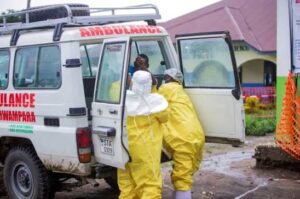
Reports said she was flown out at about 6am from the private jet area of the Nnamdi Azikiwe International Airport, after a convoy from the city centre that included diplomatic vehicles.
What Pate said about the Nigeria Ebola patient
Pate said the patient was “clinically much improved, stable, conscious, communicating”, with her laboratory results moving back towards baseline. Her husband has remained asymptomatic.
He cautioned that the improvement did not mean she was free of the virus. “This does not mean she is not still infectious, hence the strict protocols in place,” he said.
He commended the clinical staff who treated her and the public health personnel who coordinated the evacuation. He said further updates would follow once she and her husband arrived safely, and urged Nigerians to stay vigilant and rely on credible sources.
Switzerland has two referral hospitals equipped to treat Ebola, in Zurich and Geneva. Reports say she will go to one of them, but this has not been confirmed. The Swiss foreign ministry had not responded to requests for comment.
Contacts and airport screening
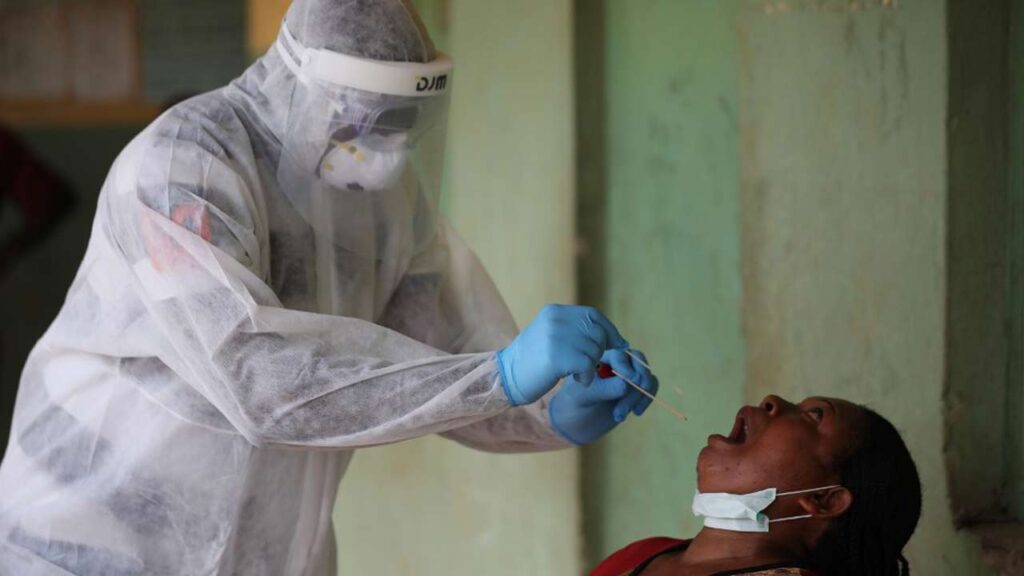
The Nigeria Centre for Disease Control and Prevention (NCDC) said on Sunday that it had identified 53 primary contacts of the patient, up from 44 initially. They are being monitored for symptoms. A suspected case reported in Rivers State on 23 October tested negative, the agency said.
The NCDC has widened health declaration requirements to travellers arriving from all countries. It had first limited them to travellers from countries linked to the outbreak. It said it is working with the Federal Airports Authority of Nigeria, the Nigerian Civil Aviation Authority, Port Health Services, immigration and customs to strengthen surveillance at five priority airports in Lagos, Abuja, Enugu, Kano and Port Harcourt. The incubation period of Bundibugyo virus disease is two to 21 days.
The NCDC says the patient arrived in Abuja on 3 October from Uganda, via Addis Ababa. Her symptoms began on 7 October. She sought care at a private facility in Abuja on 11 October, and the virus was confirmed on 20 October.
Open questions on the Nigeria Ebola patient’s infection
Scientists are still working to establish where she was infected. Switzerland says she did not travel to the Democratic Republic of the Congo (DRC), which contradicts statements by Ugandan officials. They said she was a Nigerian who travelled to eastern DRC for business before transiting through Uganda. Uganda says it has no confirmed active Ebola cases.
Investigators are examining a possible link between her and Kenya’s first case, a man who travelled from the DRC. Both went through Entebbe airport on 3 October. This has not been established. Kenya has reported nine cases.
The outbreak was declared in the DRC in May. Nigeria’s first Ebola outbreak, in 2014, began with an infected traveller from Liberia who arrived in Lagos. It produced 20 cases, including eight deaths, and was declared over in October of that year.