
Two domestic staff are included alongside 44 hospital contacts, and FAAN is told to tighten screening at international airports
Festus Keyamo, minister of aviation and aerospace development, has directed the Nigeria Civil Aviation Authority (NCAA) to place 46 contacts of Nigeria’s confirmed Ebola patient on a no-fly list for at least 21 days.
Keyamo announced the directive in a post on X on Wednesday, after a virtual meeting with Coordinating Minister of Health and Social Welfare Muhammad Ali Pate. He said he had told the NCAA to notify all domestic and international airlines immediately.
Who is on the Ebola no-fly list
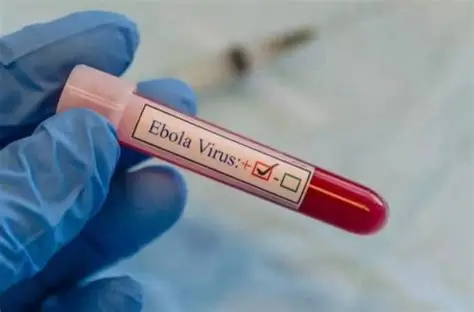
Keyamo said Pate gave him a list of 44 people who came into contact with the patient at a hospital after she developed symptoms, plus two of her domestic staff. Pate had announced the 44 contacts on Tuesday. The two domestic staff are additional.
The minister said efforts were under way to isolate them until there is certainty none has been infected. Until then, aviation authorities must keep them on “a no-fly list for at least 21 days”. He described that as the period in which symptoms are normally expected to appear. The incubation period of Ebola is generally given as 2 to 21 days.
The directive follows Tuesday’s confirmation of Nigeria’s first case of Bundibugyo virus disease, in the Federal Capital Territory (FCT). The patient is a woman who recently arrived from Uganda. An official at an emergency meeting on Wednesday said she is a diplomat whose condition has deteriorated into multi-organ failure. Uganda’s health ministry says she is a Nigerian who transited through its territory after a business trip to eastern DR Congo. Neither claim has been independently confirmed.
Airports step up Ebola surveillance
Keyamo also directed the Federal Airports Authority of Nigeria (FAAN) to strengthen Ebola response and surveillance at all international airports. He said the measures include enhanced health screening, temperature checks, travel history tracking and digital health declarations. FAAN will coordinate with the Nigeria Centre for Disease Control and Prevention (NCDC).
He said the steps followed earlier regional outbreak alerts. The outbreak was declared in the Democratic Republic of the Congo on 15 May, and Nigeria is the fifth country to detect the virus.
The World Health Organisation (WHO) has advised countries against restricting travel to or trade with affected countries. The no-fly list differs from that kind of measure, because it applies to named contacts rather than travellers from a particular country. WHO has urged stronger monitoring at points of entry.