The patient was severely immunocompromised, while investigations continue into the infection and the circumstances surrounding the death. Authorities say no risk to the general public has been identified.
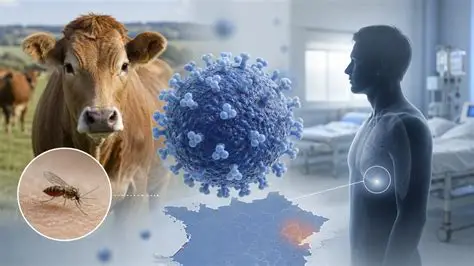
French health authorities have reported the world’s first documented human infection with Shamonda virus after a severely immunocompromised patient died in early October.
The announcement was made on Thursday, October 22, in a joint statement by France’s health and agriculture ministries. The patient had been receiving treatment for a serious illness in Lyon.
The authorities described the infection as an exceptional case involving a patient whose weakened immune system made them more vulnerable to infections and complications.
According to the statement, the patient was believed to have contracted the virus through the bite of a Culicoides midge in eastern France, where the virus had been circulating among animals during the spring and summer.
The ministries said neurological complications observed before the patient’s death were very likely linked to the infection. However, clinical, biological and epidemiological investigations are continuing to establish the circumstances of the case.
French authorities said no health risk to the general population had been identified based on current knowledge of the virus.
The European Centre for Disease Prevention and Control (ECDC) said it was monitoring the situation and working with French authorities and European partners to investigate the potential public health implications.
Shamonda virus was first identified in Nigeria
Shamonda virus, also known as SHAV, belongs to the Simbu group of viruses within the broader Orthobunyavirus group. It is a vector-borne virus transmitted between animals through the bites of infected midges.
According to the World Organisation for Animal Health (WOAH), the virus was first isolated from cattle in Nigeria in 1965. It has since been identified in parts of Africa and Asia, including Japan.
The virus has primarily been associated with livestock, particularly cattle. In infected animals, reported signs include fever, diarrhoea, reduced milk production and reproductive problems. Infections have also been reported in sheep, goats, horses and alpacas.
Before the French case, Shamonda virus had not been documented in humans and was considered incapable of infecting people.
The discovery therefore marks a significant development in the understanding of the virus, although a single human case does not establish how frequently infection could occur in people or whether it can spread between humans.
Virus detected in European livestock in 2026
The human infection follows the virus’s emergence in European farm animals earlier in 2026.
According to the ECDC, clinical signs in animals were reported from June, and the virus was identified in Europe in late July. It has since been detected in farm animals across several countries, including Austria, Belgium, France, Germany, Ireland, Italy, Luxembourg, the Netherlands, Portugal, Spain and Switzerland, as well as Liechtenstein and Jersey.
The French authorities said the patient’s suspected exposure occurred in an area where the virus had been circulating among animals during the warmer months.
The exact midge species responsible for transmission in this case has not been established, according to the ECDC.
The agency is working with European partners to strengthen testing capacity and assess whether further human infections may have occurred.
What the first human case means
The case has prompted further investigation into whether Shamonda virus poses a wider threat to human health.
For now, French authorities have stressed that no risk to the general population has been identified. The patient’s severe immunocompromised condition also makes it important not to assume that the case represents the risk faced by healthy people.
The ongoing investigations are expected to clarify how the infection occurred, the relationship between the virus and the neurological complications, and the potential implications for public health.
For Nigeria, where the virus was first isolated from cattle more than six decades ago, the development also highlights the importance of monitoring diseases that circulate in animals and understanding whether they can cross species barriers.
The World Organisation for Animal Health continues to monitor developments involving Shamonda virus and assess the available evidence on its impact on animal health.
Until further findings emerge, the French case remains the first reported human infection, and authorities have not identified a broader public health risk.