

DR Congo has recorded 1,708 Ebola cases and 580 deaths since the outbreak began, while the WHO advances clinical trials for new treatments amid ongoing conflict.
The Democratic Republic of Congo (DRC) has confirmed 1,708 Ebola cases and 580 deaths since the latest outbreak was declared, as health authorities intensify surveillance and treatment efforts amid ongoing conflict in the country’s eastern provinces.
The latest figures, released by the Congolese government on Wednesday, also show that 280 people have recovered from the disease, while 680 patients remain hospitalised.
Health workers continue surveillance as outbreak spreads
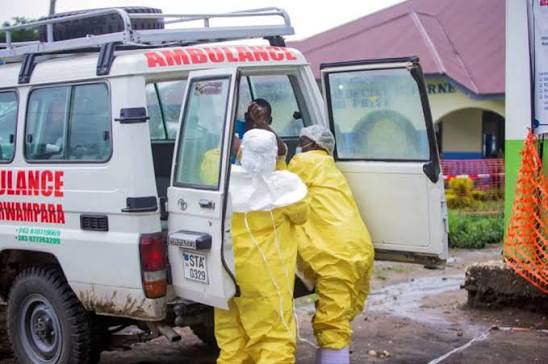
According to the government, authorities are monitoring contacts and patients at a follow-up rate of 75.2 percent across Ituri, North Kivu and South Kivu provinces.
The outbreak is centred in eastern DRC, where years of armed conflict and repeated population displacement have complicated disease control efforts. Parts of North Kivu and South Kivu remain under the partial control of the M23 rebel group.
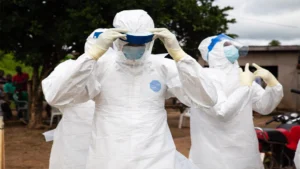
The government also confirmed that another health worker in Ituri had contracted the disease, underscoring the continued risks faced by frontline medical personnel.
Officials said surveillance, treatment, public awareness and community engagement activities are continuing in affected communities to contain the outbreak.
WHO launches clinical trial for experimental Ebola treatments
The update comes weeks after the World Health Organisation (WHO) declared the Ebola outbreaks in the DRC and Uganda a Public Health Emergency of International Concern.
Last week, the UN health agency announced the launch of a clinical trial in the DRC to evaluate two experimental treatments for Bundibugyo virus disease (BVD), a rare strain of Ebola.
The study, known as the Platform Adaptive Randomised Trial for New and Repurposed Filovirus Treatments (PARTNERS), will assess whether the monoclonal antibody MBP134 and the antiviral drug remdesivir can improve survival rates among patients diagnosed with the disease.
WHO said the trial will also evaluate whether combining the two therapies offers additional benefits.
“While effective treatments have been developed for Ebola virus disease, none are currently approved for Bundibugyo virus disease, and no treatment has been shown to work across all virus types that cause Ebola diseases,” the organisation said.
The agency added that the treatments were selected following a review of available scientific evidence, including preclinical research, safety data and findings from previous Ebola outbreaks.
The latest outbreak highlights the persistent challenge of responding to infectious disease outbreaks in conflict-affected regions. Insecurity, population displacement and attacks on healthcare infrastructure have repeatedly hampered Ebola response efforts in eastern DRC, making contact tracing and treatment more difficult. The WHO’s launch of clinical trials for Bundibugyo virus disease marks an important step towards developing the first evidence-based treatments for the rare Ebola strain while supporting efforts to reduce fatalities during the current outbreak.