

The government says security needs have sometimes been considered separately without a common threat assessment or unified capability plan, making coordination and resource deployment more difficult.
The Federal Government has acknowledged gaps in the way Nigeria’s security needs have been assessed and planned, saying operational requirements have sometimes been considered independently without a common national threat assessment or unified capability plan.
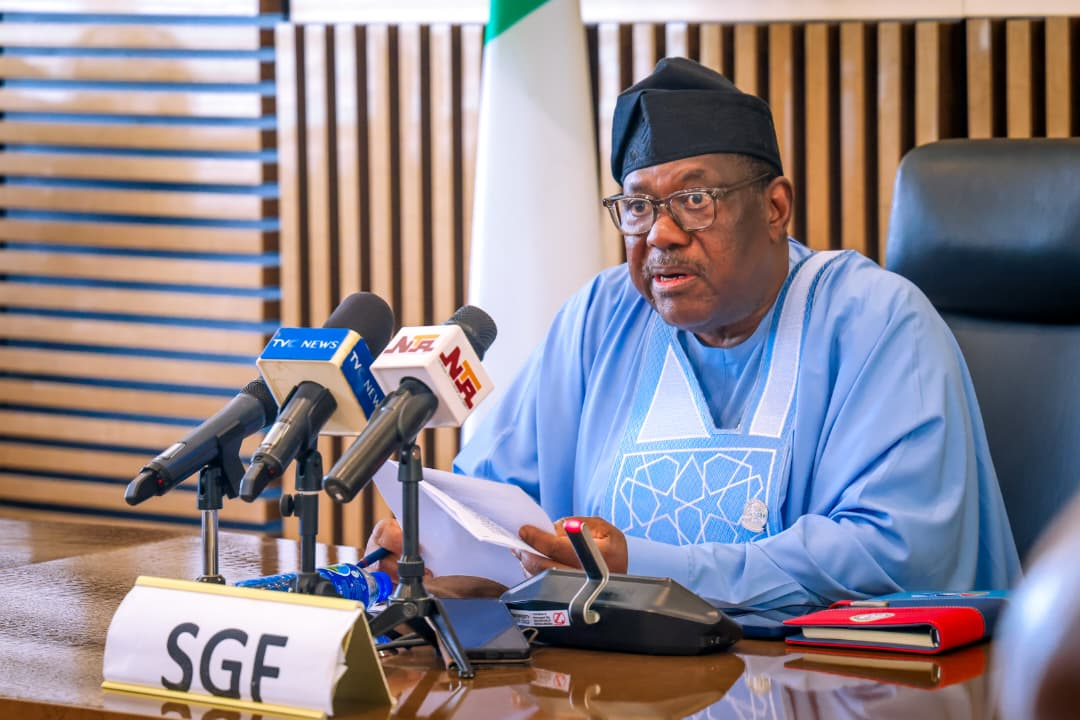
The admission came on Wednesday as Secretary to the Government of the Federation, George Akume, inaugurated President Bola Tinubu’s Presidential Committee on the National Threat Assessment and Five-Year Strategic Defence Operations Plan.
Akume said Nigeria needed to move beyond reacting to individual security threats and develop a system capable of anticipating threats, setting priorities, allocating resources rationally and measuring outcomes.
He said contemporary security threats were increasingly interconnected and capable of exploiting gaps between institutions, jurisdictions and operational theatres.
The committee has been given 90 days to produce the two documents for Tinubu’s consideration and approval.
Government seeks unified security planning
Akume said the existing approach could make coordination more difficult and limit the efficient deployment of scarce resources.
According to him, Nigeria needs a system in which the assessment of threats determines operational objectives, those objectives determine required capabilities, and capability requirements then inform expenditure, procurement, force development and industrial priorities.
“In simple terms, we must establish a clear path from threat to objective, from objective to capability, from capability to resource, and from resource to measurable outcome,” he said.
The National Threat Assessment is therefore expected to establish a common understanding of the country’s security environment for the Armed Forces, intelligence services and other relevant agencies.
It will identify immediate and emerging threats, assess their urgency and strategic implications and determine the appropriate government response.
The government says this should help distinguish threats requiring immediate military or security action from those that demand longer-term investment in intelligence, technology, infrastructure, training and doctrine.
Defence plan to determine spending priorities
The proposed five-year Strategic Defence Operations Plan is expected to take the threat assessment a step further by identifying what Nigeria needs to respond effectively.
The committee will examine capability gaps across operational theatres and determine requirements for personnel, equipment, logistics, infrastructure, intelligence and technology.
It will also establish procurement priorities based on assessed threats rather than what Akume described as institutional preferences.
The plan will include implementation timelines, responsibilities and mechanisms for measuring progress.
The five-year horizon is intended to support longer-term decisions on force development, infrastructure, training, maintenance, research and development and the country’s defence industrial base.
However, the plan will be reviewed annually to reflect changing threats, operational experience and technological developments.
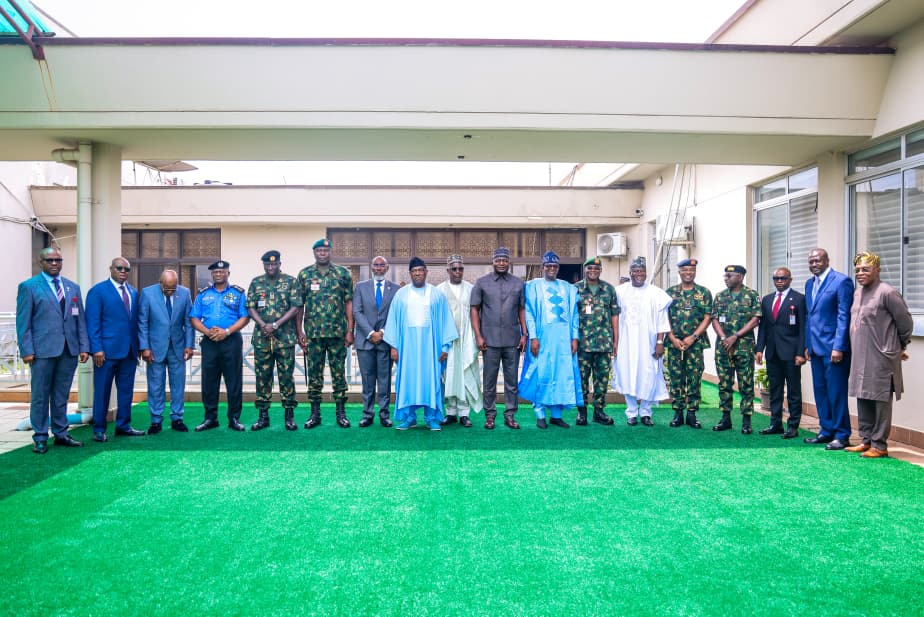
Top security officials make up the threat assessment committee
The committee brings together the country’s principal defence, intelligence and security chiefs.
Its members include National Security Adviser Nuhu Ribadu, Defence Minister Christopher Musa, Minister of State for Defence Bello Matawalle, Chief of Defence Staff Olufemi Oluyede and the service chiefs.
The Inspector-General of Police, Olatunji Rilwan Disu, DSS Director-General Tosin Ajayi and NIA Director-General Muhammed Muhammed are also members.
The committee will be coordinated by Tinubu’s Special Adviser on Homeland Security, Major General Adeyinka Famadewa (retd.), who said his role would be to facilitate collaboration and harness the expertise of members rather than command them.
Subcommittees are also expected to be established to handle specialised areas of the assignment.
The initiative comes as Nigeria continues to confront multiple security challenges across different theatres, making the government’s stated shift from reactive responses to longer-term threat anticipation particularly significant.
A civil society coalition, the Coalition of Patriots for Security Sector Reforms, has welcomed the initiative but said its success should ultimately be judged by implementation, funding and measurable accountability rather than simply the production of another strategy document.