


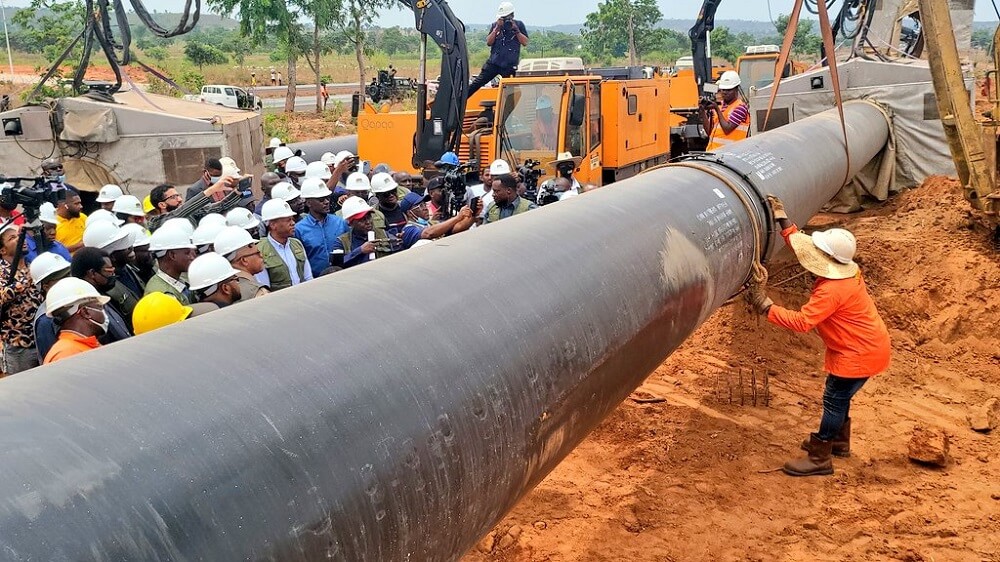
The United Niger Delta Congress has urged the federal government to extend pipeline surveillance contracts, citing improved crude oil deliveries, reduced illegal connections and jobs in host communities.
The United Niger Delta Congress (UNDC) has called on the federal government to extend pipeline surveillance contracts, citing improved crude oil production.
Speaking at a press conference in Abuja on Saturday, Julius Obi, the UNDC’s national president, said maintaining the contracts would help consolidate gains in crude oil deliveries, protect jobs in host communities and keep up efforts against oil theft and illegal refining. In its statement, the group specifically urged an extension of the contract held by Pipeline Infrastructure Nigeria Limited (PINL).
The Group’s Case
Obi said better protection of oil infrastructure had contributed to higher crude output at export terminals, and that thousands of residents had benefited from jobs under the surveillance programme. He said the programme had given residents of host communities an alternative source of income that might otherwise draw them into illegal oil bunkering.
The group’s president also called on the federal government to create more opportunities for young Nigerians, arguing that competence and performance should guide appointments to critical national assignments. He added that community-focused interventions, including scholarships, skills programmes and relief efforts, were important to improving relations between oil companies and host communities.
The Figures Cited
Obi said crude deliveries through the Trans Niger Pipeline to the Bonny terminal rose from 3 percent in August 2022 to 98 percent in September 2026. He said 2,049 illegal pipeline connections had been remediated and 1,010 illegal refinery clusters destroyed.
He attributed these figures to PINL’s operations, which began in August 2022 and cover 215 host communities, employing more than 35,600 surveillance guards. The figures come from the UNDC and PINL, and the reports reviewed did not include independent verification.
The Petition Against PINL
The contracts have been under scrutiny amid claims that PINL receives ₦2.7 trillion annually for its surveillance work. The claim has circulated in commentary, and the reports reviewed do not say where it originates or confirm it.
Last week, the House of Representatives Committee on Host Communities dismissed a petition against PINL, citing lack of evidence and the petitioners’ failure to appear despite invitations. The petition, dated September 5 and filed by the Niger Delta Oil-Producing Communities Reform Movement (ND-OCRIM), accused PINL of improper contract implementation, mismanagement of contract funds and neglect of surveillance personnel’s welfare. It also alleged personal expenditure by PINL’s managing director, Osahon Okunbor.
The committee said ND-OCRIM failed to appear on September 14, September 22 and October 5. A representative sent a written submission with location-tagged photographs, but the panel said no documents or proof accompanied the allegations. PINL appeared and submitted its own report on its effect on oil output and stability in the region.
The subcommittee recommended that the petition be dismissed, that further investigation be discontinued, and that the federal government extend PINL’s contract. The full committee later adopted the report at a special sitting and passed a vote of confidence in PINL, NNPC Limited and President Bola Tinubu. Obi commended the committee for its decision.
An Earlier Position
The UNDC took a different line earlier this year. In March, the group asked the federal government to decentralise pipeline surveillance, saying the structure of the contracts concentrated opportunity and influence. It also called for a comprehensive audit of all surveillance contracts and for their terms and beneficiaries to be published.
PINL has not been reported to have responded separately to the ₦2.7 trillion claim in the coverage reviewed. ND-OCRIM has not commented on the committee’s decision.