

The presidential committee will assess Nigeria’s current and emerging threats and translate its findings into operational priorities, capability requirements and a multi-year defence plan.
President Bola Tinubu has given Nigeria’s top defence, intelligence and security officials 90 days to produce a comprehensive National Threat Assessment and a rolling Five-Year Strategic Defence Operations Plan.
The deadline was announced on Wednesday as Secretary to the Government of the Federation, George Akume, inaugurated the presidential committee on behalf of the President.
The committee is expected to provide a common assessment of Nigeria’s security threats and translate the findings into clear operational priorities, capability requirements and resource needs.
Akume said the assignment required professionalism, objectivity, urgency and patriotism, stressing that both documents must be submitted to Tinubu for consideration and approval within 90 days.
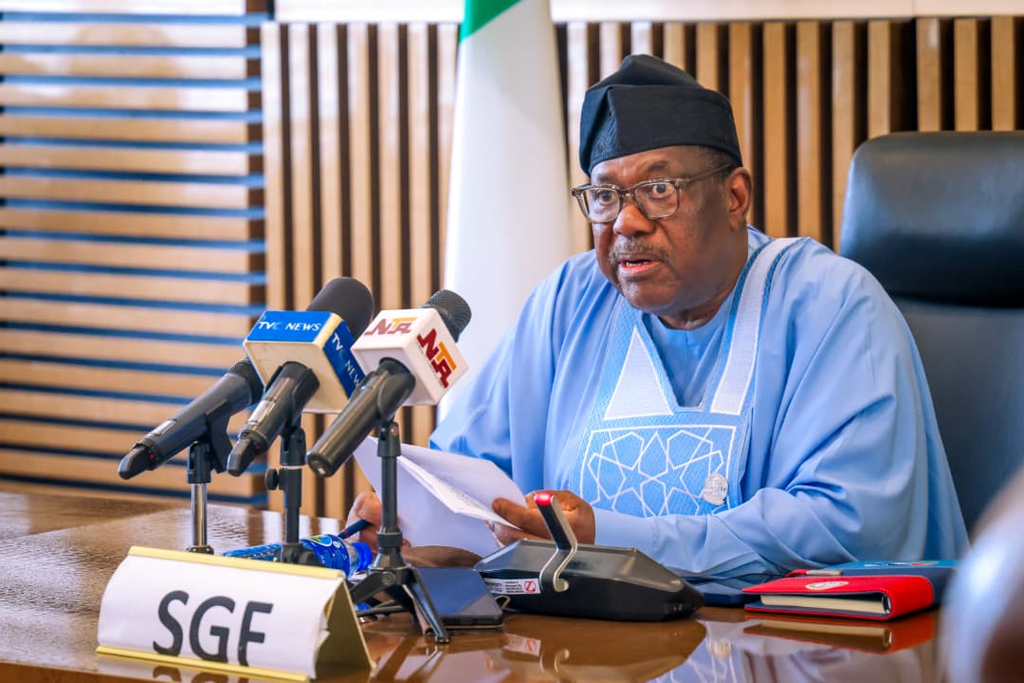
The initiative follows Tinubu’s directive last week for a coordinated framework to strengthen cooperation among the country’s defence, intelligence and security agencies. The State House said the plan is intended to provide a common understanding of national threats, operational objectives and the capabilities required to address them.
National Threat Assessment to map Nigeria’s security risks
The first document, the National Threat Assessment, is expected to provide an objective assessment of Nigeria’s security environment.
According to Akume, the committee will identify existing and emerging threats, assess their urgency and strategic implications, examine how they are likely to evolve and determine the consequences of failing to address them.
The assessment is also expected to distinguish between immediate threats requiring urgent operational responses and emerging threats that require early investment in intelligence, technology, infrastructure, training and other capabilities.
The government said the assessment will serve as a common planning basis for the Armed Forces, intelligence services and other relevant security agencies.
Tinubu had previously said the framework was necessary because operational requirements were sometimes considered independently, without sufficient reference to an agreed national threat assessment or unified medium-term plan.
Five-year plan to link threats with resources
The second document will translate the threat assessment into a five-year operational framework.
It will set out what needs to be achieved in each operational theatre and identify the forces, equipment, infrastructure, logistics, intelligence, technology and other capabilities required.
The committee will also identify capability gaps and establish procurement priorities based on assessed threats and operational requirements rather than institutional preferences.
Akume said the plan would establish a clear chain from threat identification to measurable results.
“In simple terms, we must establish a clear path from threat to objective, from objective to capability, from capability to resource, and from resource to measurable outcome,” he said.
The five-year framework is expected to guide force development, equipment acquisition, infrastructure, training, maintenance, research and development and the strengthening of Nigeria’s defence industrial base.
However, it will operate on a rolling basis and be reviewed annually to account for emerging threats, technological changes and lessons from ongoing operations.
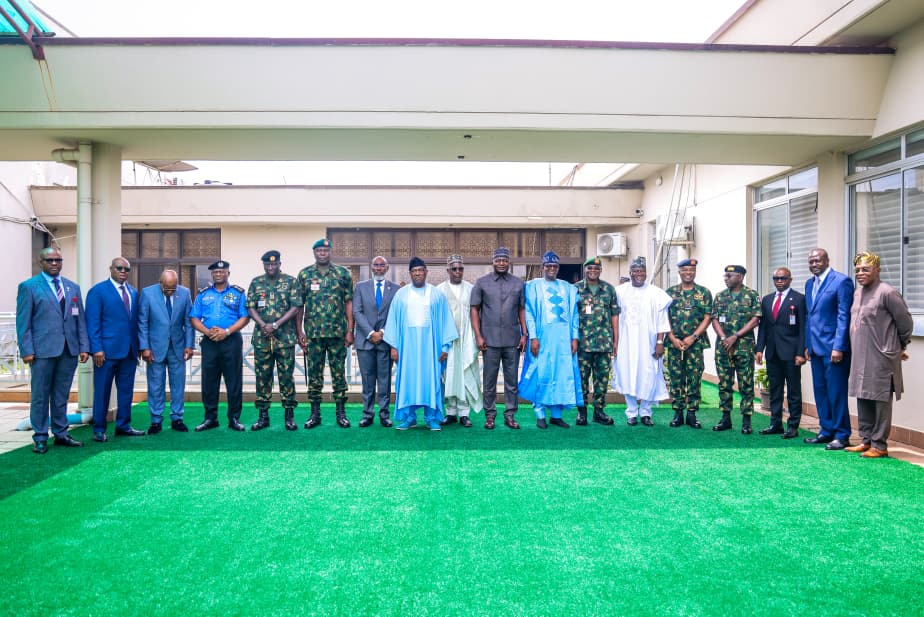
Security chiefs form core of presidential committee
The committee is coordinated and supported by Tinubu’s Special Adviser on Homeland Security, Major General Adeyinka Famadewa (retd.).
Its members include National Security Adviser Nuhu Ribadu; Defence Minister Christopher Musa; Minister of State for Defence Bello Matawalle; Chief of Defence Staff Olufemi Oluyede; Chief of Army Staff Waidi Shaibu; Chief of Air Staff Sunday Kelvin Aneke; Chief of Naval Staff Idi Abbas; Inspector-General of Police Olatunji Rilwan Disu; DSS Director-General Tosin Ajayi and NIA Director-General Muhammed Muhammed.
Famadewa said his role would be to facilitate collaboration rather than command the other members.
He also said subcommittees would be created to allow members to focus on specialised areas and meet the 90-day deadline.
The government says the eventual framework is expected to provide the basis for more coordinated defence planning and resource allocation across Nigeria’s security architecture.