

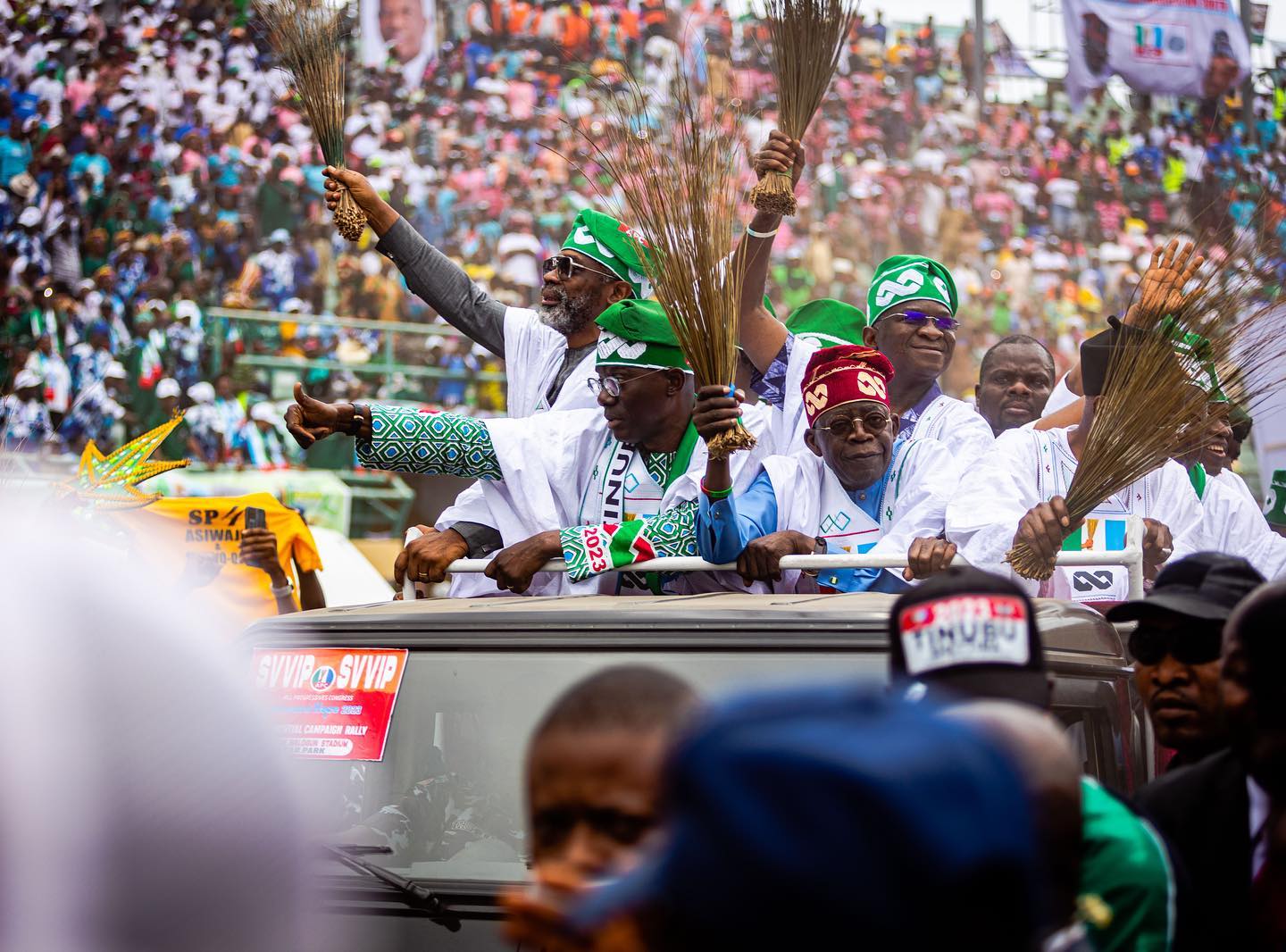
The APC’s 2027 campaign council blurs the line between the ruling party and the machinery of government.
There is something almost wonderfully Nigerian about our election campaigns. The people who spend the morning running the government can, by afternoon, report for campaign duty to explain why they should be allowed to keep running it.
And so, President Bola Ahmed Tinubu’s 2027 campaign council has arrived.
Tinubu is its chairman. Vice President Kashim Shettima is Vice Chairman I, while APC National Chairman Nentawe Yilwatda is Vice Chairman II. Former Zamfara Governor Abdulaziz Yari is Director-General and Imo State Governor Hope Uzodimma is secretary.
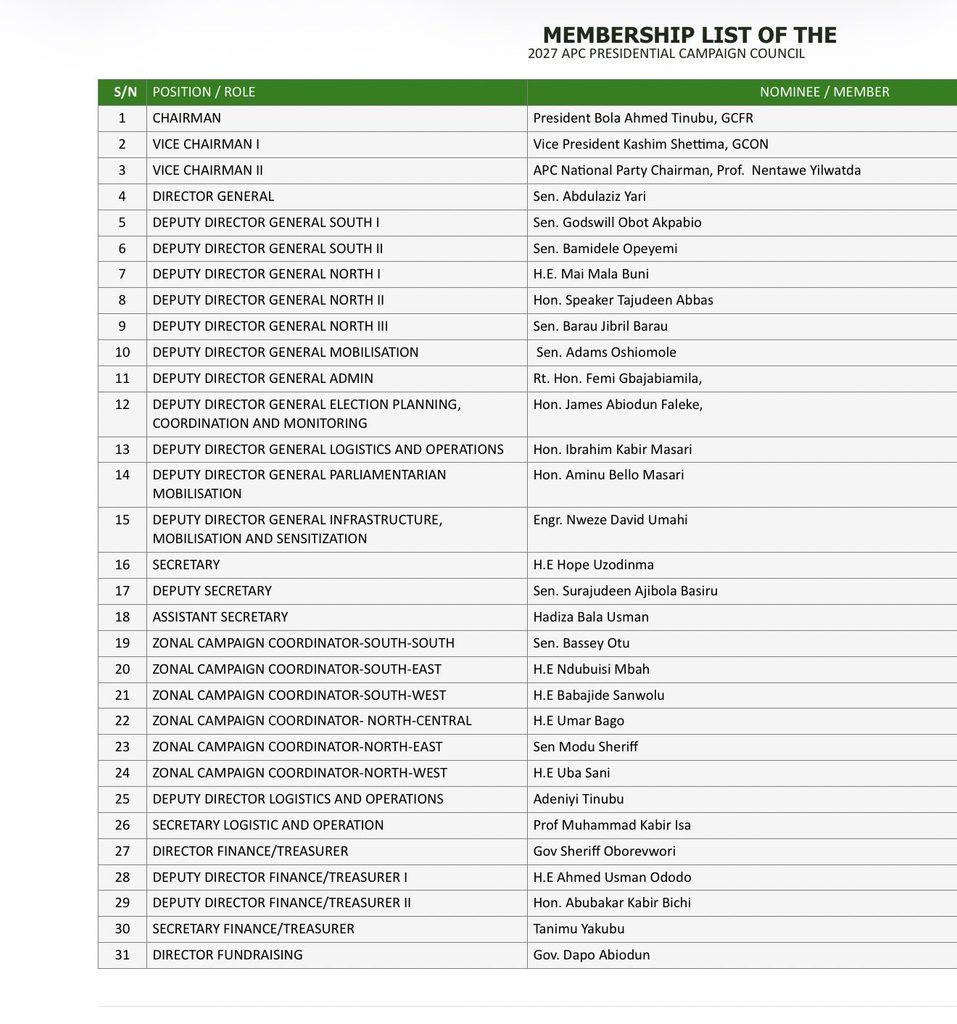
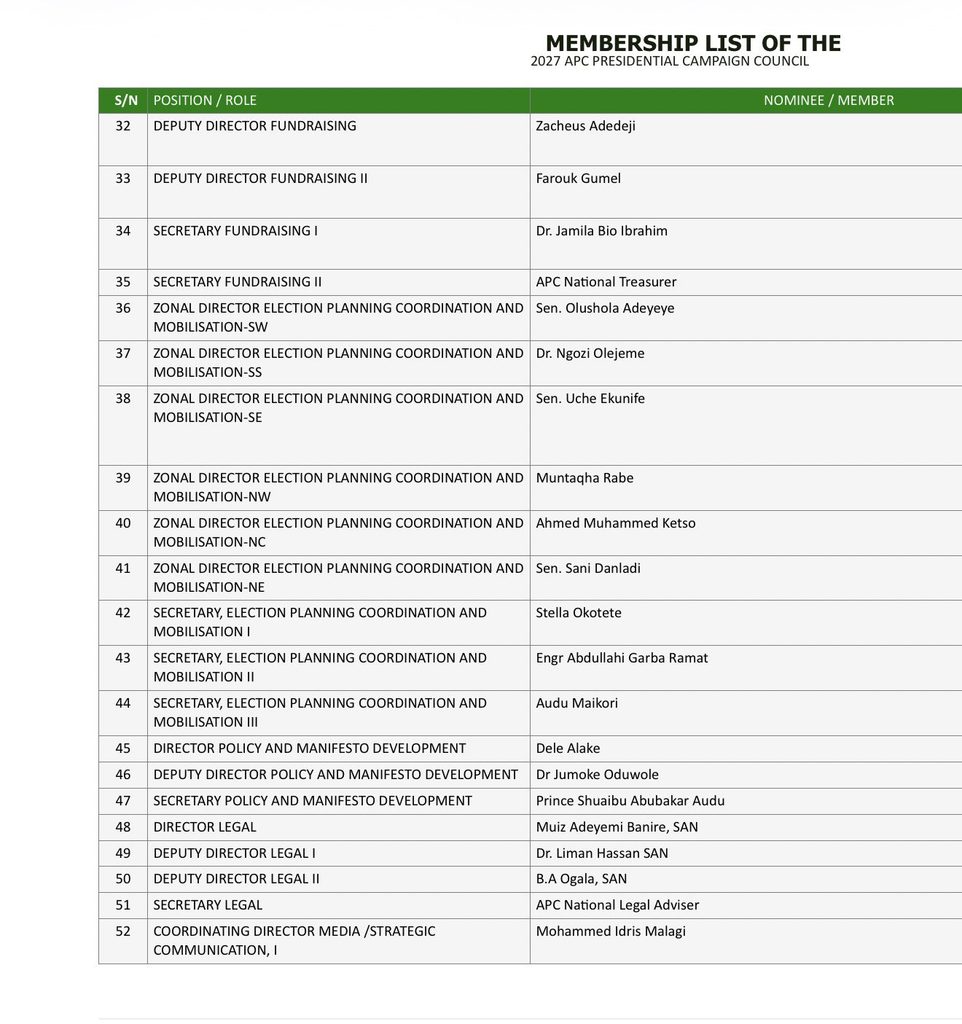
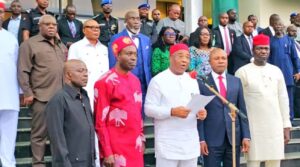
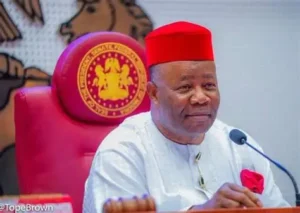
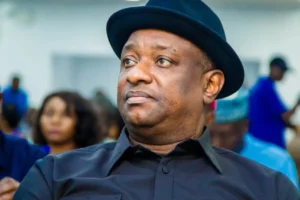
The council also draws heavily from the country’s political establishment, including Senate President Godswill Akpabio, Speaker Tajudeen Abbas, serving governors, ministers, the President’s Chief of Staff Femi Gbajabiamila, legislators and senior party officials. The published list contains 223 members.
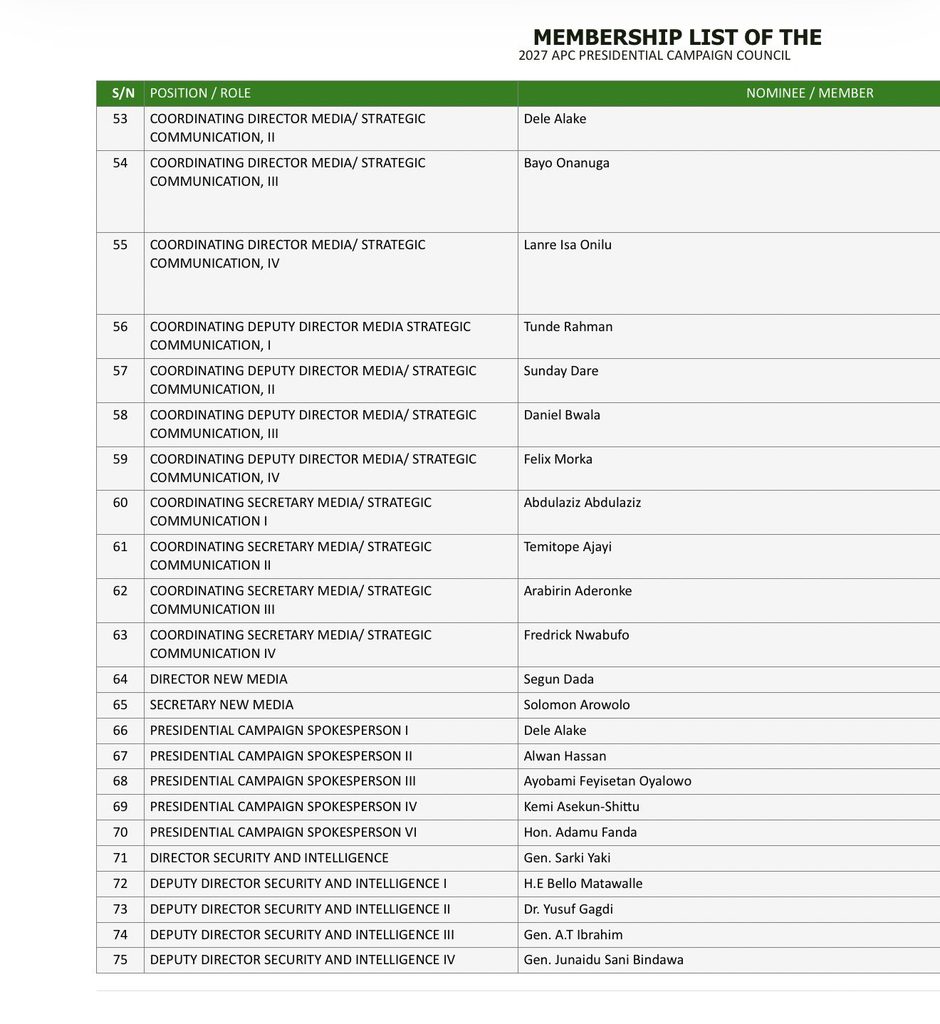
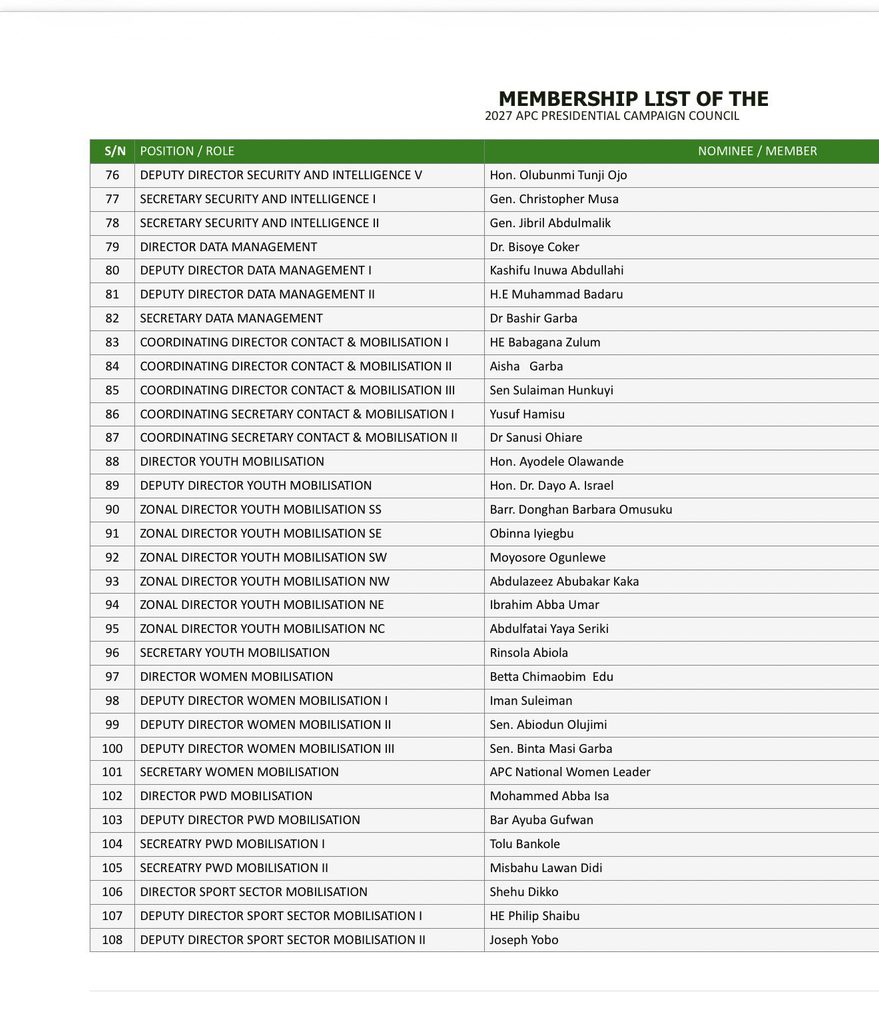
At first glance, this looks like a campaign council. Look a little longer, however, and it begins to resemble a fairly familiar gathering of Nigeria’s political establishment.
That is precisely why the question deserves asking: is this simply a campaign team, or is it government in campaign mode?
Tinubu’s campaign council is not unprecedented
Let’s not pretend that Tinubu has invented the practice of populating presidential campaign councils with serving government officials. He has not.
In 2019, President Muhammadu Buhari chaired the APC Presidential Campaign Council for his re-election. Bola Tinubu was its co-chairman, while then-Vice President Yemi Osinbajo and APC National Chairman Adams Oshiomhole were deputy chairmen. Rotimi Amaechi, then a serving minister, was Director-General. The council also included governors, senators and other senior political figures.
The 2023 election provides an even closer comparison.
When Tinubu was the APC’s presidential candidate, the party’s 422-member campaign council was chaired by the sitting President, Muhammadu Buhari. Tinubu was a deputy chairman, while Kashim Shettima was vice chairman and Plateau State Governor Simon Lalong was Director-General. The council was divided into 31 directorates and drew heavily from governors, ministers, lawmakers, party officials and other political stakeholders.
There is therefore nothing strange about politicians campaigning.
A governor campaigning for his party’s presidential candidate is not a constitutional scandal. A minister campaigning for his party is not, by itself, evidence of abuse of office. Political parties are supposed to mobilise their political heavyweights during elections.
Indeed, Nigeria’s political history is full of campaign structures that mix elected officials, party leaders, former office holders and influential supporters.
The question is not whether politicians should campaign.
The question is how much of the governing establishment should become the campaign establishment before the distinction between the two begins to look rather theoretical?
Tinubu’s campaign council is more concentrated
This is where the 2022-to-2027 comparison becomes interesting.
In 2022, Buhari was the sitting president and Tinubu was the presidential candidate seeking to succeed him.
In 2027, Tinubu occupies both positions of political centrality. He is the sitting president, the presidential candidate and the chairman of his own campaign council.
His Vice President is there.
The APC chairman is there.
The Senate President is there.
The Speaker is there.
Governors are there.
Ministers are there.
The President’s Chief of Staff is there.
The machinery is not merely politically connected to government. At its senior levels, it is populated by people who are government.
That does not make the arrangement illegal. It does, however, make it worthy of scrutiny.
Consider the senior structure. Senate President Akpabio is a deputy director-general for the South; Speaker Abbas is a deputy director-general for the North; Governor Mai Mala Buni has a similar senior role; Adams Oshiomhole is in charge of mobilisation; Femi Gbajabiamila, the President’s Chief of Staff, is deputy director-general for administration; Governor Hope Uzodimma is secretary; and David Umahi, a serving minister, is assigned responsibility for infrastructure mobilisation and sensitisation. And then there is the Defence Minister.
General Christopher Musa, Nigeria’s serving Minister of Defence, is listed as Secretary, Security and Intelligence I on the campaign council, alongside General Jibril Abdulmalik as Secretary II.
The Minister of Defence occupies one of the most sensitive positions in the Nigerian state. His portfolio concerns national defence and military policy. Yet the serving minister is also formally part of the political machinery campaigning for the continuation of the administration under which he serves.
Musa has accepted the campaign appointment while maintaining that his constitutional responsibility to protect Nigeria’s territorial integrity remains his priority.
That does not prove that the military or the Ministry of Defence is being used for APC campaigning. There is no basis for making such an allegation.
But it does illustrate the proximity between state responsibilities and partisan political activity.
And Musa is hardly alone.
This is not unusual because Nigerian campaigns have always drawn heavily from the political class. Goodluck Jonathan’s 2015 campaign, for instance, included serving and former ministers, a serving minister as a deputy director-general, former governor Peter Obi, former ministers Femi Fani-Kayode and Jerry Gana, and other political figures. The campaign also had directorates for finance, security, youth mobilisation, civil society and support groups, among others.
In other words, the presence of government officials in a presidential campaign is not a Tinubu innovation. Nor is the creation of elaborate directorates for finance, mobilisation, media, security, youth, women, labour and other interests.
The difference in 2027 is therefore not that politicians have suddenly discovered campaigning.
It is the degree of political concentration surrounding the campaign.
The APC’s political reach changes the calculation
The context matters.
The APC enters the 2027 contest with an extraordinary political advantage. Associated Press reports that 31 of Nigeria’s 36 governors are now members of the ruling party, giving it an enormous network of political structures across the country.
That does not make APC control illegitimate. Governors can defect. Politicians can change parties. Voters remain free to reject whoever they please at the ballot box.
But a party with 31 governors has an enormous political network at its disposal.
Now add the President, Vice President, National Assembly leadership, ministers, presidential aides and the party hierarchy.
The campaign council begins to look less like a collection of campaign volunteers and more like a directory of the governing establishment.
That distinction matters because the government and the ruling party are not the same thing.
At least, they should not be.
A governor campaigning for Tinubu in his capacity as an APC politician is one thing.
An APC campaign using its own party resources is another.
A government agency, public funds, state vehicles, public employees or other state resources being deployed for partisan campaigning is something else entirely.
The first can be legitimate political participation.
The second is normal party activity, subject to electoral rules.
The third raises a serious question about the use of state power and the fairness of the electoral contest.
This is why the concern should not be reduced to whether a minister or governor is allowed to campaign. Of course they are.
The concern is whether the institutional boundaries remain strong enough to prevent the state from becoming an extension of the party.
The government cannot become a campaign office
There is a perfectly reasonable defence of Tinubu’s arrangement.
The APC is the governing party. Its elected officials are political actors. If they are expected to help their party win an election, it is hardly surprising that they would appear on its campaign council.
That argument deserves to be taken seriously.
But democratic government depends on more than what politicians are technically permitted to do. It also depends on restraint, convention and a clear separation between public office and partisan advantage.
And that is where the 2027 council presents an uncomfortable question.
Can the people responsible for administering the country remain sufficiently separate from the political machinery seeking to retain power?
They must.
Tinubu should be allowed to campaign.
Shettima should be allowed to campaign.
Governors should be allowed to campaign.
Ministers and legislators should be allowed to participate in partisan politics.
But the government itself cannot campaign.
The state cannot become a campaign office simply because most of the people running it belong to the same political party.
That line has to remain visible.
The 2022 comparison makes the point even clearer. Buhari chaired Tinubu’s campaign council because Buhari was the incumbent and Tinubu was the candidate seeking to succeed him. In 2027, Tinubu is both the incumbent and the candidate.
That is not unprecedented.
It is simply more concentrated.
And concentration of political power should make institutional boundaries more important, not less.
The APC is entitled to build the most formidable campaign organisation it can. Tinubu is entitled to seek another term. His governors, ministers, lawmakers and political allies are entitled to campaign for him.
But Nigerians are equally entitled to ask the inconvenient question: when almost everyone who matters in government is also on the campaign team, who exactly is left to make sure the government remains a government while the campaign remains a campaign?
Because the most important distinction in 2027 should not only be between APC and opposition.
It should also be between party and state.
The ruling party should campaign.
The government should govern.
And Nigerians should be able to tell which one they are looking at without needing a programme schedule and a seating chart.