

The President may have intended to sound relatable by recounting how water stopped flowing while he was shaving at the Villa. But a brief inconvenience in Aso Rock is not the same as the daily struggle of communities living without reliable access to water and electricity.
President Bola Tinubu appears to have found an opportunity to connect with ordinary Nigerians through a familiar frustration: the interruption of water supply.
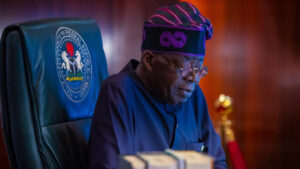
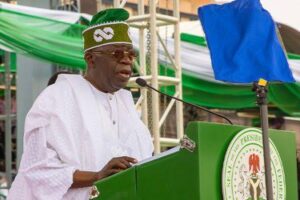
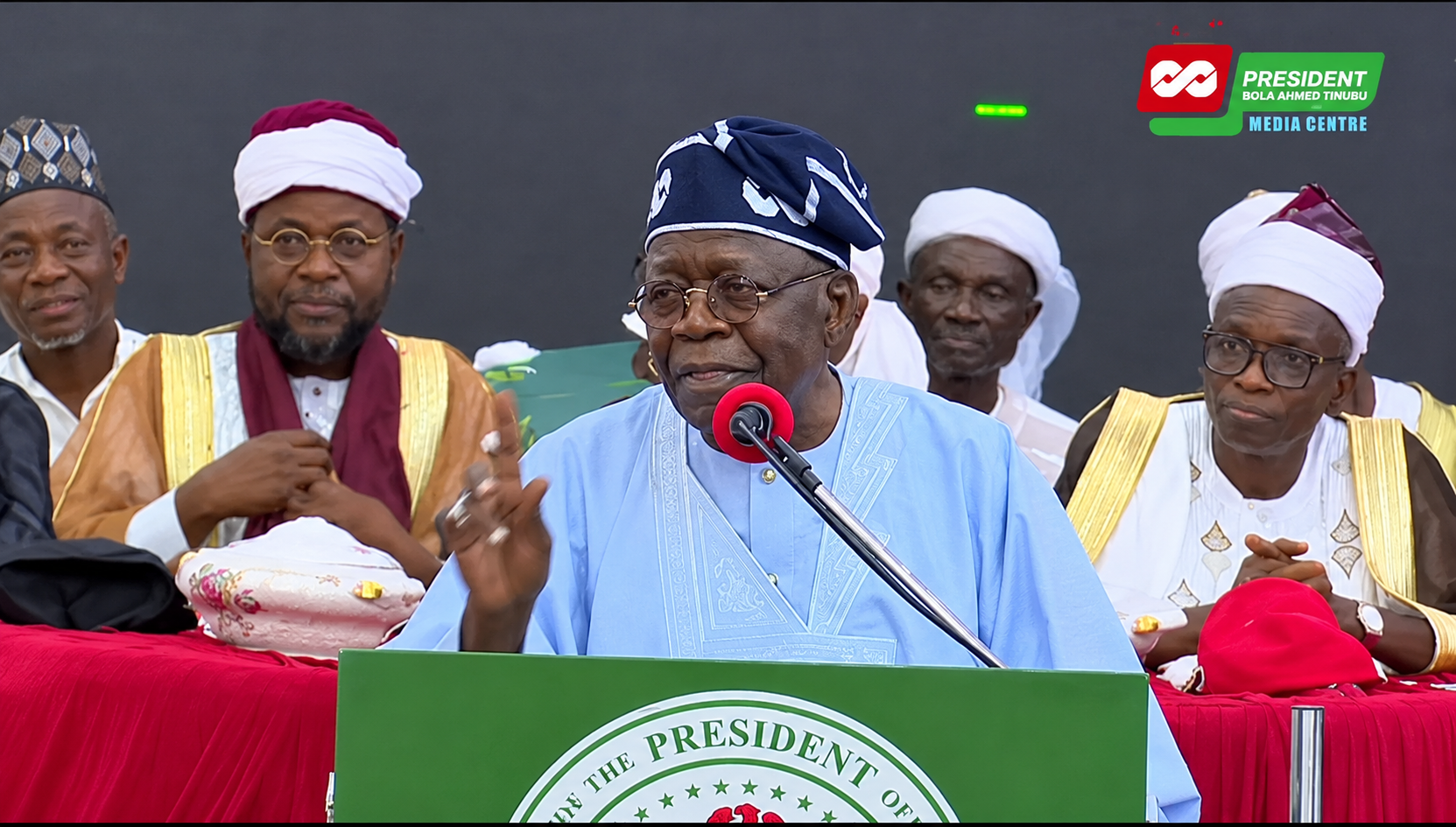
Speaking on Sunday, 22 November, at a special prayer gathering organised by members of his family at the Yoruba Tennis Club in Lagos, Tinubu recalled how water stopped flowing at the Presidential Villa in Abuja while he was shaving the previous Wednesday.
“On the Wednesday of last week, I was shaving, and the water went off. In the Villa, you won’t know punishment dey there too,” he said.
He followed the anecdote with a promise to address Nigeria’s infrastructure problems.
“We will correct all this. No light, no water, no electricity, no development. We have just started. We can do it, and we will do it for Nigeria.”
Perhaps the President intended to show that even the Presidential Villa is not insulated from the country’s infrastructure failures. Perhaps he wanted Nigerians to see him as someone who also experiences the frustrations they face.
But there is something deeply uncomfortable about the comparison.
For millions of Nigerians, the absence of reliable water and electricity is not an occasional inconvenience that interrupts a morning routine. It is a daily condition that shapes how they live, work, study, cook, maintain their hygiene and raise their families.
A temporary interruption while shaving in Aso Rock is not the same as living in a community where there is no functioning public water supply, where residents depend on wells, streams, water vendors or boreholes, or where access to electricity remains a distant possibility.
The President may have experienced a water shortage. But that does not mean he understands the deprivation millions of Nigerians endure.
Water is not a minor inconvenience for millions of Nigerians
The numbers offer a sobering picture of the country’s water access crisis.
Nigeria’s 2024 Demographic and Health Survey found that only 38 per cent of households had drinking water on their premises. About 65 per cent of the household population lived in homes without water on the premises.
The disparity is even more pronounced in rural communities, where 74 per cent of residents did not have drinking water at home, compared with 54 per cent in urban areas. Among households in the poorest wealth category, the figure rose to 80 per cent.
Although 71 per cent of Nigerians had access to at least basic drinking water services, that classification includes households that must travel up to 30 minutes, including the return journey, to collect water. It does not mean that water flows from a tap at home or is available whenever a family needs it.
The survey also found that only 66 per cent of the population had sufficient quantities of drinking water when needed.
These are not inconveniences that can be dismissed with a humorous anecdote.
For a mother who has to wake up early to fetch water before preparing her children for school, the problem is not simply that water is unavailable. It is the time, physical effort and money required to secure something that should be a basic public service.
For communities without reliable access, water scarcity affects sanitation, health, education and livelihoods. It also places a disproportionate burden on women and girls, who frequently take responsibility for collecting water.
The situation is not helped by the fact that access to electricity remains uneven. World Bank data puts Nigeria’s electricity access rate at 62.5 per cent in 2024, leaving roughly 87 million people without access. And having a connection does not necessarily mean having reliable power. A recent World Bank analysis found that Nigerian households experience an average of nearly seven outages in a seven-day period, with each outage typically lasting about 12 hours.
This is the reality behind the President’s reference to ‘no light, no water’. For many households, these are not occasional disruptions. They are the conditions under which they have learnt to organise their lives.
Tinubu made a promise about water. Nigerians should be able to measure it
What makes the President’s anecdote more troubling is that access to potable water was already part of his campaign promises.
In his 2023 manifesto, Tinubu promised to establish a national potable water supply campaign, committing to a Nigeria where, by the end of the decade, nobody would live more than five minutes away from a reliable source of drinking water.
That was a clear and ambitious commitment. It also provides a standard against which Nigerians can assess his administration’s performance.
The question is no longer whether the President recognises that water supply is a problem. He clearly does. The question is what his government is doing to solve it, how much progress has been made and whether the promise remains achievable.
Since taking office in May 2023, Tinubu’s administration has undertaken several water interventions. The Minister of Water Resources, Joseph Utsev, said in December 2025 that more than 6,700 water schemes had provided safe water to Nigerians, alongside 500 new rural water projects. The government has also commissioned projects such as the Rafin Yashin Multipurpose Dam in Niger State and water supply facilities in Kano and Jigawa, while approving the ₦59.46bn Greater Dutse Water Supply Project, designed to serve more than 1.5 million people.
These are significant interventions, but some are still under construction, and government-reported project figures do not establish how many households now enjoy consistent access to safe water. The 2024 household survey remains a reminder of the gap between infrastructure announcements and the reality of water access
How many communities have gained reliable access to potable water since he assumed office? How many water schemes have been completed, and how many are functioning? What is the government doing to rehabilitate abandoned infrastructure and ensure that completed projects continue to operate?
There should be a publicly accessible account of these interventions, including their locations, funding, completion status and the number of people they serve.
The same accountability applies to electricity. It is not enough to promise that the country will have light. Nigerians need to know how the government intends to improve generation, transmission and distribution, expand access to communities outside the national grid and make supply reliable enough for households and businesses.
Nigerians need more than presidential anecdotes
There is nothing wrong with a President acknowledging that public infrastructure is failing, even at the seat of government. In fact, such an admission should be welcomed.
But acknowledging a problem is not the same as understanding its full consequences, and understanding it is not the same as fixing it.
The Presidency is not an ordinary household. It has the resources, personnel and institutional access to respond to an interruption in water supply. The same cannot be said of a family in a rural community that has to walk several kilometres to find water, or a small business that loses income every time electricity fails.
That is why the President’s attempt to make the experience relatable falls short. It risks reducing a structural problem affecting millions of people to a personal inconvenience that can be recounted at a gathering and followed by another promise.
And there is a larger point about leadership here. The purpose of holding public office is not to demonstrate that leaders occasionally experience the same frustrations as citizens. It is to use the authority and resources of government to reduce those frustrations, particularly for people who have the fewest alternatives.
Tinubu said, “We have just started. We can do it, and we will do it for Nigeria.”
But his administration has been in office since May 2023. Nigerians are entitled to ask what has been achieved so far, not only what the government hopes to accomplish.
A President should not have to run out of water while shaving to recognise that water supply is a national emergency. He should already know what it means for a child to miss school because of the time spent fetching water, for a health centre to operate without reliable electricity, or for a family to spend a significant portion of its income buying water.
The President’s experience at the Villa should have been an opportunity to reflect on the scale of the problem, not an attempt to suggest that the inconvenience is shared equally.
For millions of Nigerians, the water does not simply go off while they are shaving. Sometimes, it never comes on at all.
And that is the problem the President must fix.