

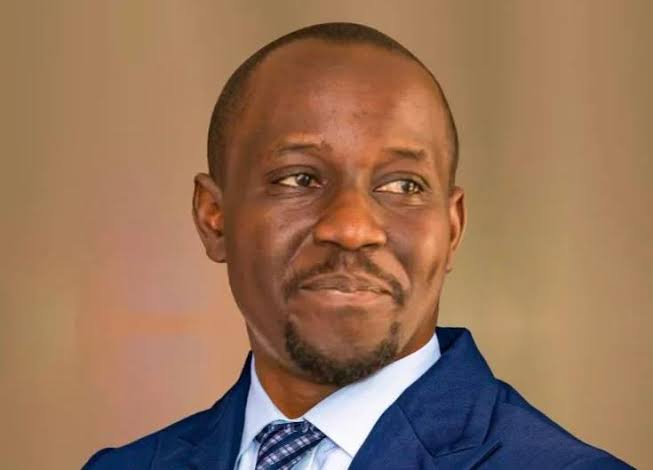
At the QEDNG Summit, Ife Adebayo argued that Nigeria must treat its creative economy as an industry, investing in skills, capital, intellectual property and storytelling to project the country globally.
The QEDNG Creative Powerhouse Summit 2.0, organised by QEDNG, a Nigerian digital media and entertainment platform, was held in Lagos on August 11, 2026.
Themed “Creativity, Culture and Nigeria’s Next Chapter,” the summit explored how stronger collaboration among government, investors and the creative community can drive economic growth, create jobs and support sustainable development.
In his keynote address, Adebayo highlighted Nigeria’s vast creative talent while examining the gaps in skills, financing, infrastructure and policy that continue to limit the sector’s economic potential.
Ife Adebayo‘s full speech at the QEDNG Summit:
Thank you. Thank you very much, sir. And thanks everyone, and good morning. It’s a pleasure to be here with you today. When I got the invitation to give the keynote address, and I also realised that when I saw the list of people who were on the panels, and also saw, you know, names like people like Mommy Joke Silva, I was a bit bothered, and I said, what note am I keying, you know, in this room? And I tried to dodge it, and I mentioned to my colleague, Tunde, I don’t know if I’m going to do this.
But then I had a conversation with a friend of mine, Tolu Ogunlesi, and he said, oh, who is behind this? And I said, Mr. Olumide, and he said, oh, Mr. Olumide, I can assure you, you should go. And he spoke really amazing things about you, and just basically gave me the confidence, and said, if he’s the one inviting you, you can go, I can assure you that you should go. So I appreciate the honour, thank you very much, and I’m honoured to be in the presence of all of you distinguished fellows.
Many of you, I grew up listening to, watching. So it’s a great privilege to be here today. And beyond that, it’s also, you know, a great and awesome opportunity to be able to engage with the creative sector, and to see what you’re doing, Mr. Olumide, around encouraging the younger people who are coming on board.
And also looking at the financiers in the room, the banks, bringing together also the ecosystem, I think these are some of the conversations and the collaborations that are important, so that everyone can listen to each other. And like the chairman’s representative said, everyone can begin to realise that one unit cannot bring the change that we require, but we all must work together. But I’ll start today to speak about a story about a country that is not Nigeria.
In 1986, there was a film that opened in American cinemas. I was still a toddler. I’m sure people like my egbon Gbenga Adeyinka, probably have been watching, that as maybe married men at the time.
The movie was Top Gun, and it opened in cinemas in America, it was about a hot-headed fighter pilot, a naval fighter pilot. And a lot of accounts said this was just an advertisement for the American Navy aviation. But after that movie, the United States Navy reported applications jumped by as much as 500%. So that meant if the US Navy had one fighter pilot application, prior to that, in a day, they started having 500. It was so serious that recruiters were putting tables in cinemas, so that as people have finished watching the movies, people were coming out to sign up to join the US Navy to become pilots.
A man named Philip, Philip Strupp, the man who at the time was running the Pentagon’s entertainment office, and he ran the place for like 30 years, he said there is no amount that the Navy could have paid for such publicity. But what did they do? All they provided was support, not a penny of the US Navy went into that movie. So if you think about that, the most powerful military on earth with the largest budget in human history, confessing that its most effective recruiter was not a weapon, was not a general, was not a budget line, it was a story, it was culture, it was a young man with good teeth and a leather jacket, and a nation confident enough to let its artists sell its story to the world. So my question for us in this room, if a film can build the image of an army, as a country in Nigeria, what would our films, our music, our fashion, our comedy, our animation, build for our nation of 200 million people, who are already, whether we admit it or not, the storytellers of the African continent? But before we speak about what our stories can build, I’ll also speak about what the absence of these stories has cost us, and because for me, the absence of these stories is no theory, it’s something I’ve lived, it’s practical for me.
So I am one of the lucky few, at the time, I don’t know how it’s done now, at the time, if you wanted to join the Nigerian Air Force Military School, Jos, you had to be the top three in your state.
So the top three from every state, I think the top five from every state is selected to go for interviews, and the top three are selected to join the military school. So I was one of the lucky few who got to attend the Air Force Military School, Jos, in the 90s. So because of that, I have many friends, my course mates, my seniors, my juniors, that are currently fighting, that have fought, some currently still fighting against insurgency in this country.
And I lost one of them, my godfather, S.K. Umaru, to an IED blast in 2014. So he wore the uniform of the Nigerian Army, he went to the Northeast, left his family, stood between us and the terrorists. But he did not come home.
I saw his wife’s pain. I saw his children’s pain. But most importantly, a country’s quiet loss.
One of his course mates told me, S.K. is a Chief of Army Staff the Army will never have. What stays with me most? This story has never been told. And he is one of thousands, men and women who have fought and who are fighting for this country as I stand speaking here to you today.
Think of your mornings in this very room. For most of us, we wake up, so I left home this morning, I kissed my children goodbye for a trip to Lagos. So some of you, you’ve kissed your spouses, your children, your parents goodbye, they’ve gone to Abuja, Enugu, maybe some to London, America, and then you went back to bed.
But who tells the story of the wife who kisses her husband goodbye into the Sambisa Forest? Not knowing whether that is the last time she will ever see him. Who tells the story of the child born while his father slept in a trench in the rain, a thousand miles from the delivery room? I have a friend who was fighting terrorists and he was released to go for his wedding. And on the day of the wedding, he told me, oh, he’s off for two weeks’ honeymoon, and that was a Saturday. So he was to go on his honeymoon with his wife for two weeks. He was recalled on Sunday, the next day after his wedding, so by Monday, he was back in the bush.
America turned its soldiers into legends the whole world will recognise. We have not yet told the stories of ours, not even to our own children.
That is what a story left untold costs a nation. And it is exactly what the power of art and storytelling has the power to reshape. But I have hope, because we’re not starting from zero.
We’re starting from a generation of giants that does not know its size. Nollywood, by volume, the second largest film industry on the planet, created an estimated 1 million jobs. It’s the second largest employer in this country after agriculture.
And it did that for years without any help from anybody. People like Mommy Joke Silva started, no support, did all what they did. And the NBS puts the output of our arts, entertainment, and motion picture sector at about over 700 billion Naira.
So this is a sector that has grown more than 150% over the last decade. When Netflix quietly invested about $23 million a year, it supported over 5,000 jobs and licenced more than 250 of our films. That is what our creative economy does while it is still, in policy terms, mostly still an orphan.
And from statistics, our entire creative economy contributes roughly 1.2% of our GDP. That’s the lowest of any benchmark African country that we can be proud to compare ourselves to. So if we compare us, for example, to South Africa, smaller country, fewer people without our raw cultural firepower. Nobody is streaming Joburg the way they would stream Lagos.
Every time I’m in an African country, whether it’s Kenya, whether it’s Rwanda, whether it’s South Africa, everybody wants to visit Lagos. And yet, the cultural and creative industries in South Africa contribute close to 3% of their GDP and support roughly 1.4 million jobs. Their creative sector is now about the same size as agriculture.
And what’s the difference between us and them? It’s not talent. In fact, our talent is not even close. We are way further.
The difference is that they count it, they structure it, they finance it. We have the louder voice. They built the microphone, provided better infrastructure, supported with better policies.
Building the structures behind Nigeria’s creative talent
And if we look further to a country that made a decision 40 years ago, South Korea. South Korea was known for one thing, factories, ships, semiconductors. Then it chose deliberately a national strategy to export its culture.
The results are almost difficult to say out loud. In one year, Korea’s culture-related exports were worth about $14 billion. A single Netflix series, Squid Game, added over $900 million in value the moment it aired.
There is one global example. Let’s consider a single company. Not a factory, not an oil major like Shell.
A Korean band called BTS, a music band, is estimated to add $5 billion to the Korean economy every year. One band. That is the comparison to the annual export of Hyundai, the Korean car maker.
So a band contributes the same to the economy as all the Hyundai cars that are exported. That’s the power of the creative sector. And what is the BTS band? It’s just seven young men singing, that’s worth a car company.
So tell me we do not have seven young men and women in Lagos, in Enugu, in Kano, in Benin City, who could do the same? If we finance them like an industry instead of admiring them like a hobby. If we provide the platforms, the infrastructure, both physical, virtual, and the policies that support them and keep them here. So what are the issues and where are the gaps? Skills.
We have raw talents in abundance, but are they really employable? The employability surveys tell us the gaps are exactly where the money is. Cinematography, product management, animation, the craft behind the camera. When I engage with creatives, I hear if you want to do a movie, you have to bring in some cameras from South Africa, Morocco, but not just that, you have to bring in the human that will operate it.
Capital. The average Nollywood film has historically been made on a budget, a fraction of what a single day costs a serious studio abroad. A great script in this country does not die because it is bad, it dies because it is broke.
And then the third is structure. There is no intellectual property protection and the chairman’s representative also spoke about this. There is no formal pathway from a bedroom idea to a bankable enterprise.
So genius in Nigeria has always been forced to freelance and when you freelance to finance structures to get paid, keep your money in, keep your data in. If we structure IP properly, sorry, I keep mentioning mommy Joke Silva, I’m a fan. If you structure IP, she should be rubbing shoulders with Oprah.
So these things are critical, they are important. So now, when we’re building the iDICE programme, we try to look at some of these issues. And while the programme is not a solution to all the problems, we try to identify some of the critical issues and at least begin to solve them.
iDICE is the investment in digital and creative enterprises programme, a commitment of the federal government of Nigeria, funded by the African Development Bank, Agence Française de Développement, Islamic Development Bank and the Bank of Industry. It’s under the oversight of His Excellency, Vice President Kashim Shettima. The design for the programme provides some of the answers to the three problems I just named.
And how you see that these problems are not far-fetched and you don’t need a genius to recognise them is that when Mr. Olumide spoke, he mentioned the same problems. When the chairman spoke, he mentioned the same problems. So we know the problems and we’ve been speaking about it, I’m sure all of you in this room have been in rooms where these problems have been spoken about, but we must now start to get serious to build the structures and the solutions to them.
It begins with skills. On the iDICE programme, we’ll be training thousands of people in specific bankable crafts, not certificates, skills for sets, for studio, or even most importantly, we’ll be working with enterprise support organisations who also support startups.
The chairman spoke about how you start to fund an artist as an industry, as a company. So how do artists start to do what the tech sector in Nigeria has managed to do, which is start to turn their talents into companies. And this is why, as part of the iDICE programme, we’re working with universities where we have the largest concentration of our young people, universities and polytechnics, and we’re setting up, at the moment, sixty-six enterprise support systems within those spaces.
And I was having a conversation with my colleague in the car and he told me, while we were on oversight visits to the institutions to determine which institutions would get this support, that you will get to a university, you will see this building by TETFund, locked down, This building by CBN, locked down, NITDA built this for us, locked down, and PTDF built this for us, locked down. Computers, gathering dust. So the design of iDICE looks into that, and one of the package that universities and polytechnics have been forced to accept is that you must have a private sector partner that will run these institutions with you for three years.
But beyond that, these private sector partners, part of their own deliverables to the bank of industry and to the federal government is that they must build in a sustainability framework so that when they’re handing over to the universities, they’ve not just passed on knowledge, they’re ensuring that those spaces can be sustainable. Because what makes those spaces work is in 10 years time, we should be able to count the new enterprises, the new startups and the creative and the tech sector that have come out of those institutions and are now on CNN, are now on, hopefully, NTA becomes like CNN also, are now globally on NTA and are showcasing Nigeria to the world.
Then if you move to capital, and this is a very big part of it, we are building a real financial staircase.
So on the iDICE programme, we have two pools of funds. The first is an equity pool. For that equity pool, we have a tech fund.
On that tech fund, we have a tech fund manager. The beauty of this is each of our fund managers cannot be pushed by us, governments, where to put money, because they are mandated to match the funds. So for every dollar you get on the iDICE programme, you have to go and raise another dollar to match it.
And we’ve seen how that works with our tech fund manager, Ventures Platform Limited. We committed $26 million through the Bank of Industry to Ventures Platform. As at first close last year, he had closed the fund at $64 million.
So he has more than doubled the money the federal government has given him. And we’re in good company. The other investors in that fund are the British International Limited, International Finance Corporation, ProPaco, that’s a subsidiary of the French Development Agency, Standard Bank of South Africa.
So the confidence that these international investors have to put their money in is showing that if we put government money in in the right way with the right partners, we can crowd in other funds. And it shows that African money can bring in global funding if it is done right. So these fund managers will now invest.
So what it means is even if my twin brother, I don’t have one, if I had one, my twin brother wants to collect funds from Ventures Platform, and I tell them, they will tell me, it’s not only your money, I have other people’s money in this pot. You can’t determine where I put it. And that’s why we structured it that way, to ensure that there is no political interference in the way this is done, to ensure that these funds can go directly to the people that need it, and impacts the people that it’s supposed to impact.
We also have the Creative Fund. We’re in the process of engaging a Creative Fund manager. That has taken a bit longer, because interestingly, at the moment in Nigeria, there is no dedicated equity fund to the creative sector, while there are a couple of venture capital companies that have invested in creative activities and movies and other things, but there is no dedicated fund to the creative sector, and this will be the first.
And it’s been championed by the Bank of Industry. So we’re hoping to announce that before the end of the year. But this fund will follow the same route.
We’ll be looking for a venture capital, a general partner that already has shown the ability to raise financing, the ability to invest in the creative sector, and understanding of the networks in the creative sector, so that this fund will also be used well. And then the third part of the equity fund is the Fund of Funds. So this is a fund that will invest in smaller funds.
And we set this one up because while the big boys like Ventures Platform and Kuramo Capital, who has won our Fund of Funds programme, can easily come in and get funds, but what of the other smaller ones? So the 50,000 books joke, when I think of all that money, you may want to set up a fund to say, let me help other artists, other comedians that are coming up. What this Fund of Funds does is you can now ask him, that your $1 million, sir, we can match you another $1 million. Now, if he would have been able to support only 10 comedians before, now he can support 20.
So that’s the idea of the Fund of Funds. And that has been launched by Kuramo Capital, and the announcement is out people can start to apply for that. If you have an investment fund, you can apply to that fund, they will match you, and you’ll be able to extend your investments.
The second bucket of funds that we have is the debt funds. And for that, we have a $45 million commitment from the Bank of Industry, subject to the Banks own Risk Assessment criteria, that has also been launched. And then we have another one, $65 million Islamic finance.
And when I say Islamic finance, it does not mean you have to be a Muslim. It just means that it is bound by its own ethical requirements. So meaning it wouldn’t fund alcohol, for example, but it’s also a $65 million available to creators that have ethical messages in their creation.
So these are all opportunities that are available, and it’s the second part of what we looked at after we looked at skills and enterprise, which is access to capital. And I know that all these monies will not solve the problem of the ecosystem, but it is showing a framework and a style and a method that can be used and can be replicated, both by private sector, we have First Bank here, Zenith Bank, these are things that you can replicate to have the maximum impact that you can have.
And then the final part of the IDICE programme is on policy.
So we’re working with policymakers, regulators, to look at the key issues. One of the things we’re doing at this moment is we’re drafting an IP securitisation framework. Because when you look at the issues of IP in Nigeria, you have the Department of Trade and Patenting in one ministry, you have Copyrights Commission under Ministry of Justice, you have Ministry of Creative Economy, it’s just all over the place.
That’s why IP cannot really be valued. So we’re working to design a framework, and hopefully with the push of His Excellency, the Vice President, with his convening power, we’ll be able to put everyone in a room and be able to define how we can start to value IP, and IP can start to be used as collateral in Nigeria, and IP of our creatives can become value to them.
Artificial intelligence and the future of Nigerian storytelling
So, the future, I’ll be dishonest if I stood here and I spoke about the future of the creative economy without naming the force that’s already making it, which is artificial intelligence, and that was talked about earlier. And I know the fear that a lot of people have is that the machine, that’s AI, will flatten our voice, the voice of creatives, it will make every story sound the same, and it will take the bread from the animator. And the editor, and the writer.
That fear is not, I mean, it’s a valid fear, but AI is not the end of the Nigerian storyteller. And I think Mr. Efe, I think, yeah, he responded to it earlier. It is the largest amplifier that the Nigerian storyteller has ever been handed.
And when people ask me about AI, I usually tell them, we had the town crier in the olden days, goon, goon, goon, goon, the king said I should tell you something, goon, goon, goon, goon. Now you have to, somebody just goes on Twitter and put the president’s SA on media, tap, tap, tap, he has spoken to 200 million Nigerians. So the jobs are just gonna change, It’s not like they’re gonna go away.
Nollywood is now the fifth largest film industry on Earth, valued near $8 billion, and more than 70% of the watch time on Nigerian content comes from outside Nigeria. Afrobeat crossed 13 billion streams in a single year. Google reported our young Nigerians are quietly turning to AI, not to replace their craft, but to learn it, to master the guitar, to dub a film into Yoruba with the lips still moving in perfect time, to grade Lagos at those contour footage in seconds instead of days. That is the future in miniature. A young creator in Aba or Nsukka, who no longer needs a Hollywood budget to reach a Hollywood audience, because the barrier that used to cost millions now costs a data plan.
A tool is only ever as powerful as the hands that hold it. If we do not train those hands though, the value of this revolution will simply be exported and we’ll become consumers of our own genius all over again. So the future of our creative economy is not a choice between the human and AI.
It has to be a partnership between the storyteller and the tool. And our task and the task of everyone in this room is to make sure that the storyteller is Nigerian, the skills are Nigerian, and the values stay Nigerian. And to the financiers in the room and every institution, we should stop treating film like a personal loan and start treating it like the asset class that it has become everywhere else on earth.
The creative sector is not charity. It is the highest growth, youngest, most exportable industry you are not yet lending to. And to corporate Nigeria, your next brand campaign, your next markets, your next reason a young customer trusts you will be written by the very creators in this room, commission them, co-invest in them. Do not just sponsor the summit, fund the sector.
This part, I want to say to governments, but I’m government in a way, so I would drill down and say, especially to state and local governments, protect the intellectual property of creators as fiercely as you protect an oil pipeline. And move at the speed of the creator, not the speed of the government.
To the creators and the ones for whom every institution in this hall represents, keep telling the story.
Tell the story of the founder, of the fashion designer. Tell the story of the soldier in the trench, the woman at the door, waiting for her husband that is never coming home and every Nigerian whose courage has gone unrecorded, because when you do, you are just not entertaining us, you are doing for Nigeria, what a fighter pilot did for a foreign Navy in 1986. You are selling this country to the world, not the Nigeria of the headlines but the Nigeria of the highlights, the one that is funny, brilliant and most importantly brave and unbreakable and the Nigeria that is worth believing in.
The theme of this summit is Creativity, Culture and Nigeria’s next chapter, so I will leave you with this, The next chapter of Nigeria will not be written by Government alone, will not be written by the private sector alone, it will be co-written by the creator, the financier, the policy maker, the entrepreneur, by everyone in this room, deciding our story is too valuable to be left untold and too powerful to leave unfunded.
South Korea sold the world a song, America sold the world a pilot, it is Nigeria’s turn to sell the world a story, and this time let us own it, let us finance it, and let us keep it.
Ife Adebayo is the National Coordinator of the Investment in Digital and Creative Enterprises (iDICE) programme at the Bank of Industry, where he coordinates initiatives supporting Nigeria’s technology and creative sectors through skills development, access to finance and enterprise support. He previously served as Special Assistant on Innovation to the Vice President from 2015 to 2023 and holds degrees in Electrical Engineering and Business Information Systems.