Six years after the protests against police brutality, officers have again disrupted a memorial for victims. A country that has not fully confronted its past cannot build public trust by silencing remembrance.
Every 20 October, Nigerians return to the Lekki tollgate to remember those who lost their lives during the #EndSARS protests. They come with placards, flowers, photographs and questions that remain unanswered.
They come to mourn, to demand accountability and to remind the country that the fight against police brutality was never just a trending hashtag.
And, too often, they encounter the police.
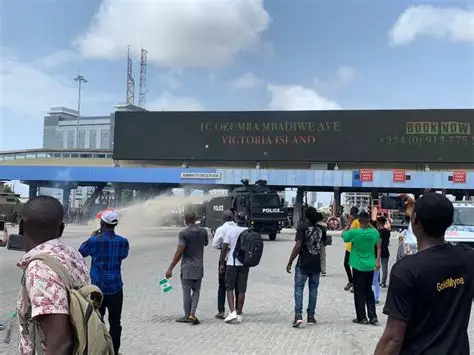
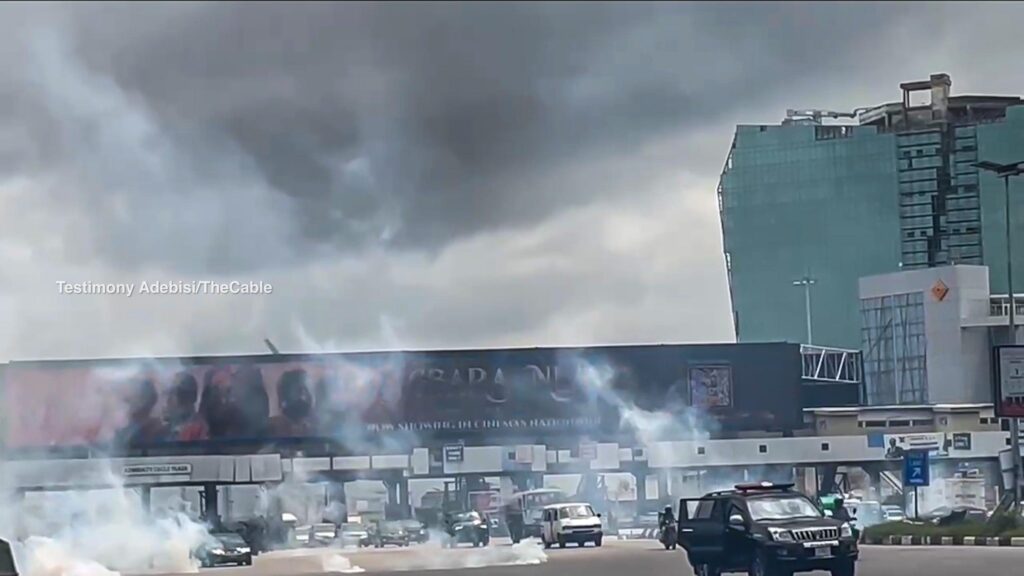
On Tuesday, October 20, 2026, police officers reportedly fired teargas at residents, journalists and activists gathered at the tollgate for a wreath-laying ceremony organised by the Enough is Enough (EiE) movement. Among those caught up in the dispersal were Gbadebo Rhodes-Vivour of the African Democratic Congress and Funso Doherty of the Nigeria Democratic Congress, both governorship candidates in Lagos State. The ceremony was disrupted before the wreaths could be laid.
It was a grim reminder that six years after the protests that shook the country, the relationship between the police and the citizens they are supposed to protect remains deeply strained.
The question is no longer whether the Lekki tollgate memorial has become a flashpoint. It clearly has. The more important question is why a gathering intended to remember victims of police brutality keeps ending in confrontation with the police.
The Lekki #EndSARS memorial has become a troubling pattern
Tuesday’s incident did not happen in isolation.
During the first anniversary commemoration in October 2021, police fired teargas at people gathered around the tollgate. In 2022, officers again used teargas and water cannon to disperse participants. Two years later, on the fourth anniversary, police dispersed demonstrators and arrested some of them. Amnesty International condemned the 2024 crackdown, describing the use of teargas and arrests as unacceptable.
Now, in 2026, the same scene has played out again.
The repetition matters. One can debate the circumstances surrounding an individual police operation, but when similar confrontations recur at the same memorial, year after year, the authorities must do more than offer explanations after the fact. They must examine why their approach keeps producing the very hostility and distrust they ought to be reducing.
In 2024, the Lagos State Commissioner of Police, Olanrewaju Ishola, argued that the demonstrators had not obtained police clearance and said the gathering would not be allowed to proceed. That position reflects a recurring tension between police claims about maintaining order and citizens’ right to assemble.
But a memorial is not automatically a threat to public order simply because it takes place in a public space, attracts political attention or recalls an uncomfortable chapter in the country’s history.
There may be legitimate questions about traffic management, crowd control and public safety at a busy expressway. The Lekki tollgate is not detached from the realities of urban life, and the police have a responsibility to protect road users as well as those attending an event.
Yet that responsibility should lead to proportionate planning, communication and protection, not an automatic resort to force.
The police have not, in the reports available at the time of writing, provided a detailed explanation for Tuesday’s dispersal. They should explain what specific threat justified the use of teargas, what alternatives were considered and whether the force used was necessary.
The Lekki #EndSARS memorial is a test of police reform
The irony of these annual confrontations is difficult to ignore. #EndSARS began as a demand for an end to police brutality, harassment and extortion, particularly abuses associated with the now-disbanded Special Anti-Robbery Squad. The protests grew into a national movement because many young Nigerians believed that the institutions meant to protect them had become sources of fear.
The Lekki tollgate became the defining symbol of that crisis after security operatives opened fire on protesters on October 20, 2020.
A Lagos State Judicial Panel of Inquiry subsequently reported that nine people were confirmed dead in connection with the incident, while four others were listed as missing and presumed dead. The panel found evidence that soldiers fired live ammunition at protesters. The Lagos State Government later rejected the panel’s central findings in its White Paper, leaving competing official positions over the incident.
Those disagreements make transparency and accountability more important, not less.
A memorial cannot resolve every dispute about what happened in 2020. Neither can it substitute for investigations, prosecutions where warranted, compensation or the implementation of credible reform recommendations. But remembrance serves a public purpose: it keeps victims from being reduced to names in old reports and prevents difficult questions from disappearing simply because the news cycle has moved on.
When police disperse people attempting to lay wreaths, the immediate effect is to prevent a ceremony. The wider consequence is that the authorities risk reinforcing the belief that public expressions of grief and demands for accountability are treated as acts of defiance.
That is a damaging message for a police force that needs public cooperation to investigate crimes, prevent violence and keep communities safe.
Section 40 of Nigeria’s Constitution protects the right to assemble freely, while Article 11 of the African Charter on Human and Peoples’ Rights also recognises freedom of assembly, subject to necessary restrictions provided by law. In the Court of Appeal case Inspector-General of Police v All Nigeria Peoples Party, the court rejected the requirement for a police permit to hold peaceful rallies. Public safety is a legitimate concern, but it cannot become a blanket justification for suppressing peaceful gatherings.
The distinction is essential. The right to assemble does not exempt anyone from laws against violence or protect genuine criminal conduct. Equally, the possibility that a gathering could cause inconvenience does not give the police unlimited discretion to shut it down.
The police should protect the right to remember
If the police believe an anniversary gathering presents a security risk, the answer should begin with engagement. Organisers can be contacted, routes and access points agreed, emergency arrangements established and officers deployed to prevent violence or protect participants.
If a specific threat emerges, the response should be targeted, necessary and proportionate. Dispersal should not be the default simply because an event is critical of the state or recalls alleged wrongdoing by security agencies.
The police should also communicate clearly with the public. Following Tuesday’s incident, the Lagos State Police Command owes Nigerians an explanation of what happened, the operational grounds for deploying teargas and whether any injuries were recorded. If officers acted improperly, there should be an independent investigation and appropriate consequences.
The organisers also have a responsibility to plan responsibly, respect other road users and cooperate with reasonable safety arrangements. But cooperation must not be confused with surrendering a constitutional right.
There is something profoundly wrong when a memorial to victims of police brutality repeatedly becomes a confrontation with the police. It suggests that the country has yet to establish a relationship in which citizens can express grief and demand accountability without fearing the very institution being called to account.
Six years after #EndSARS, the question is not whether Nigeria should remember what happened at Lekki. It should. The question is whether the police can finally recognise that peaceful remembrance is not an enemy to public order.
The people who gather at the tollgate are not asking the police to agree with every slogan, interpretation or demand. They are asking to remember the dead, to keep questions of accountability alive and to exercise a right protected by law.
A police force confident in its commitment to reform should be able to protect that right.
Teargas may clear a crowd. It cannot erase a memory. And each year that the same confrontation returns, the authorities give Nigerians another reason to wonder how much has really changed.