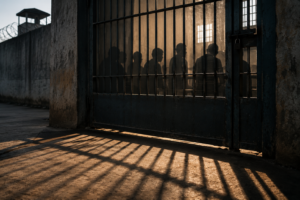


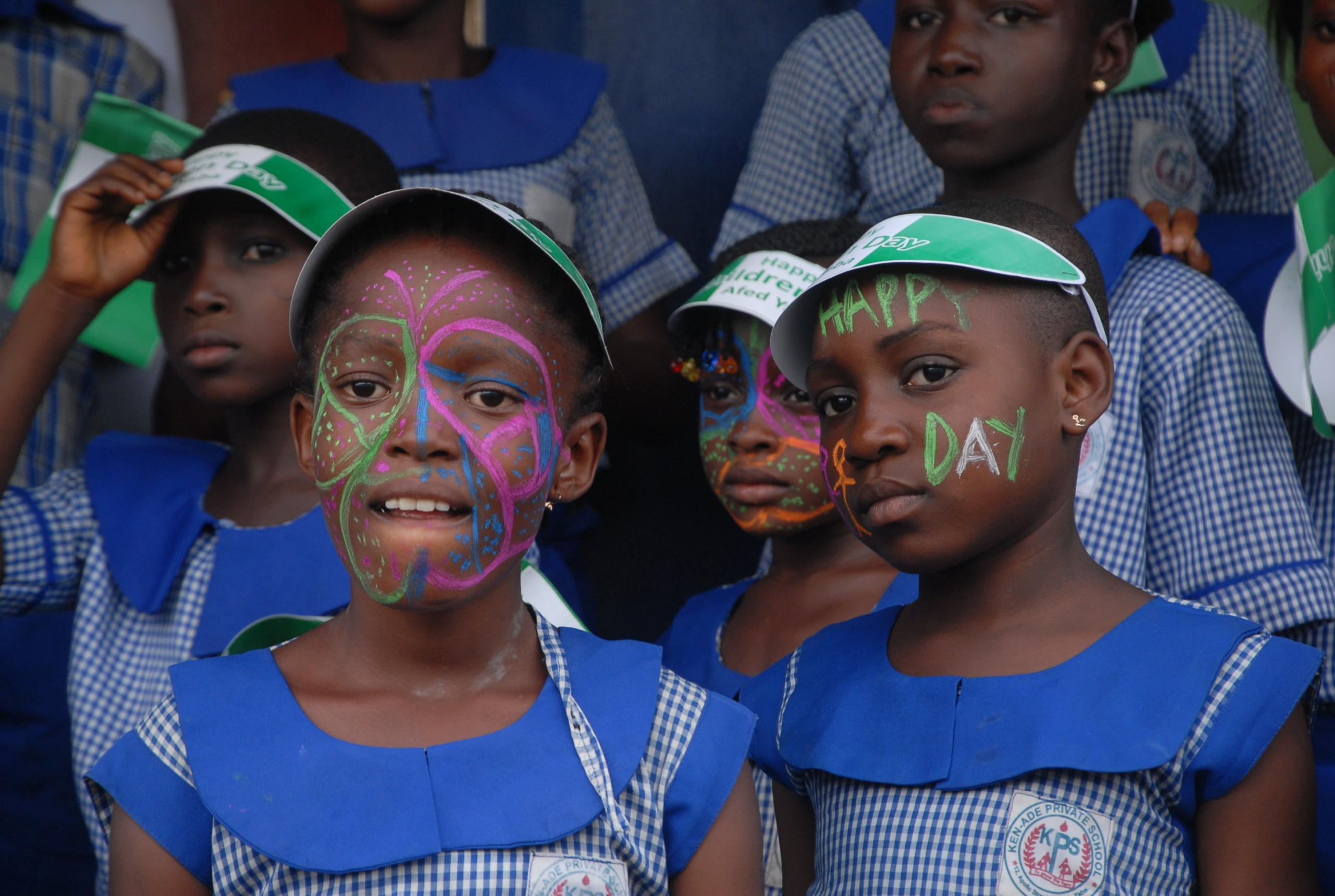
Children’s Day 2026 arrived as a bitter reminder of our national failure to protect those who should matter most.
Yesterday was Children’s Day in Nigeria. On this date every year since 1964, we gather to celebrate our children, to organise parades, to give them treats and a day off school. We speak of their importance, their potential, their futures. We speak of rights and protection. We speak of hope.
This year, such celebrations feel obscene.
Not because children do not deserve celebration. They do. But because on this very day, somewhere in Oyo State, a 2-year-old girl named Christianah Akanbi remains missing. So do 44 other people. They were taken on 15 May 2026, twelve days ago. Among them are teachers and children as young as three years old.
We do not know if they are still alive. We do not know if they are eating. We do not know if the children are crying for their parents. We only know that the country that celebrated Children’s Day yesterday has failed to bring them home.
The Oyo abduction is not an isolated tragedy that we can compartmentalise and move past. It is the latest chapter in a systematic, accelerating assault on childhood in Nigeria. It is evidence of a state that has lost control of its monopoly on violence, and worse, has lost the will to reclaim it.
The scale of the catastrophe
Between January 2024 and May 2026, less than two years and five months, at least 10 major school kidnappings have been documented in Nigeria, affecting more than 670 children. According to Save the Children International, this represents an unprecedented uptick in school-based abductions.
But even this staggering figure understates the true horror.
According to verified data from multiple human rights organisations, between July 2023 and June 2024 alone, 7,568 Nigerians were kidnapped. That is an average of 26 people snatched from their lives every single day. Twenty-six. Every day. Mothers. Fathers. Children. Students.
From 2019 to 2023, the number of kidnapping incidents increased by over 400 per cent. Not 40 per cent. Four hundred per cent. This is not a problem that is fluctuating. It is accelerating.
In the first half of 2024, 4,777 people were reported abducted. The Nigerian kidnapping economy has become so lucrative that between July 2023 and June 2024, kidnappers demanded N11 billion in ransoms. Only N1.04 billion was paid. The shortfall represents a tragedy: it means desperate families, many already impoverished, faced impossible choices between feeding their children or attempting to ransom them from captors.
The death of education
The consequence of this violence is the effective death of education for millions of Nigerian children.
Approximately 19 million Nigerian children—27 per cent of all children in the country—do not attend school. The reasons include poverty and cultural factors. But an increasingly significant reason is fear. Children do not go to school because parents are terrified they will be kidnapped.
Schools have responded by closing. Following the mass abduction of over 300 children from a Catholic school in Niger State, 20,468 schools across seven states were indefinitely closed. Think about that number. Twenty thousand schools. Imagine the quantum of learning lost. Imagine the millions of hours of education that will never happen.
One analysis, widely cited by Amnesty International, notes that since the Chibok abduction in 2014, at least 15 major mass school kidnappings have been documented. Yet no one has been prosecuted. Not one perpetrator of the Chibok kidnapping has faced justice in 12 years. This is not an accident. It is a signal. It is a message to kidnappers that they will not face consequences.
The slow collapse of childhood
What we are witnessing is the systematic erasure of childhood in large parts of Nigeria. A generation of children are growing up in a country where:
- Going to school is considered a dangerous luxury
- Being a teacher is a profession that carries the risk of violent death
- Parents must weigh the risk of losing their children to violence against the benefits of education
- A child can be snatched from her home and held captive for days with no certainty of rescue
- Negotiating with kidnappers for the return of your child is an accepted part of governance
This is not normal. In functional countries, this situation would trigger a state of emergency. There would be military mobilisations. There would be arrests. There would be trials. There would be consequences.
In Nigeria, we celebrate Children’s Day.
The Oyo case: Abandonment in real time
The Oyo school kidnapping of 15 May 2026 offers a case study in governmental abandonment.
Forty-six people were abducted in coordinated attacks on three schools in Oriire Local Government Area. Seven of them were teachers. Thirty-nine were children and students. One child, Christianah Akanbi, is two years old.
On 18 May, days after the abduction, a video emerged showing Michael Oyedokun, a mathematics teacher, being beheaded by the captors. The video was shared on social media. It circulated. Nigerians saw it. And still, as of this writing, no one has been arrested. No one has been prosecuted. The remaining 45 captives remain missing.
The families of the abducted submitted distress videos. The principal of Community High School, Mrs Alamu Folawe, pleaded on camera. She asked for help. She asked for intervention. The video went viral. It touched hearts. But did it change the situation for Mrs Alamu? No. She remains in captivity.
Governor Seyi Makinde has said that the government is “prepared to listen to the demands of the abductors.” This is the language of surrender. This is the language of a government that has accepted it cannot protect its citizens and is now negotiating the price of their lives.
The burden on parents
What no editorial can fully capture is the terror that parents across Nigeria now live with. The mother who sends her daughter to school knowing that kidnapping is not a theoretical risk but an actual, documented, ongoing threat. The father who hears his son’s teacher has been killed by kidnappers and wonders if his child will come home that day. The father of Christianah Akanbi, who do not know if his 2-year-old is alive.
This is not governance. This is the collapse of governance.
Why we must make this Children’s Day different
As we celebrated Children’s Day, we must acknowledge a bitter truth: we are failing our children. Not in abstract ways. Not in policy debates. But in concrete, measurable ways. Children are being stolen from schools. Teachers are being killed. Families are being destroyed. And the response from government has been inadequate.
Children’s Day should not be a day of hollow parades and treats. It should be a day of accountability. It should be a day when every Nigerian asks: Why are my children not safe? Why is the government not protecting them? Why are kidnappers not being prosecuted? Why do 19 million children not attend school?
It should be a day when government officials are uncomfortable. When they must defend their record. When they must explain to the mother of a 2-year-old why her daughter remains in captivity twelve days after being abducted.
The path forward
There are steps that could be taken immediately:
- Declare a state of emergency on school kidnappings and deploy comprehensive security infrastructure to protect schools in vulnerable areas
- Establish a dedicated task force with prosecutorial powers to investigate all school kidnappings and bring perpetrators to justice
- Implement a witness protection programme for informants and survivors
- Close the justice gap by prosecuting a single high-profile kidnapping case, beginning with Chibok, to demonstrate that perpetrators will face consequences
- Invest in education security including armed security presence at schools, communication systems, and emergency response protocols
- Support traumatised children and families with mental health services
None of these are impossible. They require will. They require resources. They require a government that has decided that protecting children is a priority.
A day of reckoning
This Children’s Day should be a day when Nigeria stops pretending. Stops celebrating. Stops speaking in platitudes about the importance of children. Stops organising parades whilst children remain missing.
It should be a day when we demand accountability. When we ask difficult questions. When we insist that government deliver on the most basic function of a state: the protection of its citizens, especially the most vulnerable.
Christianah Akanbi and others were taken on 15 May 2026. Today is 27 May 2026. That is 12 days their parents do not know if they would ever be rescued.
That is why this year’s Children’s Day is a sad one.
That is why it must also be a day of change.