


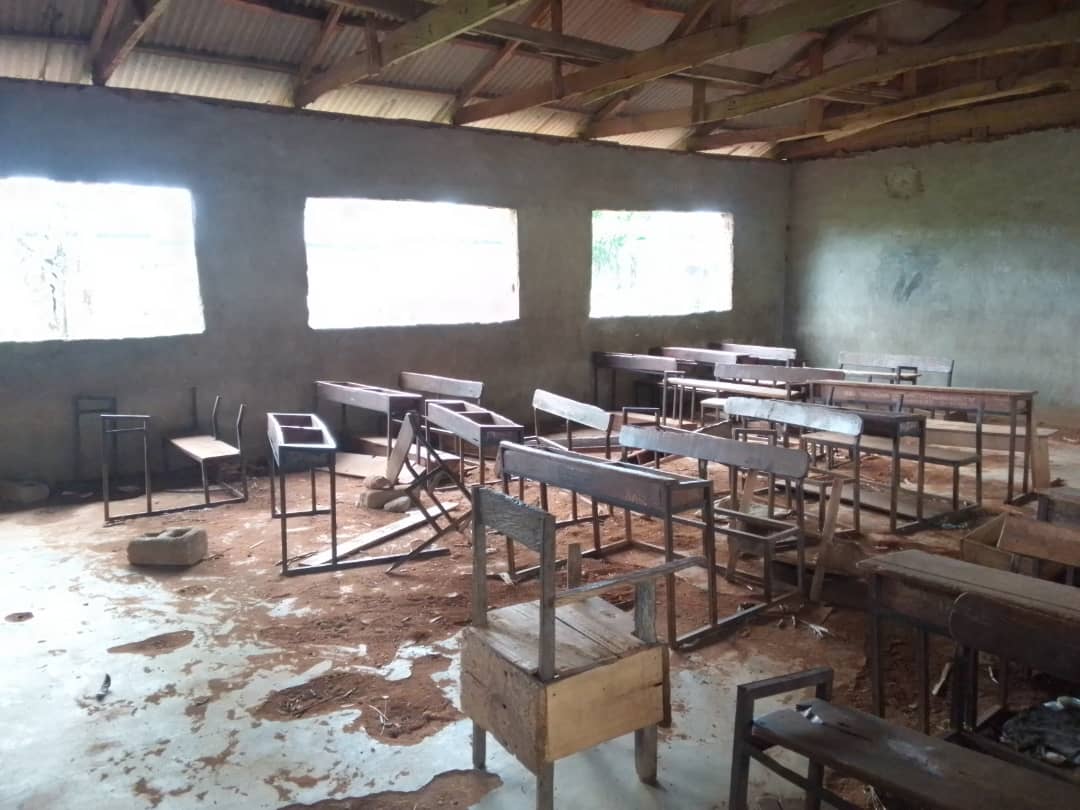
Every empty classroom seat in Nigeria tells a story.
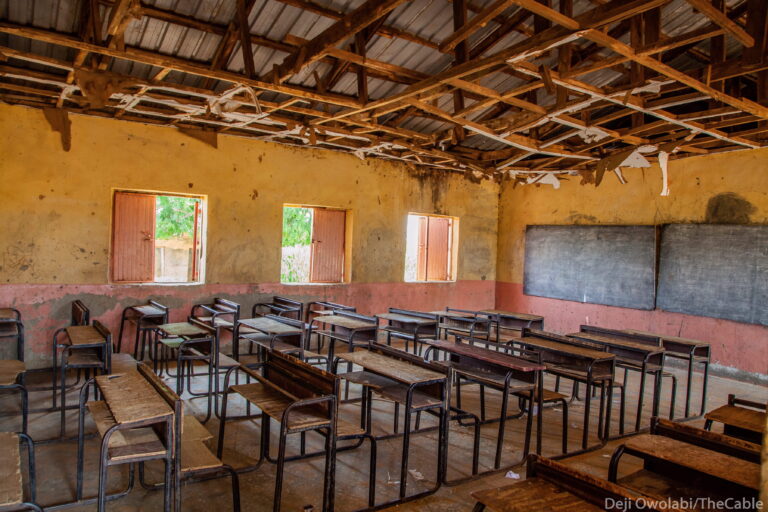
Some belong to children pushed out of the classroom by poverty and insecurity. Others belong to children whose parents no longer believe that school is a safe place to send them.
Together, they tell the story of one of the greatest challenges facing Nigeria today.
According to UNICEF, Nigeria has an estimated 18.3 million out-of-school children, the highest number in the world. This is not merely an education problem. It is a development crisis, a security challenge and a threat to the nation’s future.
The figure is so staggering that it risks becoming just another statistic. It should not. Eighteen million children represent a generation whose potential is being diminished before it has the chance to flourish. No nation can aspire to greatness while millions of its young people remain outside the classroom. No economy can achieve sustainable growth while so many future workers, innovators and leaders are denied the opportunity to learn.
Behind the statistics are real children whose lives are being shaped by forces beyond their control. They are children who should be learning to read and write but are instead hawking goods on busy roads. They are children who spend their days in markets and workshops rather than classrooms. They are children whose dreams are being deferred long before they have the opportunity to pursue them.
The recent abduction of pupils and teachers in Oyo State is a painful reminder that Nigeria’s education crisis extends far beyond access to classrooms. For many families, the challenge is not simply whether a school exists, but whether it is safe. The kidnapping of children and teachers in Oriire Local Government Area has once again exposed the vulnerability of schools and the fear that now shadows education in many communities.
For parents, such incidents reinforce an agonising question: Is sending a child to school worth the risk? When schools become targets and children become victims, confidence in the education system erodes. Attendance declines, parents withdraw their children, and the cycle of educational exclusion deepens.
Every attack on a school sends a message beyond the immediate victims. It tells parents that education may come at an unacceptable cost. It encourages absenteeism, school closures and, ultimately, more children joining the ranks of the out-of-school population.
More than a decade after the abduction of the Chibok schoolgirls shocked the world, attacks on schools continue to cast a shadow over education in many parts of the country. From Chibok and Dapchi to Kankara, Jangebe and Kuriga, schoolchildren have repeatedly found themselves at the centre of a growing security crisis. The recent incident in Oyo demonstrates that this threat is no longer confined to a particular region. It is a national concern that demands a national response.
Poverty has compounded the problem. As the cost of living continues to rise, many families face difficult choices about how to allocate limited resources. For households struggling to put food on the table, school fees, uniforms, transportation and learning materials can become unaffordable.
As a result, many children are pushed into economic activities at an early age. Some work to support their families. Others simply never enroll in school at all. What begins as a temporary coping mechanism often becomes a lifelong disadvantage.
The consequences are profound.
Education remains one of the most effective pathways out of poverty. Children who miss out on schooling are more likely to face unemployment, low incomes and limited opportunities as adults. They are also more vulnerable to exploitation, child labour, criminal networks and extremist recruitment.
This is why the out-of-school children crisis should concern every Nigerian, whether they have school-age children or not. A country cannot achieve sustainable development when millions of its young people are denied the knowledge and skills needed to contribute meaningfully to society.
The economic implications are equally troubling. Nations grow when they invest in human capital. They prosper when children acquire the skills needed to drive innovation, productivity and economic growth. By leaving millions of children outside the education system, Nigeria is effectively limiting its own future potential.
Yet despite the scale of the challenge, the response has often lacked urgency.
For years, governments at all levels have acknowledged the crisis, launched initiatives and made promises. Yet millions of children remain outside the classroom. Policies without implementation have become a recurring feature of Nigeria’s education sector. The gap between official declarations and measurable progress remains unacceptably wide. A nation that can identify a problem for decades but fail to resolve it cannot claim surprise when that problem grows into a crisis.
Too many schools remain unsafe. Too many classrooms are overcrowded. Too many communities lack access to quality education.
The Way Forward
The scale of the crisis demands more than concern; it demands action.
First, schools must be made safe. The recent Oyo abduction is a glaring reminder that parents will not send their children to classrooms they believe are vulnerable to attack. Strengthening school security, improving intelligence gathering and ensuring swift responses to threats must become national priorities. The Safe Schools Initiative must move beyond policy documents and become a reality in communities across the country.
Second, governments at all levels must increase investment in education. Millions of children remain out of school not only because of insecurity but also because of inadequate infrastructure, overcrowded classrooms and a shortage of qualified teachers. Education funding should reflect the importance of the sector to national development.
Third, vulnerable families need greater support. School feeding programmes, scholarships and targeted social interventions can help reduce the financial pressures that force children out of school and into child labour. No child should be denied an education simply because their parents are poor.
Finally, communities, traditional rulers, religious leaders and civil society organisations must become active partners in the fight against educational exclusion. Bringing children back into the classroom is not solely the responsibility of government; it is a national responsibility.
Nigeria cannot afford another generation of children growing up without the knowledge and skills needed to participate meaningfully in society.
Most importantly, policymakers must recognise that every year of delay carries a cost. Every child who leaves school today represents talent that may never be fully realised. Every empty classroom seat is a reminder of an opportunity lost.
Nigeria’s future will not be determined by the resources beneath its soil but by the children sitting in its classrooms.
That is why the out-of-school children crisis demands more than concern. It demands action.
Until every Nigerian child has access to safe, quality education, the nation’s promise will remain unfulfilled. The cost of empty classrooms is simply too high for Nigeria to ignore.