


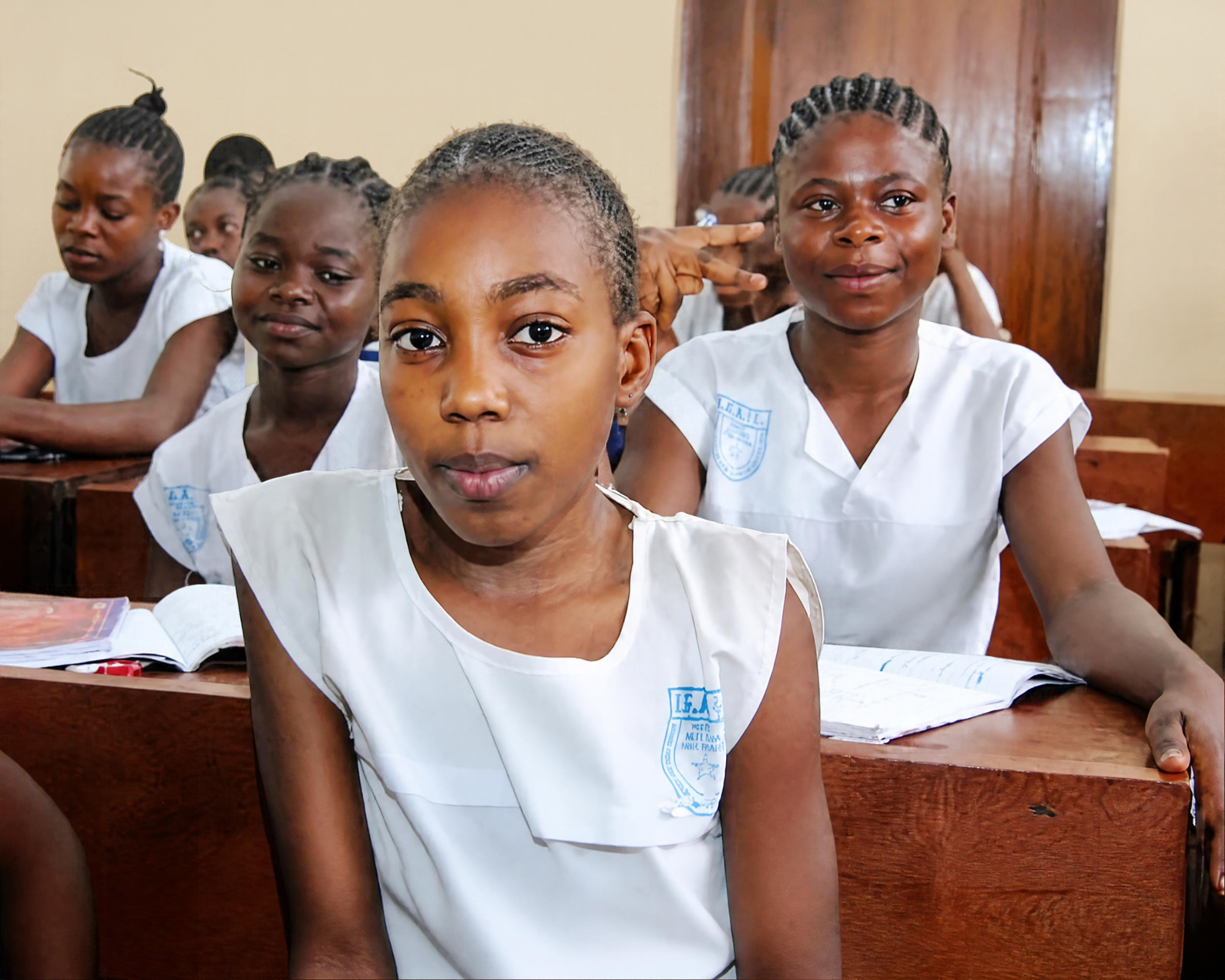
UNICEF data show that girls who finish secondary school marry about five years later than girls with no schooling. Nigeria still has 7.6 million girls out of school
Every 11 October, Nigeria does what it does best: statements, walks and hashtags. This year’s theme for the International Day of the Girl Child is “End child marriage and invest in girls’ rights.” Fine words. Now let us talk about the investment.
The cheapest one is also the least glamorous: a seat in a classroom, and a reason to stay in it.
What the numbers say about girls and school
UNICEF’s figures are blunt. The median age at first marriage in Nigeria is 16.6 years for girls with no education. For those who complete secondary school, it is 21.7 years. That is a gap of five years, and every one of them belongs to the girl.
The link runs both ways. Dataphyte reports that studies put child marriage behind between 15 and 20 per cent of secondary school dropouts. Girls who leave school marry earlier, and marriage almost always ends a girl’s schooling. It is a trap that closes from both sides.
UNICEF estimates that if every girl in northern Nigeria completed secondary school, child marriage could fall by up to two-thirds. Not by a speech. By a certificate.
The price of keeping girl child in class
Here is the part that should embarrass a few budget offices. A 2025 analysis presented by UNICEF and partners found that spending $114 million on out-of-school girls aged 10 to 18 in just two northern states could return $2.5 billion, about ₦3.6 trillion, in benefits to society. That is a 21-to-1 return.
Any investor offered those odds would clear their diary. Governments, meanwhile, will commission a flyover without blinking and then discuss girls’ education in committee.
It is a projection, not a guarantee, and the money has to be spent well. But even if the real return were half of that, who turns it down?
Where Nigeria keeps failing girls
The scale is not in doubt. UNICEF estimates that 7.6 million girls are out of school, about half of them in the north. The 2024 Nigeria Demographic and Health Survey puts child marriage at 33.4 per cent nationally. UNICEF’s analysis of the survey shows it approaching 50 per cent in the North West and North East. In Zamfara, the median age at first marriage is 15 years and seven months.
The law is not the missing piece. The Child Rights Act of 2003 sets 18 as the minimum age for marriage. But “not yet” means little to a family that has no school to offer, no money to spare and a fear of what could happen to a daughter on the road. A Yale Global report notes that insecurity pushes the same way, with families in conflict areas marrying girls off to protect them from violence.
A girl in a classroom is not a guarantee of safety. But a girl in a classroom is a girl whose wedding has to wait.
What Nigeria should do for girls now
First, fix the point where girls fall out. UNICEF’s evidence brief says large numbers drop out at the end of primary school. That transition needs targeted money, not a mention in a communiqué.
Second, make school re-entry real for girls who have married or left, with a named official in each state responsible for it.
Third, publish enrolment and dropout figures by state every year, so parents and journalists can see which governors are keeping their promises.
Fourth, treat school safety as part of girls’ rights. No family should have to choose between a classroom and a daughter’s safety.
None of this is a mystery. Dataphyte reports that a 2026 study of a girls’ education programme in northern Nigeria, run with local religious leaders, cut the likelihood of child marriage by about 80 per cent. The solutions exist. What is missing is the will to pay for them.
Nigeria can keep marking the day with speeches. Or it can pay for the desks. Keep a girl in school and the wedding waits. It really is that cheap.