

The deaths of 37 suspected illegal miners in NSCDC custody should test whether Nigeria’s promise of accountability means more than suspensions, committees and condolences.
There is something deeply unsettling about the phrase “died in custody”. It means that whatever happened to a person happened after the state had taken responsibility for that person’s safety.
In Minna, 37 suspected illegal miners went into the custody of the Nigeria Security and Civil Defence Corps after raids in Niger State. They did not come out alive.
That alone should make this more than another troubling headline that dominates the news cycle for a few days before being replaced by the next crisis.
The detainees were arrested during anti-illegal mining operations in the M.I. Wushishi and Lukoto areas of Niger State on September 15 and 16. The following day, 37 of those detained were found dead. Governor Mohammed Umaru Bago confirmed the deaths, while the NSCDC initially attributed them to a suspected disease outbreak. The actual cause, however, remains a matter for investigation.
That uncertainty is important. So are the accounts coming from survivors.
Custody comes with responsibility
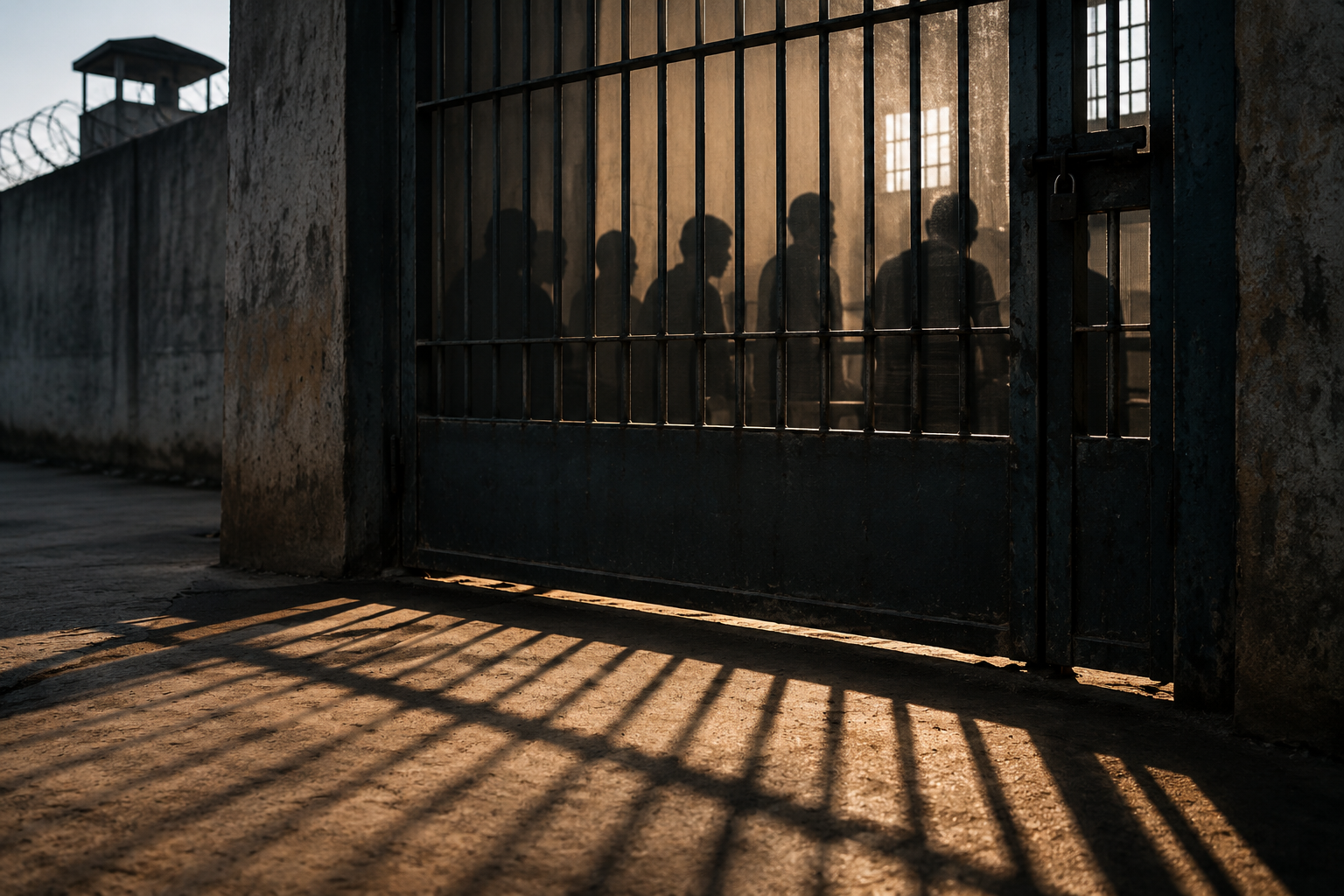
Survivors have described a severely overcrowded cell in which detainees struggled to breathe and called for help. One survivor told journalists that those inside banged on the cell door and raised the alarm as people began collapsing. Other accounts have alleged poor detention conditions and mistreatment. These accounts have not, by themselves, established the cause of death, but they are serious enough to demand a thorough and independent examination of what happened inside that facility.
And that is where the government’s response matters.
President Bola Tinubu has ordered a full investigation, while Interior Minister Olubunmi Tunji-Ojo has suspended the Niger State commandant and 20 other NSCDC officers. A 10-member independent committee has also been constituted to investigate the arrests, detention conditions, cause and circumstances of the deaths and determine responsibility, negligence or misconduct. The committee has two weeks to submit its report. The NSCDC has subsequently arrested three more personnel, bringing the number of officers held in connection with the incident to 24.
Those are serious steps. They are also only the beginning.
Nigeria cannot investigate its way out of accountability
The government has a difficult balancing act here. Illegal mining is not an imaginary problem, and the state has every right to enforce its laws. Niger State has significant mineral resources and illegal mining has been associated with environmental damage and, in some areas, criminal activity. A government that refuses to confront illegal mining would be failing in its responsibility to protect communities and regulate the exploitation of the country’s resources.
But enforcing the law does not suspend the law.
A person suspected of illegal mining is still a person. Being arrested does not amount to being convicted, and detention does not give the state a licence to treat someone as though their life has become less valuable. Once a person is placed behind a government-controlled door, the government assumes a heightened responsibility for that person’s welfare.
That principle should not depend on whether the detainee is wealthy or poor, influential or unknown, innocent or eventually found guilty.
This is why the investigation must go beyond the immediate question of who was physically present at the detention facility when the deaths occurred. If overcrowding is established, who authorised or permitted it? If medical attention was required and not provided, who knew and who failed to act? If officers received warnings from detainees and ignored them, what happened to those warnings? If there were failures in supervision, how far up the chain of command did those failures extend?
Those are the questions that determine whether an investigation is genuinely about accountability or simply about finding a few people to suspend.
Nigeria has no shortage of investigations. We have seen enough panels, committees and task forces announced after tragedies to know that the announcement of an investigation can itself become a convenient form of closure. It creates the impression that government is doing something while the public waits for a report that may eventually arrive quietly, if it arrives at all.
That shouldn’t happen here.
The Interior Ministry’s committee has been given a mandate broad enough to establish what happened and recommend appropriate action, including compensation where applicable. The minister has also warned against the destruction or concealment of evidence, intimidation of witnesses and obstruction of the investigation. Those safeguards are welcome. The committee should now be allowed to follow the evidence wherever it leads.
And there should be no presumption of guilt either.
The officers suspended or detained in connection with the incident are not automatically responsible for the deaths simply because their names have been linked to the investigation. Nor should the government decide in advance that the initial explanation of a disease outbreak is correct. The proper response is neither a cover-up nor a rush to judgment. It is a credible investigation that establishes the facts and makes those facts public.
That is particularly important because public confidence has already taken a hit. Protests erupted in Minna after the deaths, and authorities imposed a curfew following clashes. Human rights groups, lawyers and civil society organisations have called for an independent investigation and justice for the deceased.
The anger is understandable.
Families do not need another expression of sympathy from government. They need to know what happened to their relatives. They need to know how their loved ones were treated after they were arrested, whether they asked for help, whether that help came and, if it did not, why.
The public deserves those answers too.
There is also a wider lesson here for Nigeria’s security institutions. The state cannot demand respect for its authority while failing to demonstrate respect for the lives placed under that authority. Security operations are necessary, but the manner in which they are conducted is part of the legitimacy of the state itself.
If the investigation establishes that negligence, abuse or criminal conduct contributed to these deaths, those responsible should face the appropriate consequences. If it establishes that the deaths resulted from something else, the government should publish that finding and explain the evidence supporting it. Either way, the report should not disappear into the familiar administrative graveyard where difficult government investigations sometimes go to die.
The real test begins after the investigation
The 37 people who died were suspects, not convicted criminals. And even if they had been convicted criminals, the state would still have been responsible for keeping them alive and treating them humanely.
That is the uncomfortable point at the centre of this tragedy.
Nigeria does not need to choose between fighting illegal mining and protecting human rights. It can, and must, do both. A serious government should be capable of arresting people suspected of breaking the law without allowing them to die in circumstances that raise questions about the conditions of their detention.
The real test, therefore, is no longer whether government will investigate. It has already promised to do that.
The test is what happens after the investigation.
Will evidence lead to consequences? Will families receive appropriate redress? Will detention procedures change? Will officials learn that placing someone in state custody also means accepting responsibility for that person’s life?
Or will this become another Nigerian tragedy followed by another committee, another report and another round of condolences?
Thirty-seven people are dead. The least the Nigerian state owes them now is the truth, and the least it owes the living is proof that their deaths will not simply become another statistic in the long history of people who entered government custody and never came home.