


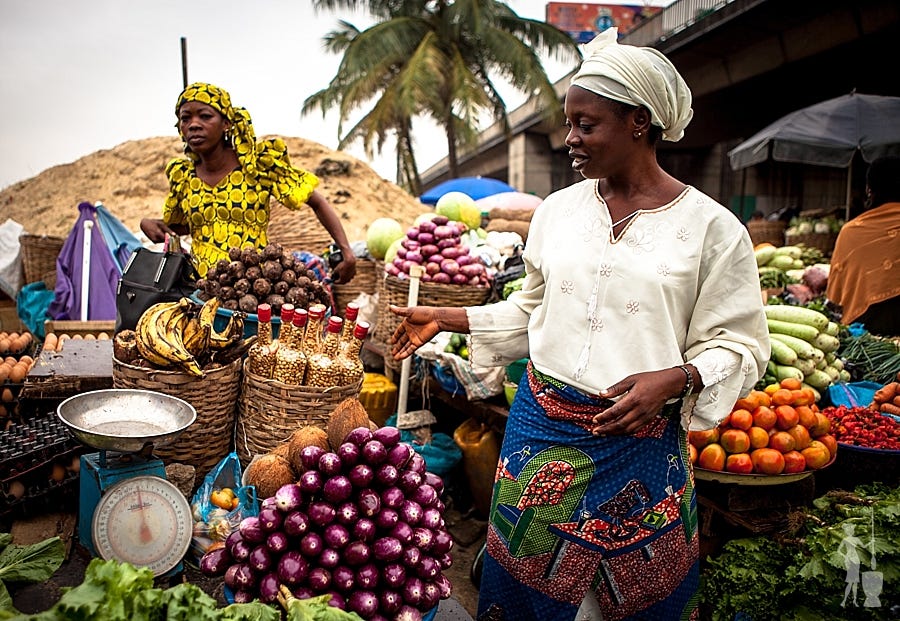
Headline inflation edged down from 15.43% in July as monthly food inflation recorded a sharp slowdown, according to the National Bureau of Statistics.
Nigeria’s headline inflation rate eased marginally to 15.39 per cent in August 2026 from 15.43 per cent in July, extending the recent moderation in annual price pressures, according to the National Bureau of Statistics.
The NBS disclosed this in its Consumer Price Index report for August released on Monday.
The latest figure represents a 0.04 percentage-point decline from July. On a month-on-month basis, however, the slowdown was more pronounced, with headline inflation falling to 0.71 per cent in August from 1.57 per cent in July.
The NBS said this meant the average price level continued to increase in August, but at a slower rate than in the previous month.
Food inflation slows sharply
The more significant movement came from food inflation, which fell to 19.57 per cent year-on-year in August from 20.31 per cent in July.
The August figure was also considerably lower than the 25.30 per cent recorded in August 2025.
On a month-on-month basis, food inflation dropped sharply to 1.02 per cent in August from 5.56 per cent in July, representing a 4.54 percentage-point decline.
The NBS attributed the moderation to changes in the average prices of several food items, including palm oil, carrots, pepper, onions, cassava flour, beef, yam flour, water yam, melon, fresh ginger, fresh fish, Irish potatoes, wheat grain, frozen chicken and turkey meat.
The development marks a notable reversal from July, when monthly food inflation accelerated sharply to 5.56 per cent despite the decline in the annual headline inflation rate.
Food pressure remains uneven across states
Despite the national slowdown, food price pressures remained significantly different across states.
According to the NBS data, Adamawa recorded the highest year-on-year food inflation rate in August at 38.85 per cent, followed by Zamfara at 37.96 per cent and Bayelsa at 36.20 per cent.
At the other end of the scale, Borno recorded a negative year-on-year food inflation rate of -4.04 per cent, while Jigawa recorded -0.23 per cent and Kebbi 3.47 per cent.
The month-on-month figures also showed substantial differences.
Katsina recorded the highest monthly food inflation at 9.48 per cent, followed by Rivers at 8.86 per cent and Osun at 8.32 per cent.
Meanwhile, Taraba recorded the largest monthly decline at -12.42 per cent, followed by Borno at -12.15 per cent and Bauchi at -8.88 per cent.
The wide differences underline how national inflation figures can mask sharply different price experiences across the country.
Inflation continues gradual downward trend
August’s 15.39 per cent headline inflation marks another step down from the 15.43 per cent recorded in July and 15.91 per cent in June.
The July figure itself represented a significant decline from the 24.94 per cent recorded in July 2025.
However, the latest data do not mean that prices are falling across the board. Rather, the inflation rate measures the pace at which prices are increasing. A lower inflation rate means prices are rising more slowly, not necessarily that goods and services have become cheaper.
The sharp moderation in monthly food inflation will therefore be closely watched, particularly because food remains a major component of household spending.
For consumers, the latest figures offer some relief in the pace of price increases, but the substantial differences between states suggest that the national average does not tell the full story of what Nigerians are paying for food.
The August data also suggest that while Nigeria’s broader inflation trend remains downward, sustained relief for households will depend heavily on whether the moderation in food prices continues in the months ahead.