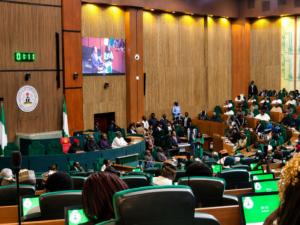


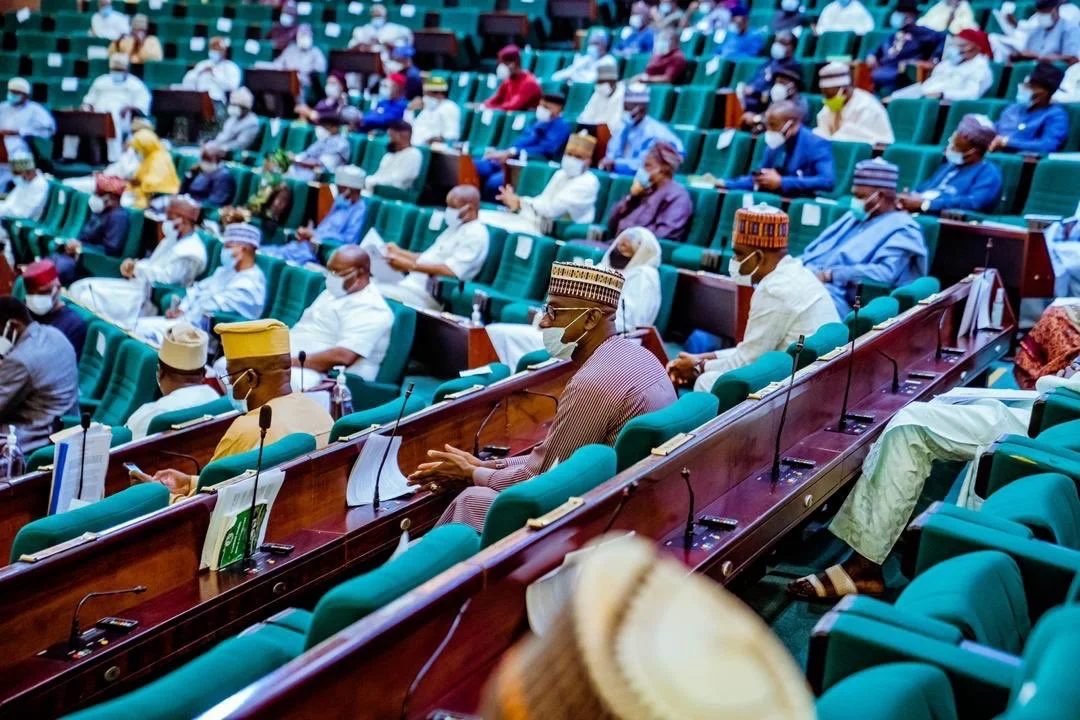
The National Assembly has directed the transmission of the proposed state police constitutional amendment to President Bola Tinubu after 30 State Houses of Assembly approved the bill, clearing the constitutionally prescribed threshold for state-level endorsement.
The development was announced during Wednesday’s plenary after Deputy Senate President Jibrin Barau read a notice from the Clerk to the National Assembly, Kamoru Ogunlana.
According to the notice, the Clerk’s office had received approval reports from 29 state assemblies as of the close of business on Tuesday, November 3. The leadership of the National Assembly subsequently directed that the bill be transmitted to the President on Wednesday, November 4.
However, Senate Leader Opeyemi Bamidele later read out the names of 30 state assemblies that had approved the proposed amendment.
The states are Adamawa, Akwa Ibom, Anambra, Bauchi, Bayelsa, Borno, Delta, Ebonyi, Edo, Ekiti, Enugu, Gombe, Imo, Jigawa, Kaduna, Katsina, Kebbi, Kogi, Kwara, Lagos, Nasarawa, Ogun, Ondo, Osun, Plateau, Rivers, Sokoto, Taraba, Yobe and Zamfara.
The 30 approvals are six more than the minimum of 24 required under Section 9 of the 1999 Constitution, which prescribes approval by at least two-thirds of the 36 state Houses of Assembly for constitutional alterations.
What the 30 approvals mean for state police
Bamidele said the constitutional amendment process involved passage by the National Assembly, approval by at least two-thirds of state legislatures and the subsequent step of transmitting the amendment to the President for assent.
“Passage of the bill was meant to be done by the National Assembly, which was done, and approval is meant to be done by at least two-thirds of the 36 state Houses of Assembly in the country, and assent is to be given by the President to complete this process,” he said.
He described the development as a positive step for Nigeria’s democracy, arguing that the constitutional threshold ensures that amendments receive support across different levels of government.
The National Assembly had earlier passed the proposed amendment before transmitting it to the 36 state assemblies on September 16 for consideration and approval.
The Senate passed the proposal on June 24, while the House of Representatives approved it on July 23, completing the initial legislative stage.
The amendment, contained in the Constitution of the Federal Republic of Nigeria, 1999 (Sixth Alteration) Bill, 2026, seeks to provide for the establishment of State Police Services and related matters.
Six state assemblies given until November 15
Earlier on Wednesday, Senate President Godswill Akpabio said the six state assemblies yet to communicate their decisions had until November 15 to respond to the proposed amendment.
He said any state assembly that failed to communicate its position by the deadline would be deemed to have withheld its approval.
The Senate unanimously adopted the position.
The additional time comes after the National Assembly’s initial request that state legislatures communicate their decisions within 30 days of receiving the bill. That administrative period expired on October 15, although the Clerk’s office said it would continue receiving reports until the bill was transmitted for the next stage.
What happens next?
The National Assembly says the bill is being transmitted to Tinubu for assent, following the state assemblies’ approval of the required threshold.
However, the announcement does not mean state police services have already been established. The proposed constitutional amendment must complete the remaining formal processes before the new policing framework can be implemented.
Nigeria currently operates a centralised policing system through the Nigeria Police Force. The proposed reform is intended to allow states to establish their own police services, decentralising policing responsibilities.
The proposal has been presented as a response to the country’s security challenges, including kidnapping, banditry and other crimes that require local intelligence and more responsive security operations.
Its implementation will also raise questions about funding, oversight, accountability, recruitment, training and safeguards against the possible misuse of state-controlled police forces.