

Lawmakers reject deradicalisation policy following targeted killings of military officers; security concerns overshadow non-kinetic strategy
The Nigerian Senate has called on the Federal Government to discontinue its rehabilitation and reintegration programme for repentant Boko Haram members, citing escalating attacks and killings of serving and retired military officers.
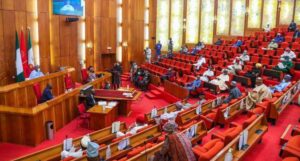
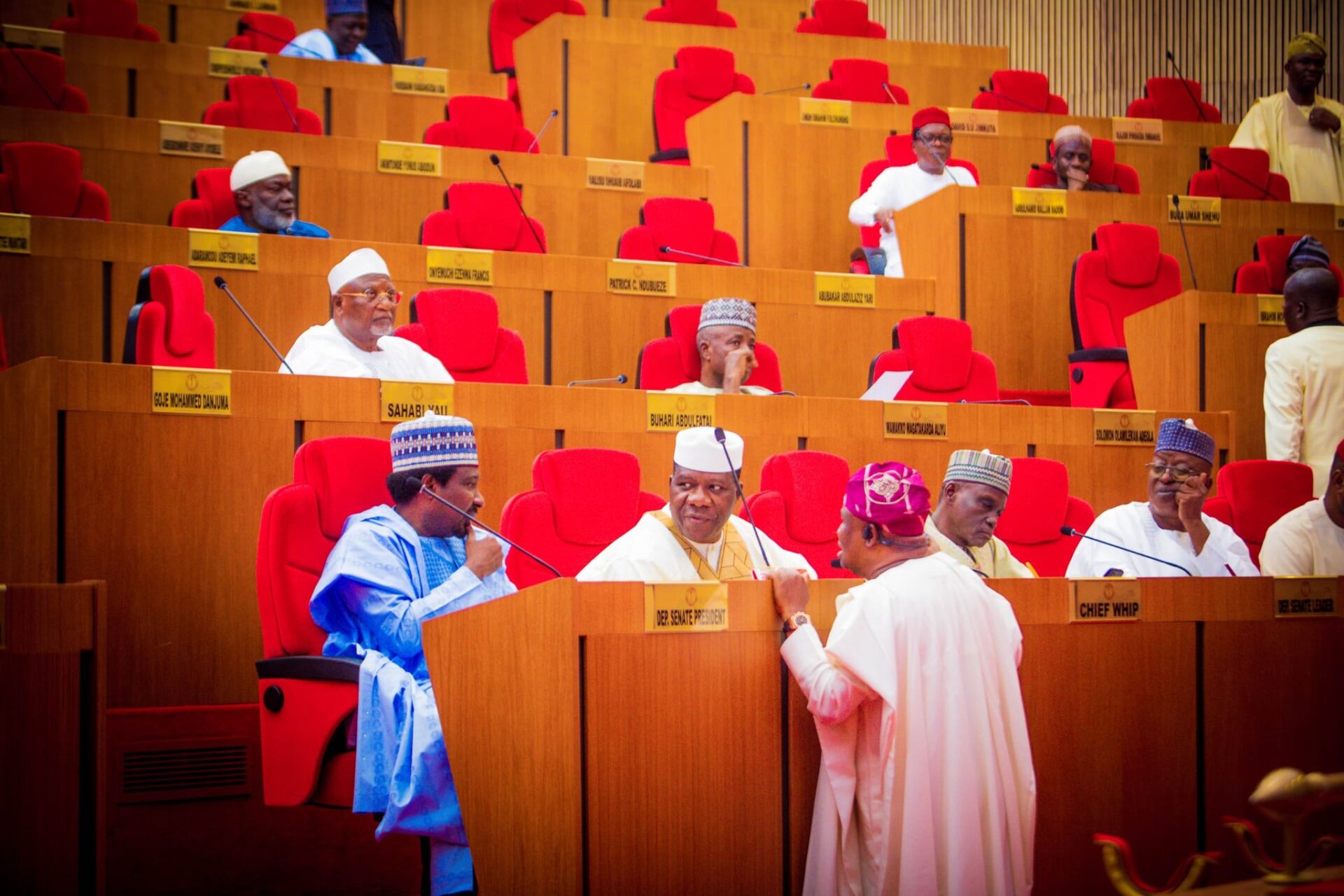
The resolution, adopted unanimously on Tuesday during plenary, represents a significant policy reversal following the abduction and death of retired Major General Rabe Abubakar, former Director of Defence Information.
The decision emerged from an additional prayer proposed by Senator Joseph Ikpea representing Edo Central, adopted through a voice vote during consideration of a motion on escalating attacks, abductions and killings of serving and retired military personnel. Supporting the prayer, Senator Adams Oshiomhole representing Edo North stated: “It does not make even common sense to grant pardon and rehabilitate criminals.“
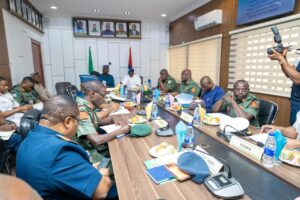
The primary motion, sponsored by Senator Abdulaziz Yar’Adua, Chairman of the Senate Committee on the Nigerian Army, highlighted the alarming pattern of targeted attacks on military personnel. Abubakar was abducted on 30 May 2026 alongside his wife whilst travelling in Katsina State and subsequently died in captivity.
Pattern of targeted military killings documented
Senator Yar’Adua presented a comprehensive list of military officers targeted since 2023, emphasising the dangerous shift in security threats.
The chronology included the abduction of retired Colonel Rabiu Garba Yandoto in Zamfara in January 2023, the kidnap and killing of retired Major General Richard Duru in Imo in September 2023 despite payment of a $50,000 ransom, the murder of retired Brigadier General Uwem Udokwere in Abuja in June 2024, the abduction of former NYSC Director-General Maharazu Tsiga in Katsina in February 2025, the death of retired Major Joe Ajayi in Kogi in May 2025, and the abduction and subsequent rescue of retired Colonel Joseph Ajanaku in Plateau in January 2026.
“The death of the retired Major General and others in the custody of terrorists represents not only personal tragedies but also a painful national loss and a stark reminder of the scale and persistence of insecurity confronting the nation,” he said.
Yar’Adua warned that the targeting of military personnel undermines troop morale, weakens public confidence in the state’s ability to provide security and emboldens criminal groups. He described the situation as a “national emergency,” noting that insecurity had assumed “increasingly complex, persistent and alarming dimensions.”
Contentious policy under review
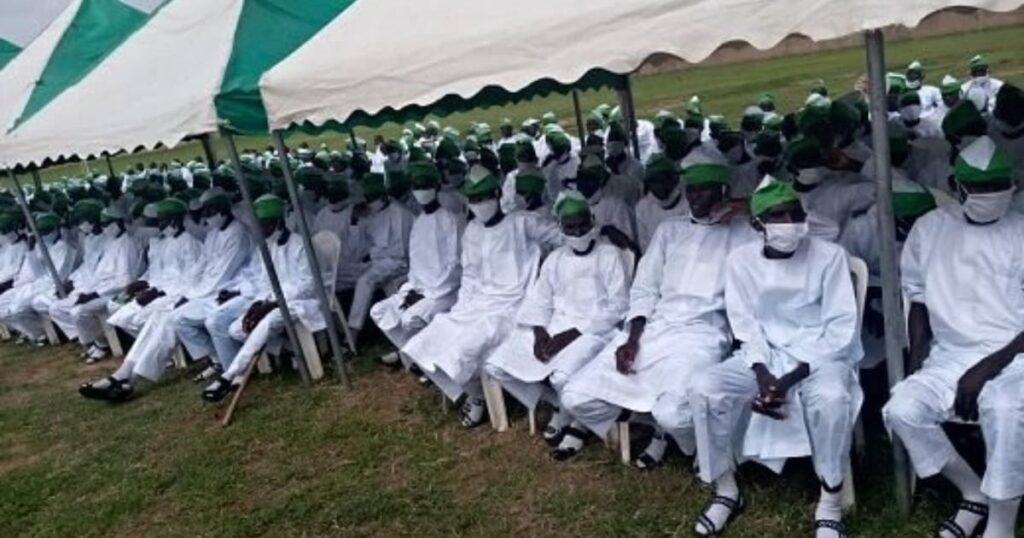
The rehabilitation and reintegration programme, formalised through Operation Safe Corridor in 2016, has been credited with encouraging thousands of insurgents to surrender. As of 2017, approximately 10,000 former Boko Haram fighters had reportedly been reintegrated into society. However, concerns about recidivism, some rehabilitated individuals reportedly returning to terror groups, have intensified criticism of the policy.
The programme was expanded in 2021 when thousands of fighters and their families surrendered following clashes between Boko Haram and Islamic State West Africa Province. Operation Safe Corridor, coordinated by the Defence Headquarters, involves multiple government agencies including the Ministries of Justice, Education, Health and Humanitarian Affairs.
Multiple security resolutions adopted beyond rehabilitation issue
Beyond calling for an end to rehabilitation, the Senate mandated several other actions. Lawmakers urged security and intelligence agencies to strengthen intelligence gathering, surveillance operations, threat assessment mechanisms and early warning systems. They called for deeper collaboration with local communities, traditional institutions and religious leaders to improve community-based intelligence.
The chamber further mandated accelerated deployment of modern security technologies including unmanned aerial systems, geospatial intelligence capabilities and integrated command-and-control platforms to combat terrorism, banditry and kidnapping.
The Senate directed its committees responsible for security matters to strengthen oversight of security agencies, instructed Senate leadership to meet with President Bola Tinubu to discuss worsening insecurity, and mandated a senatorial delegation to visit the family of the late Abubakar and the Katsina State Government to convey condolences.