


Nigeria’s instant payment system has attained AfricaNenda’s highest inclusivity rating after improvements to dispute resolution and other user-protection mechanisms.
Nigeria’s NIBSS Instant Payment (NIP) system has become the first instant payment system in Africa to attain the “Mature” level on the AfricaNenda Inclusivity Spectrum.
The recognition was announced at the launch of the State of Inclusive Instant Payment Systems (SIIPS) 2025 report in Ezulwini, Eswatini, where NIP emerged as the only African payment system to reach the highest level of the inclusivity framework.
The report, produced by the AfricaNenda Foundation in partnership with the World Bank, the United Nations Economic Commission for Africa and the Central Bank of Eswatini, assesses the development and inclusiveness of instant payment systems across the continent.
AfricaNenda evaluates payment systems based on their functionality, governance and ability to provide inclusive services to users.
According to the 2025 report, 10 payment systems were not ranked, 15 were at the basic level, 10 had progressed, while only Nigeria’s NIP reached the mature level.
“Nigeria’s NIP is the first IPS in Africa to reach the mature level of inclusivity,” the report stated.
The achievement came after Nigeria narrowly missed the highest rating in 2024 because it lacked additional channels through which users could seek redress over payment disputes.
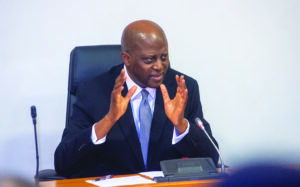
NIBSS Managing Director and Chief Executive Officer, Premier Oiwoh, attributed the improvement partly to the industry dispute-resolution platform established under the guidance of the Central Bank of Nigeria.
“The setting up of the industry dispute resolution platform driven by the Central Bank of Nigeria (CBN) helped to achieve this feat,” Oiwoh said, adding that the measures had reduced the number of disputes in the industry.
NIBSS payment system closes key inclusivity gap
AfricaNenda’s assessment highlights the importance of effective dispute-resolution mechanisms to an inclusive payment system.
Speaking on the development, AfricaNenda Deputy Chief Executive Officer Sabine Mensah described Nigeria’s achievement as groundbreaking and a major milestone for instant payment systems on the continent.
Premier Oiwoh, Chief Executive Officer and Managing Director of NIBSS, said the achievement followed improvements to Nigeria’s payment dispute-resolution framework.
“The setting up of the industry dispute resolution platform driven by the Central Bank of Nigeria (CBN) helped to achieve this feat,” Oiwoh said.
He added that the measures had reduced the number of disputes in the industry.
The recognition is significant because instant payment systems are designed to make low-value digital payments available in near real time, around the clock, while ensuring that transactions are accessible to a broad range of users.
For a system to reach the mature level, however, speed alone is not enough. Users also need effective mechanisms to resolve problems when transactions fail or disputes arise.
Nigeria’s movement into the mature category therefore reflects progress beyond simply expanding digital payment infrastructure. It points to improvements in the systems and governance mechanisms supporting users.
Nigeria leads while other payment systems lag
Despite NIP’s top ranking, the report shows that Nigeria’s payment ecosystem still has room for improvement.
Two other Nigerian payment systems assessed by AfricaNenda, the eNaira and mobile money systems, remained at the basic level.
The wider continental picture is similarly uneven.
With 15 systems classified as basic and another 10 at the progressed level, AfricaNenda identified expanded use cases and additional recourse mechanisms as some of the biggest challenges facing systems seeking to reach mature inclusivity.
The report’s findings highlight both Nigeria’s progress and the wider challenge of ensuring that Africa’s rapidly developing digital payment infrastructure is genuinely inclusive.
For Nigeria, the NIP milestone places the country at the forefront of Africa’s instant payment ecosystem.
It also underscores the importance of strengthening consumer protection alongside technological innovation.
A payment system can be fast, convenient and widely available, but its inclusiveness ultimately depends on whether ordinary users can confidently use it and have access to effective redress when things go wrong.
Nigeria’s achievement, therefore, is not simply a recognition of how quickly money can move through its financial system. It is also a recognition of the structures being put in place to ensure that users are not left stranded when the system fails them.