

The 10th Assembly graded itself against international standards and confessed it fails on inclusion. The confession deserves more attention than the scorecard
Let’s start with the compliment, because it is a real one and it should not get buried under the criticism that follows.
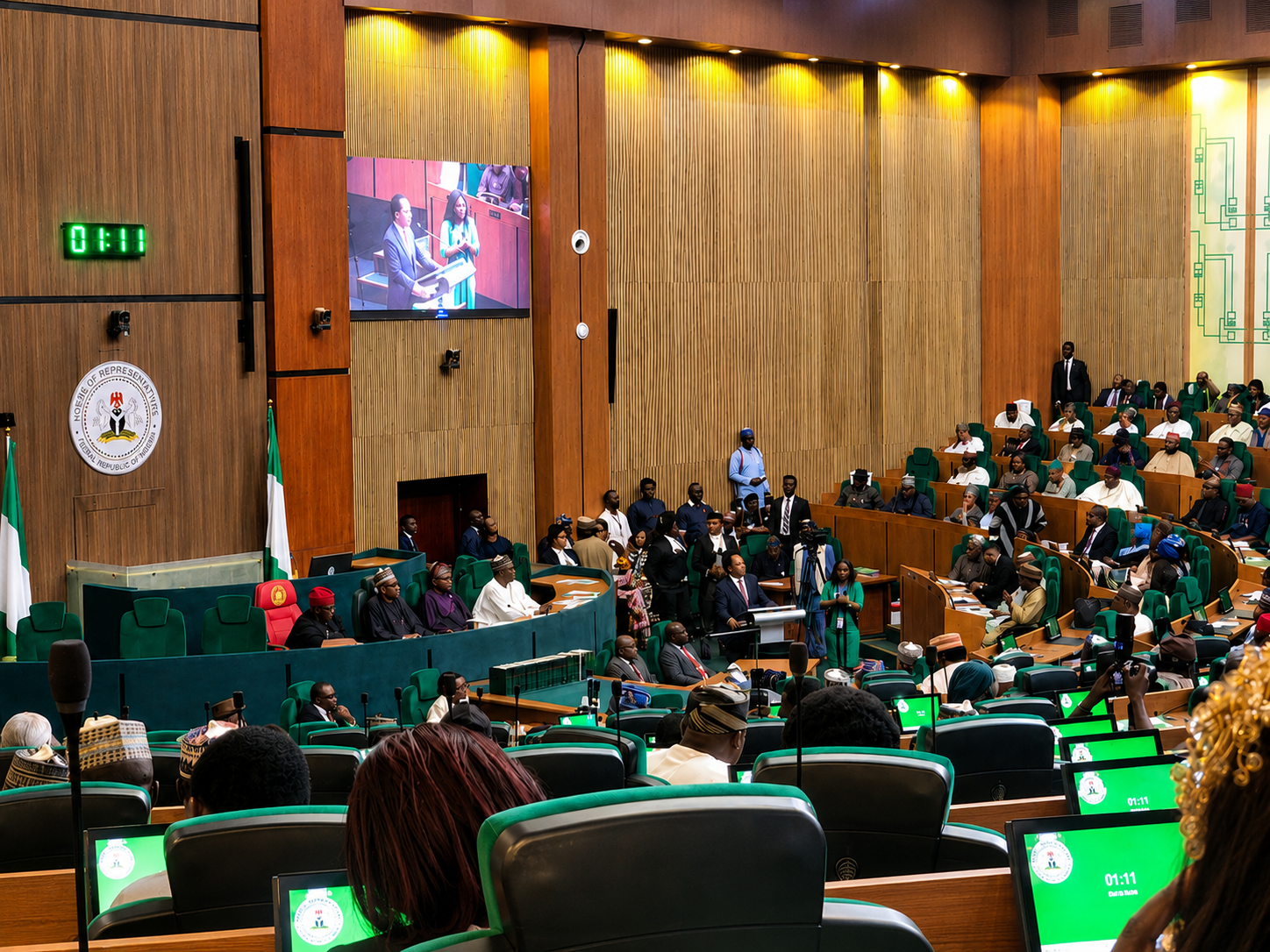
The House of Representatives held its National Assembly Open Week from 14 to 16 July, and unlike most government transparency exercises, which tend to mean a press release and a group photograph, this one actually resembled transparency.
Lawmakers stood up and gave a public account of themselves: 2,747 bills introduced over three years, 363 passed, 72 signed into law, 220 motions considered.
Speaker Tajudeen Abbas unveiled a full scorecard benchmarked against Inter-Parliamentary Union standards, and Senate President Godswill Akpabio, appearing as a guest at the House’s event, urged Nigerians to come and read the laws for themselves rather than criticise them unread.
Whatever else one makes of the numbers, an institution that volunteers to be graded is doing something braver than an institution that hides its report card in a drawer. Credit where it’s due.
But every scorecard has a line item nobody wants to talk about at the press conference, and this year’s Open Week found theirs almost by accident.

The admission behind the scorecard
The Chief of Staff to the Speaker, presenting the House’s own self-assessment against the IPU’s five benchmarks, effectiveness, accountability, participation, representation and inclusion, said the institution met three or four of the five. Then came the admission, delivered plainly and without much fanfare: the shortfall was on inclusion, specifically, the representation of women.
That is not a footnote. That is the House of Representatives, at its own celebratory event, using its own chosen metric, conceding what Nigerian women have been saying for over two decades.
The numbers behind the admission
Here is what that admission is actually describing. The 10th National Assembly, inaugurated in June 2023, has four women out of 109 senators, 3.7 per cent, and 17 women out of 360 members in the House, 4.7 per cent. Add both chambers together and women hold roughly 4.2 per cent of Nigeria’s 469 federal legislative seats.
For context, Rwanda’s parliament is 61 per cent women. South Africa’s is 46 per cent. Senegal’s is 43 per cent. Nigeria, by the Inter-Parliamentary Union’s own global ranking, sits at 178th out of 182 countries, ahead of precisely two nations: Niger, currently run by a military junta that seized power in a 2023 coup, and Eritrea, which has not held an election since 1994. That is the company Nigeria’s democracy keeps on this particular measure. Not a flattering photo to be caught standing next to.
A problem the Assembly has met before
None of this is new information arriving for the first time. It is, if anything, a rerun.
In March 2022, the 9th Assembly voted down five constitutional amendment bills collectively known as the “gender bills,” including one to reserve special legislative seats for women, sponsored at the time by Deputy Chief Whip Nkeiruka Onyejeocha and co-sponsored by 85 members, including the sitting Speaker himself, Femi Gbajabiamila.
The rejection triggered days of protest outside the National Assembly under hashtags like #NigerianWomenOccupyNASS, loud enough that the House quietly rescinded three of the five bills a week later, on International Women’s Day, though the seat-reservation bill itself stayed dead.
The current Assembly reintroduced the idea as HB 1349, sponsored by Deputy Speaker Benjamin Kalu, proposing 74 special seats split between the Senate and House, plus additional seats at state level. It passed second reading in July 2024. As of this year’s Open Week, it is reportedly nearing a decisive vote at third reading, a milestone the last version of this bill never reached before dying in 2022.
So credit where it belongs: this Assembly has moved the bill further than its predecessor did. But “further than the version that failed completely” is a low bar to clear, and three years into a four-year term, the bill Nigeria has been debating since at least 2016 is still, technically, a bill.
Why the confession matters more than the excuse
There is a version of this story where the House gets to say: look, we admitted the problem ourselves, unprompted, at our own event, that’s accountability in action. And there’s something to that. An institution that volunteers its own failing grade is doing more than one that hides it.
But an admission that changes nothing by the next Open Week is not accountability, it is a ritual. The Chief of Staff’s own framing, that inclusion “is something within the House’s own power to correct,” is precisely the problem. This is not a shortfall caused by executive interference, funding constraints, or judicial delay, the three excuses that cover almost everything else in Nigerian governance.
Reserving legislative seats for women requires nothing from the presidency, the judiciary, or the states, until the amendment reaches the point where state assemblies must ratify it. Getting the bill through the National Assembly itself is entirely, uniquely, a job the National Assembly can finish without anyone else’s permission.
That is what makes the Open Week confession worth taking seriously rather than filing away with the commendation plaques. An institution that admits a weakness it alone has the power to fix, and then leaves the fix for a fourth consecutive year, is not describing a constraint. It is describing a choice.
What happens next matters more than what was said
Nigeria has had this conversation before, in 2022, with placards outside the gates and a Speaker’s own name on the bill. It is having it again now, more quietly, inside a scorecard nobody was required to publish.
The Reserved Seats Bill either reaches third reading and a full vote before this Assembly’s term ends in 2027, or it becomes the second consecutive Assembly to raise women’s hopes at second reading and let the clock run out. The House already told the country, in its own words, which side of that outcome it currently expects. The remaining question is whether it plans to prove itself wrong.