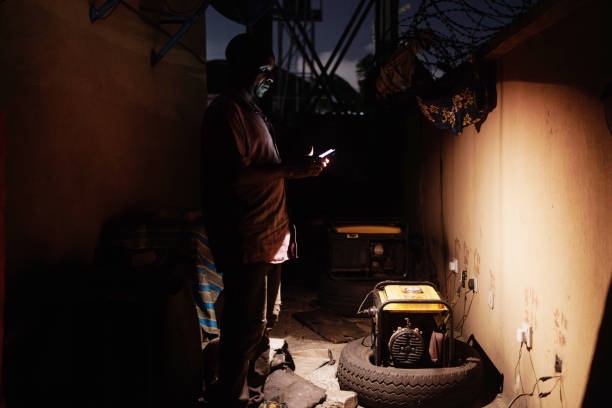
As electricity supply deteriorates despite billions of naira in government interventions, Nigerians are still waiting for the reliable power they have repeatedly been promised.
Nigeria’s electricity crisis has become an exhausting cycle of promises, explanations and disappointment. The power goes off, distribution companies apologise, government agencies explain what went wrong, and Nigerians return to their generators, inverters and other alternatives. Days later, the same problem returns. What is missing is a convincing plan to stop it.
The latest deterioration in electricity supply shows how little has changed despite years of reforms and substantial public spending. Homes endure prolonged outages, businesses spend more to remain operational, and even customers paying premium electricity tariffs are not guaranteed the service for which they are charged.
According to reports, average electricity generation fell from 3,849.60 megawatts in August to 3,549.02 megawatts in November 2026, a decline of approximately 7.8 per cent.
For a country of more than 200 million people, an electricity system struggling to sustain even 5,000 megawatts is plainly inadequate. The Federal Government cannot continue to announce reforms and financial interventions while electricity supply remains unreliable.
The explanations are familiar, but the problem remains
On November 5, the Nigerian Independent System Operator attributed the latest generation shortfall to inadequate gas supply to thermal power stations and reduced water inflows into hydroelectric reservoirs.
These are genuine technical challenges. Gas-fired stations require sufficient fuel, while hydroelectric plants depend on water availability. However, neither challenge is new. Nigeria has faced both problems for years, yet the authorities have failed to establish adequate safeguards against recurring disruptions.
The Nigerian National Petroleum Company Limited subsequently disputed suggestions that constraints within its gas transportation network caused the shortfall, insisting that its pipeline infrastructure remained available.
Pipeline availability does not necessarily mean power plants are receiving sufficient gas. Nevertheless, the disagreement raises questions about coordination and accountability within the electricity sector.
Nigerians deserve a clear explanation of which generating plants are affected, why their output has declined and who is responsible for restoring supply.
The Ministry of Power should publish this information alongside a realistic timetable for resolving the shortages. Repeated references to gas constraints and technical problems are no substitute for measurable action.
Billions spent, yet electricity remains unreliable
In April 2026, President Bola Tinubu approved a ₦3.3 trillion plan to settle verified legacy debts accumulated in the electricity sector between February 2015 and March 2025.
According to the Presidency, 15 power plants had signed settlement agreements worth ₦2.3 trillion, while ₦223 billion had been disbursed from ₦501 billion raised to support the programme.
Settling verified debts is necessary. Generating companies cannot maintain equipment, secure fuel or invest in additional capacity if they are not paid for electricity supplied.
But paying old debts without addressing the failures responsible for them risks creating another cycle of financial intervention.
The Nigerian Electricity Regulatory Commission’s second-quarter 2026 report provides further evidence of these weaknesses. Distribution companies billed customers ₦744.67 billion but collected ₦603.64 billion, representing a collection efficiency of approximately 81 per cent.
The industry also recorded aggregate technical, commercial and collection losses of 36 per cent, against an allowed target of 16.92 per cent.
These losses reduce the funds available for maintenance, investment and payments to electricity producers.
Government financial interventions must therefore come with clear performance conditions. Nigerians should know how much has been paid, which companies received the money and what improvements are expected.
Premium tariffs must come with reliable service
The treatment of electricity consumers is equally troubling.
Under Nigeria’s service-based tariff system, Band A customers are entitled to at least 20 hours of electricity daily. Yet complaints about inadequate supply persist, even among customers paying substantially higher tariffs.
Consumers should not be required to pay premium rates for services they do not receive.
The electricity regulator must enforce existing service obligations and ensure that distribution companies are held accountable when supply consistently falls below approved thresholds.
NERC should publish accessible records showing actual electricity supply hours across distribution networks. Where companies fail to meet their commitments, appropriate tariff adjustments and other regulatory remedies should follow.
Metering also remains a concern. NERC reported that 350,270 additional customers received meters in the second quarter of 2026, bringing the national metering rate to 62 per cent.
This means approximately 38 per cent of registered customers remained without meters, leaving many dependent on estimated billing.
Consumers need transparent billing, but above all, they need electricity.
Nigerians deserve results, not more assurances
Unreliable electricity affects virtually every part of the economy. Small businesses spend heavily on fuel, manufacturers face higher production costs, and households must find alternative ways to preserve food, study and carry out daily activities.
Hospitals, schools and public facilities also bear the consequences.
The Federal Government must recognise that electricity failure is not simply a technical inconvenience. It is an economic burden that affects productivity, employment and living standards.
President Tinubu’s administration has announced reforms, debt settlements and investment initiatives. These may be necessary, but their value must be measured by improvements in actual electricity delivery.
The Ministry of Power should publish a time-bound recovery plan, NERC must enforce service standards, and the National Assembly should demand evidence that financial interventions are producing results.
Nigerians are not asking for extraordinary privileges. They want electricity they can rely on, bills they can understand and institutions that accept responsibility when things go wrong.
After years of reforms, rising tariffs and repeated assurances, that is the least they should expect.
The government must stop measuring electricity reform by how much money it commits and start measuring it by how much power Nigerians actually receive.