

The Army’s bounty on ISWAP’s most wanted commander could unlock vital intelligence, but it cannot substitute for the trust needed to defeat terrorism.
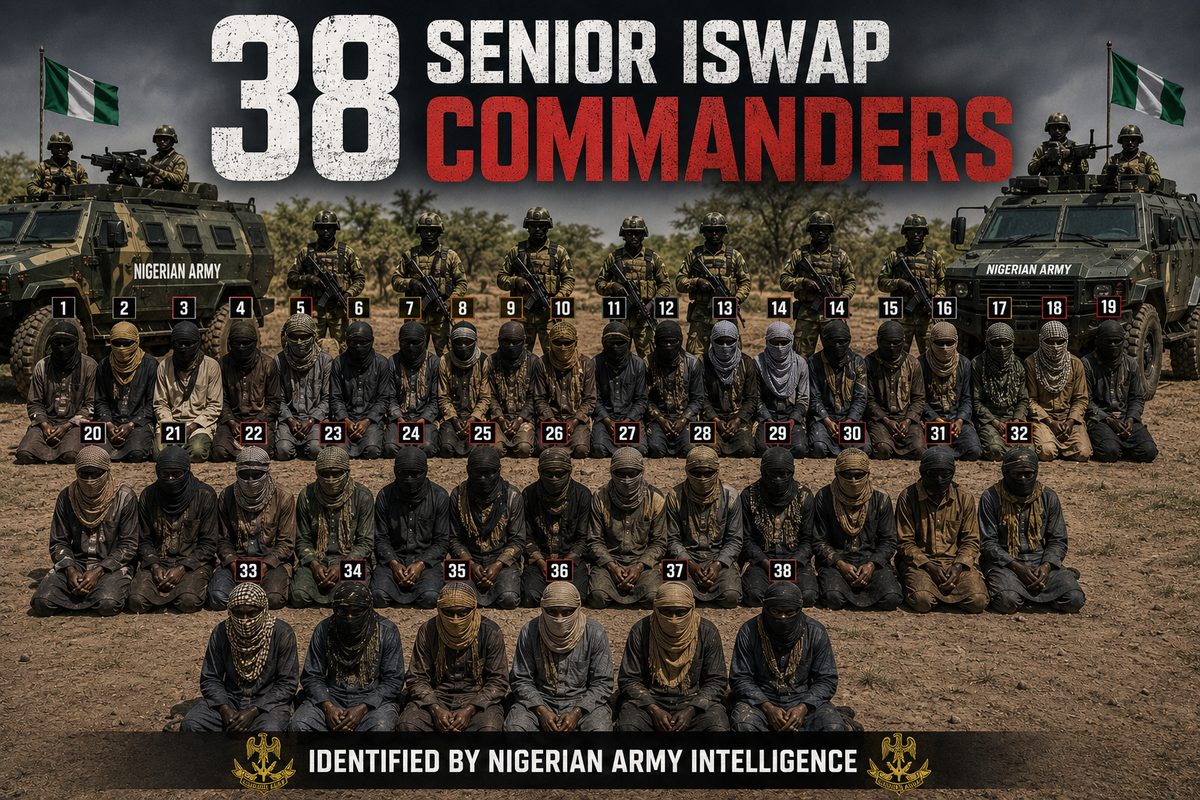
The Nigerian Army has put 38 senior Islamic State West Africa Province (ISWAP) commanders on its wanted list and offered a financial reward for information leading to the arrest of Abu Musa Al-Mangawi Baa Shuwa, identified by the military as the group’s Wali in the Lake Chad Basin.
It is a significant tactical move.
It is also a test of something more difficult to measure than military firepower: whether civilians living in some of Nigeria’s most dangerous communities trust the state enough to help it find the people terrorising them.
The Army says the identities of the 38 commanders were established through forensic analysis of a camcorder recovered during operations in the Lake Chad region. The device reportedly contained information that helped security forces identify members of ISWAP’s leadership structure, including their names, positions and areas of operation.
That is a genuine intelligence breakthrough; the Army should be credited for exploiting information recovered from the battlefield. In an insurgency where commanders operate across difficult terrain and exploit the porous boundaries of the Lake Chad region, intelligence that can identify the people directing attacks is invaluable.
But identifying a terrorist commander and getting close enough to arrest him are two very different things. That is where the wanted list and the bounty attached to it, becomes more complicated.
A bounty needs more than a phone number
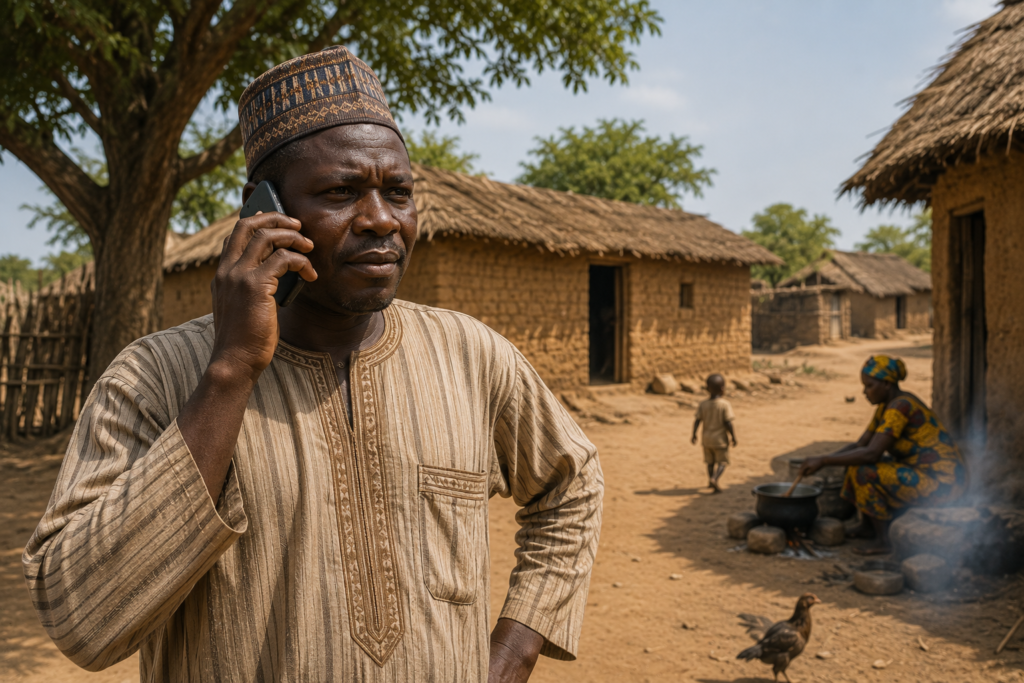
The Army is asking people with potentially valuable information to come forward. It has promised confidentiality and identity protection and offered a financial incentive for information that leads to the arrest of its most wanted commander.
On paper, that makes sense.
Governments around the world use financial rewards to encourage information about terrorists, organised crime networks and fugitives. A person who knows something that security agencies cannot independently discover may be the missing link in an operation.
But in the Lake Chad Basin, information can be dangerous.The communities around areas identified by the Army as operating grounds for ISWAP have lived with insurgency for years. Residents may know who moves through their communities, which routes are used and who has influence over local populations. But knowing something and feeling safe enough to report it are not the same thing.
A resident who provides information about a terrorist commander may have to continue living in the same community after making that call.
What happens if their identity is exposed?
What happens if the information is leaked?
What happens if the terrorist group discovers who provided it?
A financial reward cannot answer those questions.
The Army, therefore, has to do more than announce a telephone number and promise confidentiality. It must demonstrate that people who cooperate with security agencies can actually be protected.
Trust is the missing weapon
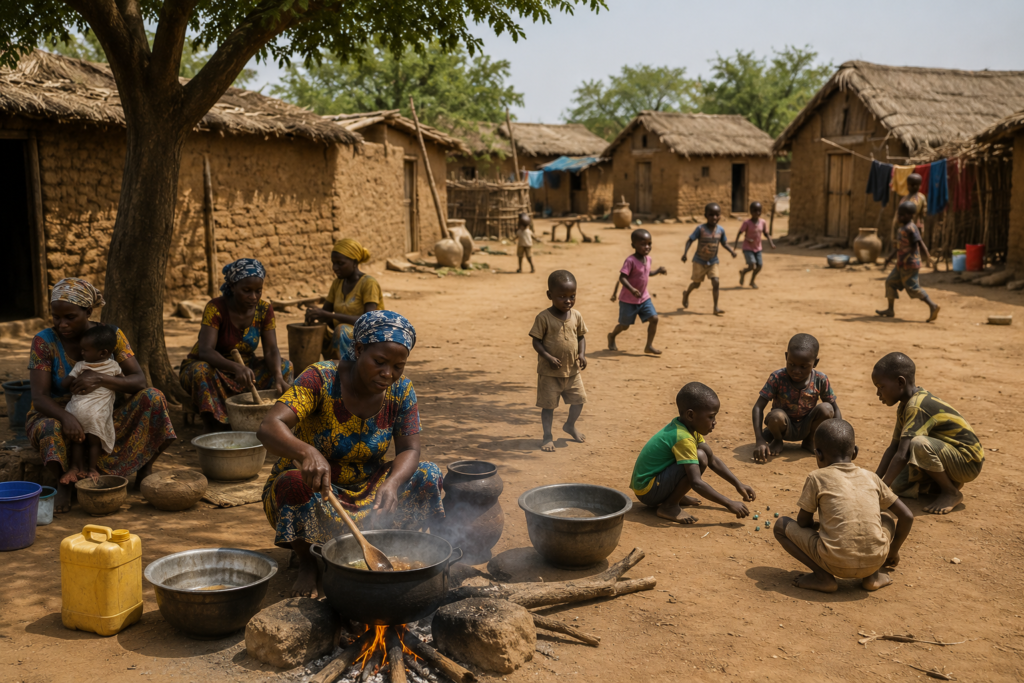
Counterinsurgency is not won by military operations alone. The state needs information from the people who live closest to the threat. It needs communities to recognise suspicious movements, identify unfamiliar faces, report recruitment attempts and provide information about insurgent activity, but that cooperation depends heavily on trust.
For civilians caught between armed groups and security forces, cooperation can carry enormous risks. The fear of retaliation can be enough to keep people silent even when they know something that could save lives.
This is why the Army’s bounty should not be viewed simply as a financial transaction. It is an invitation to communities to take a risk on the state, and the state must be prepared to show that the risk is worth taking.
That means credible protection for informants. It means secure channels for passing information. It means strict operational discipline to prevent identities from being exposed. It means responding quickly when credible intelligence is received.
Most importantly, it means showing communities that cooperation produces results. If residents provide information and see security forces arrive too late, or see the information leak back to the insurgents, the incentive to cooperate will quickly disappear.
The military cannot build trust alone
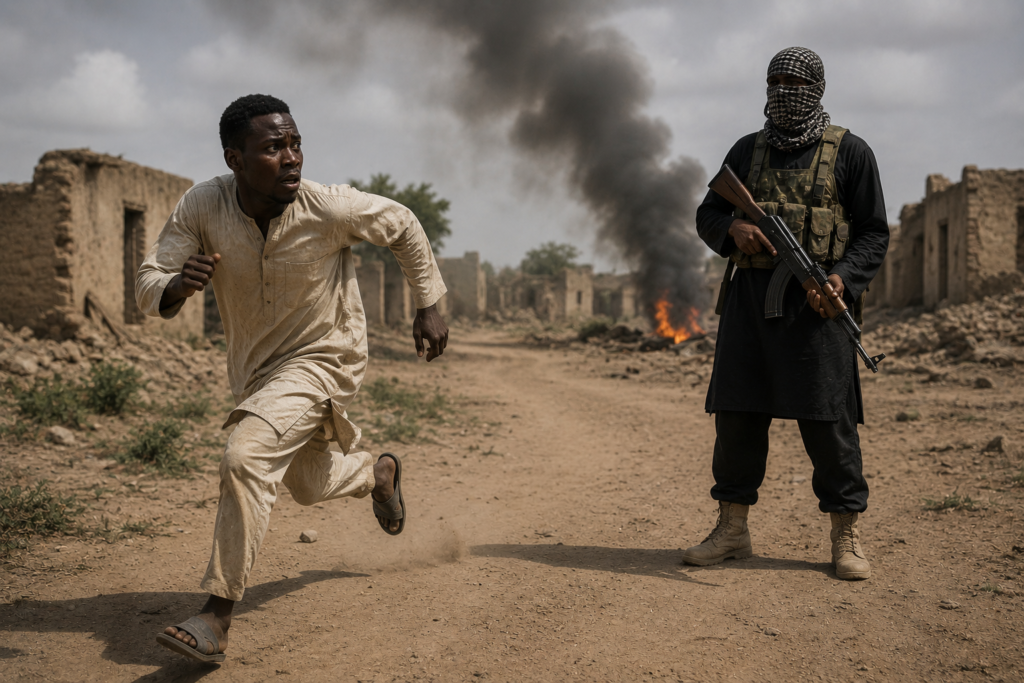
There is another limitation to the bounty strategy. The Nigerian Army can pursue insurgents, secure territory and conduct intelligence-led operations. But it cannot by itself address every condition that allows insurgency to survive. That responsibility extends to the civilian government.
A community that has electricity, functioning schools, healthcare facilities, roads, markets and legitimate economic opportunities has a stronger connection to the state than a community where government is experienced mainly through soldiers, checkpoints and emergency interventions.
This is not to suggest that poverty automatically produces terrorism. It does not. But weak institutions, unemployment, displacement, insecurity and lack of opportunity can create vulnerabilities that armed groups may exploit.
The answer, therefore, cannot be to kill or capture commanders indefinitely while leaving the environments in which their organisations recruit and operate largely unchanged.
The intelligence breakthrough matters
None of this should diminish the significance of what the Army has achieved.
The recovery and forensic exploitation of the camcorder reportedly gave security forces information capable of exposing a substantial part of ISWAP’s command structure. That is exactly the kind of intelligence-led approach Nigeria needs more of. The war against terrorism cannot depend solely on large-scale military deployments. It requires intelligence that allows security forces to identify commanders, understand networks, disrupt financing, intercept movement and prevent attacks before they happen. The reported gains made by security forces in parts of the northeast and northwest also demonstrate that military pressure can disrupt terrorist operations. These successes matter, but so does what happens after an operation.
When an area is cleared of insurgents, who comes next?
Who rebuilds the school?
Who restores the health centre?
Who helps displaced farmers return to their land?
Who creates economic opportunities for young people?
Who ensures that the community does not simply become vulnerable to another armed group?
Those questions are not secondary to security. They are part of it.
Nigeria cannot keep fighting the symptoms
ISWAP has demonstrated considerable resilience over the years. The death, capture or displacement of individual commanders does not automatically dismantle an organisation capable of replacing its leadership. That is why the objective cannot simply be to produce longer wanted lists. The objective must be to make those lists progressively less necessary.
That means dismantling the networks that recruit, finance, supply and shelter insurgents. It means strengthening intelligence cooperation with communities. It means securing borders and improving coordination with neighbouring countries. It means prosecuting captured suspects through credible legal processes. And it means ensuring that communities liberated from insurgent control do not remain neglected. A military victory without a civilian follow-up creates a vacuum, and vacuums rarely remain empty for long.
The gamble is worth taking — but only if Nigeria does more
The bounty on Abu Musa Al-Mangawi Baa Shuwa is a gamble worth taking. If it produces information that leads to his capture and weakens ISWAP’s command structure, Nigeria will be better off for it, but the government must not confuse a useful tactic with a complete strategy.
The Army needs the public. The public needs protection, and communities need reasons to believe that the Nigerian state will remain present after the guns fall silent.
The government should therefore treat the bounty programme as one part of a much broader intelligence strategy, one that includes credible informant protection, secure reporting channels, rapid response, community engagement and sustained investment in affected communities.
The Army can put a face and a name to an insurgent commander, the harder task is winning the confidence of the people who live where that commander operates.
A bounty may help Nigeria find a terrorist. Trust is what can help Nigeria defeat terrorism.
Until military pressure is matched by intelligence, protection, governance and economic opportunity, every wanted list will remain only one step in a war that Nigeria has been fighting for far too long.
Disclaimer: All images accompanying this story are AI-generated and are used for illustrative purposes only. They do not depict the actual people, communities, events or locations referenced in this story and should not be interpreted as authentic photographs or representations of real individuals.