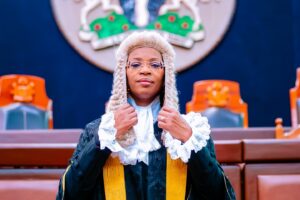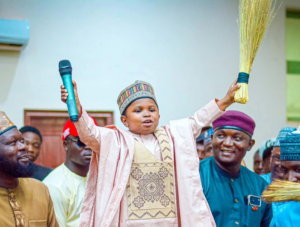


From parliamentary politics to women’s rights and grassroots mobilisation, activists such as Bode Thomas, Aminu Kano, Gambo Sawaba and K. O. Mbadiwe helped build the political movement that pushed Nigeria towards self-government.
Nigeria’s independence from British colonial rule did not happen because of one politician, one party or one region.
It was the result of decades of political organising, protests, journalism, constitutional negotiations and popular mobilisation. By the 1950s, Nigerian nationalists were fighting not only for an end to British colonial rule but also over what an independent Nigeria should look like.
The better-known names are familiar: Nnamdi Azikiwe, Obafemi Awolowo, Ahmadu Bello, Tafawa Balewa and Herbert Macaulay.
But behind them was a wider generation of politicians and activists whose contributions helped build the parties, movements and political pressure that eventually made self-government possible.
Among them were Bode Thomas, Aminu Kano, Gambo Sawaba and K. O. Mbadiwe, alongside figures such as Sa’adu Zungur.
Their methods differed. Some worked within colonial political institutions, while others challenged traditional authority, organised ordinary people, campaigned for women’s rights or pushed for greater political representation.
Their stories reveal that Nigeria’s independence movement was far more complicated than the familiar narrative of a few nationalist leaders negotiating with Britain.
Bode Thomas and the Action Group
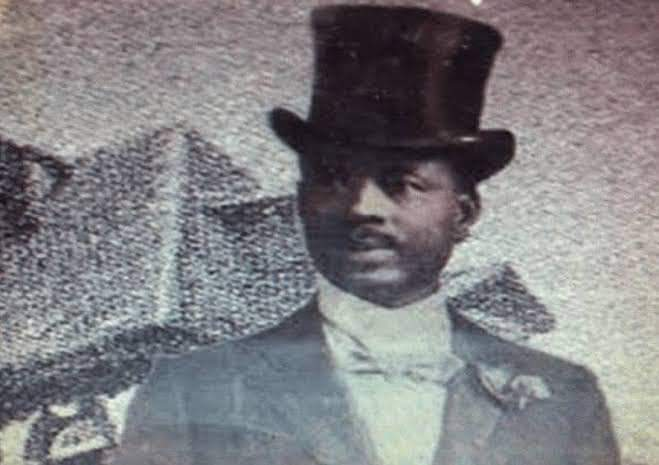
Chief Olabode Thomas, popularly known as Bode Thomas, was a lawyer, politician and one of the founding figures of the Action Group, one of the major political organisations involved in Nigeria’s transition to independence.
Born in 1918, Thomas attended CMS Grammar School in Lagos before working briefly as a railway clerk. He later travelled to Britain to study law and was called to the bar in 1942.
After returning to Nigeria, he established a legal practice and became involved in nationalist politics. He emerged as a leader of the Nigerian Youth Movement and Egbe Omo Oduduwa and was among the founders of the Action Group. A contemporary Cambridge account describes him as a prominent political figure who moved through these organisations before becoming a leader of the Action Group.
Thomas’s contribution was closely tied to the political organisation of the Western Region.
The Action Group developed a strong regional political structure and became an important participant in debates over Nigeria’s constitutional future. Thomas was part of a generation of politicians who believed political organisation at the regional level could help prepare Nigerians for self-government.
His role became particularly significant during the political crisis of 1953.
On 31 March that year, Anthony Enahoro, a leading Action Group member, introduced a motion in the House of Representatives calling for Nigeria to achieve self-government in 1956. The proposal triggered a major political confrontation, exposing deep disagreements between the country’s regional political blocs over how quickly Nigeria should move towards independence.
The controversy was more than a disagreement over a date. It revealed the competing visions within Nigeria’s nationalist movement.
Southern politicians were pushing for an earlier transfer of power, while many northern politicians argued that more time was needed and that the regions had to be properly consulted.
Thomas was among the Action Group’s federal ministers who resigned amid the crisis.
His political career also extended beyond party organisation. He served as a federal minister and deputy leader of the Action Group. The Nigeria Year Book for 1954 recorded his death that year and identified him as Central Minister of Works and Deputy Leader of the Action Group.
Thomas died in 1954, six years before Nigeria became independent.
He therefore never witnessed the raising of the Nigerian flag on 1 October 1960. Yet his political work had already contributed to the party structures and constitutional pressure that shaped the final years of British colonial rule.
His story also captures an important feature of the independence movement: nationalists could agree that colonial rule had to end while disagreeing sharply about how Nigeria should be governed afterwards.
Aminu Kano and the politics of the talakawa
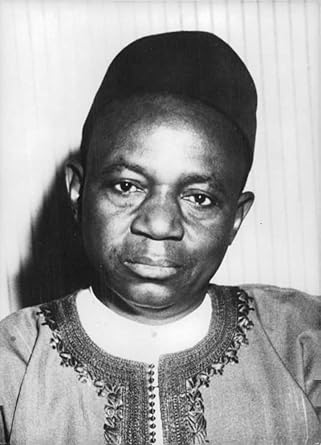
If Bode Thomas represented one strand of nationalist politics, Aminu Kano represented another.
Born in 1920, Kano became one of the most influential political figures in Northern Nigeria and built his reputation around the political mobilisation of the talakawa, or ordinary people.
His politics challenged not only British colonial rule but also the concentration of political power within the traditional emirate system.
Kano became the most prominent leader of the Northern Elements Progressive Union, or NEPU, which emerged in 1950 as a radical opposition movement in Northern Nigeria.
NEPU sought to challenge the conservative political establishment and give greater political voice to ordinary people. Its programme connected the demand for self-government with social and political reform. The National Digital Newspaper of Nigeria describes Kano as a political leader who made the rights of the northern talakawa central to the campaign for self-government.
That distinction mattered.
For Kano, political independence could not simply mean replacing British officials with Nigerian elites while leaving existing inequalities untouched.
He wanted ordinary Nigerians to have a greater say in government.
NEPU’s politics therefore broadened the independence debate. Its campaign was not limited to the question of when Britain would leave. It also asked who would hold power afterwards and whether the political system would serve ordinary Nigerians.
The movement’s grassroots approach helped take nationalist politics beyond the educated elite and into communities where political debates were often conducted in local languages.
This made Kano particularly influential in Northern Nigeria, where the dominant political establishment was closely connected to traditional authorities.
His politics also connected with demands for reform in education, political participation and women’s rights.
In that sense, Aminu Kano’s contribution to independence was both national and social. He was fighting for an independent Nigeria, but also for a Nigeria in which political freedom meant something to people outside the country’s emerging political elite.
Gambo Sawaba and the women demanding a voice
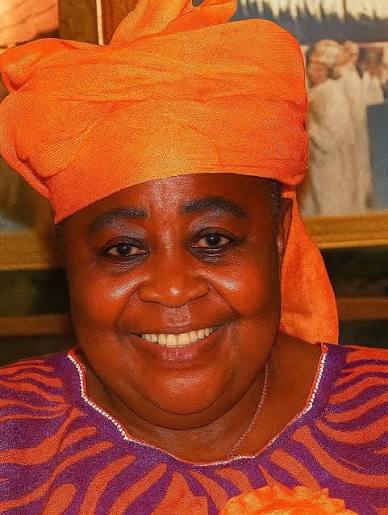
One of the clearest examples of how the independence struggle extended beyond male political elites was Hajiya Gambo Sawaba.
Born Hajaratu Gambo in 1933, she became one of the most prominent women associated with Nigeria’s early nationalist and democratic movements.
She joined NEPU and became a leader in its women’s movement. Her activism brought together the demand for political freedom with campaigns for women’s education, economic opportunity and political participation.
Sawaba challenged restrictions that kept many northern women away from formal politics.
She campaigned against child marriage, forced and unpaid labour and unfair taxation, while advocating education for girls, employment opportunities and women’s voting rights.
Her activism also brought her into conflict with the authorities.
In 1952, after campaigning among women living in purdah, she was brought before a court and sentenced to three months in prison. It was the first of numerous imprisonments she would face for her political activism.
Rather than limiting her politics to formal meetings, Sawaba went directly into communities, speaking to women who were largely excluded from conventional political activity.
That was significant.
The question of independence was also a question of who had the right to participate in the political life of the country.
For Sawaba, freedom could not simply mean the departure of British colonial officials. Women also needed access to education, political participation and economic opportunities.
Her activism helped expand the social base of nationalist politics and demonstrated that women in Northern Nigeria could be organisers, campaigners and political actors in their own right.
Sawaba’s story therefore adds another dimension to Nigeria’s independence history: the struggle for national freedom was also intertwined with the struggle over women’s rights.
K. O. Mbadiwe and nationalism inside government
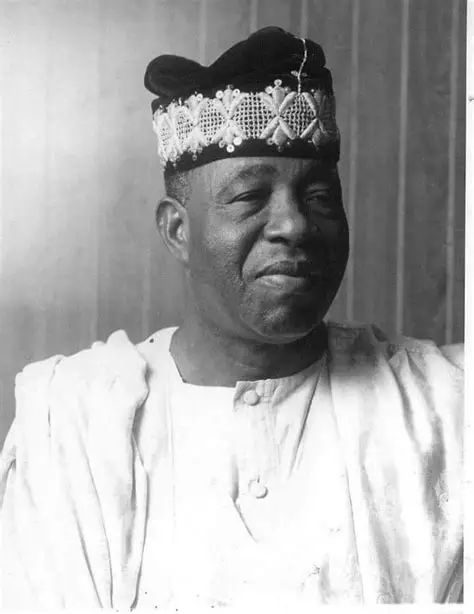
Kingsley Ozumba Mbadiwe, popularly known as K. O. Mbadiwe, took yet another route.
Born in 1915 in what was then the Orlu Division, Mbadiwe developed an interest in African nationalism while studying in the United States. He became associated with the National Council of Nigeria and the Cameroons, the nationalist organisation led by Nnamdi Azikiwe.
He was elected to the Eastern Region House of Assembly in 1951 and became an important parliamentary figure.
Mbadiwe’s contribution illustrates how Nigerian nationalists increasingly used the institutions established under colonial rule to challenge colonial authority from within.
Political power was no longer being pursued only through protests and public campaigns. Elections, legislative debates and constitutional negotiations had become equally important battlegrounds.
Mbadiwe eventually served in the federal government, including as Minister for Communications and Aviation, Minister for Lands, Survey and Natural Resources and Minister for Commerce in 1957.
His career placed him close to the centre of the political transition taking place in the 1950s.
But his story also demonstrates that the nationalist movement was hardly united.
The major political parties represented different regional interests and competing visions of Nigeria’s future. The NCNC, Action Group and Northern People’s Congress became the dominant political organisations in the East, West and North respectively, reflecting the increasingly regional character of late colonial politics.
Mbadiwe himself eventually fell out with Azikiwe during a major dispute within the NCNC and established the Daily Telegraph as an outlet for his political position.
Those disagreements were not a footnote to the independence story. They were part of it.
Nigerian politicians were already arguing about regionalism, federalism, political leadership and the distribution of power before independence arrived.
Mbadiwe’s career therefore shows how nationalism evolved from an anti-colonial campaign into the difficult business of governing and negotiating the shape of a future Nigerian state.
Independence was bigger than one political movement
By the late 1950s, Nigerian politicians from different parties and regions were participating directly in negotiations over the country’s constitutional future.
The political landscape was dominated by the NCNC in the East, the Action Group in the West and the NPC in the North, although other parties and movements, including NEPU, also played important roles.
Constitutional conferences in London in 1957 and 1958 were important stages in determining the structure of the Nigerian state that would emerge from colonial rule.
The final years before independence were therefore filled with negotiations over much more than Britain’s departure.
Politicians had to contend with questions about federalism, regional autonomy, minority rights, representation and the balance of power between different parts of the country.
The 1953 independence crisis had already demonstrated how difficult it would be to reconcile these competing interests. The debate over Enahoro’s 1956 motion exposed deep regional disagreements and even threatened the political unity of the emerging Nigerian state.
Nigeria eventually became independent on 1 October 1960.
But independence was not the achievement of one party, one region or one political ideology.
It was the product of years of political organising, education, journalism, protest, grassroots mobilisation, parliamentary politics and constitutional negotiation.
That is why figures such as Bode Thomas, Aminu Kano, Gambo Sawaba, K. O. Mbadiwe and Sa’adu Zungur deserve a place in the story.
They represented different ideas about what freedom meant and how Nigeria should achieve it.