

The commission has constituted a team to examine transactions and dealings involving public officials named in the arbitration award over the long-running Mambilla power project dispute.
The Economic and Financial Crimes Commission has constituted a special team to investigate individuals and transactions linked to the long-running Mambilla Hydroelectric Power Project dispute, following an International Chamber of Commerce arbitration award that rejected Sunrise Power’s claims against Nigeria.
Sources familiar with the matter told PREMIUM TIMES that the team is being supervised by EFCC Chairman Olanipekun Olukoyede.
An EFCC spokesperson, Dele Oyewale, confirmed he was aware of the development but said he had not been fully briefed on the details.
The development comes days after an ICC arbitration tribunal in Paris ruled in Nigeria’s favour in the dispute involving Sunrise Power and Transmission Company and its promoter, Leno Adesanya.
The tribunal rejected Sunrise’s claims and ordered the company and Adesanya to reimburse Nigeria for 75 per cent of its legal fees and expenses, amounting to about $11.82 million, alongside part of the arbitration costs.
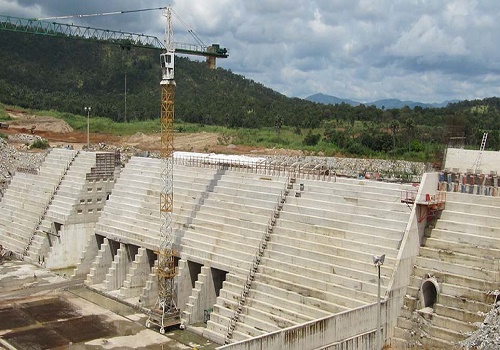
The dispute centres on the Mambilla hydropower project in Taraba State, which has been the subject of legal and contractual disputes for more than two decades.
What the ICC award found
The 616-page final award, dated September 16, examined a series of payments and dealings involving Adesanya and individuals connected to Nigerian political and public life.
Among those named were former Vice-President Atiku Abubakar, former Attorney-General of the Federation Abubakar Malami, former Minister of Power and Steel Olu Agunloye, former National Security Adviser Sambo Dasuki, his son Abubakar Dasuki, former Solicitor-General of the Federation Abdullahi Yola and former Permanent Secretary in the Ministry of Power Dere Awosika.
The award did not make the same finding against every individual named.
In the case involving Atiku, the tribunal examined a $500,000 payment made by Adesanya on January 30, 2003, from the Swiss bank account of his offshore company, China Castle Investments Ltd, to a US account belonging to Jennifer Douglas, who was then Atiku’s wife.
Adesanya told the tribunal that the payment was connected to a foreign-exchange transaction undertaken for Atiku through his bureau de change business.
However, the tribunal found that the explanation was not supported by documentary evidence, noting the absence of records showing the underlying naira payment, exchange rate, instructions from Atiku or his aides, correspondence or other documentation establishing the commercial purpose of the transaction.
It also noted that neither Atiku nor Douglas submitted a witness statement or declaration supporting the explanation.
The tribunal considered the payment, Atiku’s relationship with Adesanya and the timing of the transaction against the backdrop of Atiku’s role in a 2002 Nigerian government delegation to China, during which a memorandum of understanding covering the Mambilla project was signed.
The circumstances, according to the award as reported, raised significant questions for the tribunal. However, subsequent reporting on the award has stressed that it did not find that Atiku received a bribe.
Atiku has also denied being indicted by the tribunal and said he was not responsible for awarding the Mambilla contract.
Malami faces separate scrutiny
The tribunal’s findings concerning Malami were more direct.
According to reports based on the award, the tribunal criticised the former AGF’s handling of a 2020 settlement between Nigeria and Sunrise, finding that he acted against Nigeria’s interests and describing his relationship with Adesanya as inappropriate.
It also found that the settlement agreements were not binding on the Federal Government because they lacked the required presidential approval and were unenforceable because they were tainted by corruption and contrary to Nigerian public policy.
The settlement initially provided for a $200 million payment to Sunrise. A subsequent addendum introduced a further $200 million default provision, potentially exposing Nigeria to $400 million, apart from interest.
The tribunal concluded that Malami had not negotiated the revised terms in Nigeria’s interest and found that he was “motivated by other incentive(s)”, according to reports of the award. Malami did not appear before the tribunal to give evidence.
The ICC ruling itself was a commercial arbitration decision, not a criminal conviction. Any criminal liability arising from the transactions would have to be established through the appropriate Nigerian investigative and judicial processes.
Other payments under examination
The tribunal also examined a $1.74 million payment made by Adesanya to Abubakar Dasuki, son of former NSA Sambo Dasuki, in December 2014.
Adesanya described the transaction as a loan, but the tribunal questioned that explanation, citing inconsistencies, the absence of a loan agreement and a lack of records showing how the payment was accounted for by Sunrise. It described the transaction as raising considerable red flags.
Agunloye was also linked to payments he described as medical expenses. He is separately facing trial over allegations relating to the Mambilla project.
Yola and Awosika were likewise named in connection with payments the tribunal examined.
The award, however, did not establish that every questioned transaction amounted to a proven bribe. TheCable’s review of the award noted that the tribunal identified evidential gaps concerning some of the payments and did not reduce every transaction to a proven quid pro quo.
EFCC investigation now follows arbitration
The EFCC investigation adds a criminal-law dimension to a dispute that has already passed through years of arbitration.
President Bola Tinubu welcomed the ICC decision and said it removed what he described as the biggest legal obstacle to the Mambilla project. He also acknowledged the EFCC’s role in the investigation.
The tribunal rejected Sunrise’s claims, including its demand for $400 million under the 2020 settlement, while Nigeria’s separate counterclaim for damages was also dismissed because the government failed to establish the necessary causal connection between the conduct examined and the losses it claimed.
Meanwhile, the political fallout has already begun.
The APC Presidential Campaign Council accused Atiku of compromising Nigeria’s interests and called on him to withdraw from the 2027 presidential race.
Atiku’s Senior Special Assistant on Public Communication, Phrank Shaibu, rejected the accusation and argued that a commercial arbitration cannot be treated as a criminal verdict. He challenged the APC to identify where the tribunal found that Atiku received a bribe, abused his office or participated in a corrupt conspiracy.
With the EFCC now assembling a team to examine the people and transactions identified in the award, the next stage will be whether the commission’s investigation produces evidence capable of supporting specific criminal allegations.
For now, the ICC award establishes findings within an international commercial arbitration. It does not, by itself, determine criminal guilt for the Nigerian individuals whose names or transactions appeared in the proceedings.