

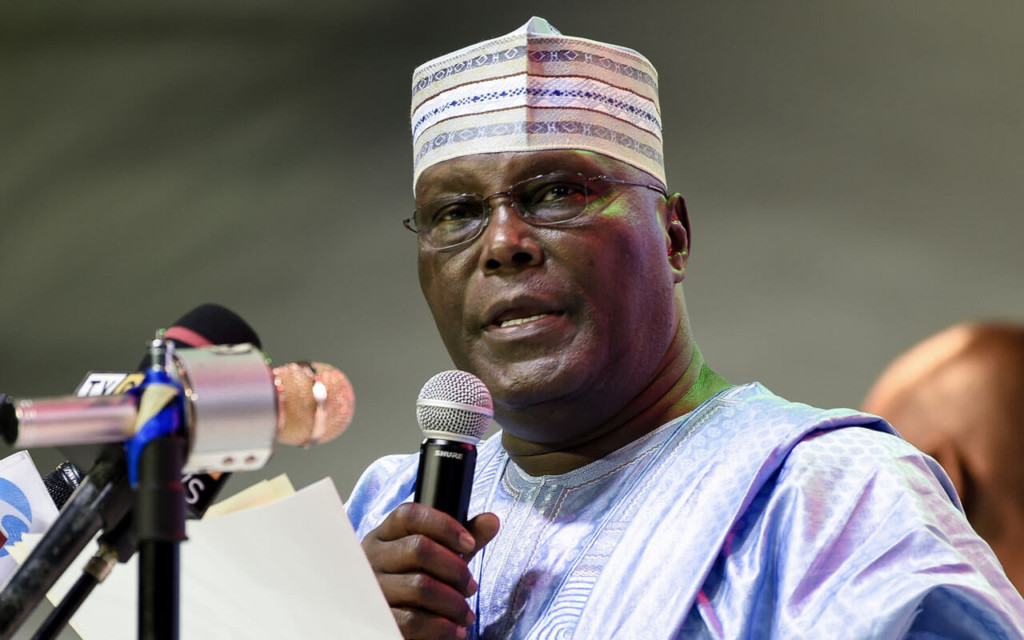
Atiku Abubakar has demanded full disclosure of Nigeria’s $5bn Abu Dhabi loan after Finance Minister Oyedele said the government would not publish spending details.
Former Vice-President Atiku Abubakar has demanded that President Bola Tinubu‘s administration be transparent about how it deploys the $5 billion financing facility secured from First Abu Dhabi Bank (FAB), arguing that Nigerians and future generations will bear the burden of repaying it.
Atiku’s demand, made in a statement issued by his media office on Sunday, followed remarks by Minister of Finance and Coordinating Minister of the Economy Taiwo Oyedele, who said on Wednesday that the federal government would not publish a separate breakdown of how funds drawn from the facility would be spent.
Oyedele made the comment while responding to questions on the government’s borrowing plan and the FAB arrangement at a media briefing in Abuja.
What Oyedele Said
Oyedele argued there was no need to treat the FAB facility differently from other sources of government financing, noting that it had gone through the required approval process, including consideration by the National Assembly.
“We will not publish how we are spending it. We will publish how we spend government money. There’s nothing special about that loan,” he said, adding that no one had asked the government to separately publish how it spent funds drawn from the World Bank, Eurobonds, or Sukuk.
The $5 billion facility is part of a wider $6 billion external borrowing package the National Assembly approved on March 31, 2026. The government has since drawn about $1.5 billion as the first tranche, structured as a Total Return Swap (TRS) rather than a conventional sovereign loan, a structure that has drawn scrutiny because such derivative-based arrangements often fall outside conventional debt-reporting frameworks.
Oyedele said the government would publish frequently asked questions on the transaction on the websites of the Ministry of Finance and the Debt Management Office “in the next few days.”
Atiku’s Response
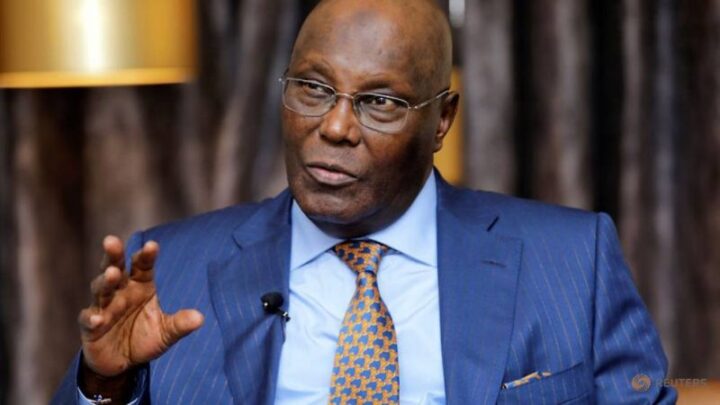
In his statement, Atiku accused the administration of “incompetence and financial impropriety,” citing what he described as a lack of transparency in recent loan agreements.
“The government is obliged to explain every loan taken on behalf of Nigerians,” he said. “Every Kobo borrowed matters because citizens, both living and unborn, will bear the burden of repayment. Yet these loans have failed to improve their material wellbeing.”
Citing Debt Management Office figures, Atiku said “since assuming office on May 29, 2023,” the Tinubu administration had “contracted significant new debt,” adding that it had added “N72 Trillion of fresh debt stock, bringing the total indebtedness to N159.35 trillion as at early 2026.” He argued that despite the borrowing, Nigerians had grown poorer, citing a rise in poverty from 56 percent in 2023 to between 61 and 63 percent under the current administration, which he said had left over 140 million citizens in multidimensional poverty. These poverty figures were presented as Atiku’s own characterisation and were not independently verified in available reporting.
Atiku also pointed to the collateral terms of the FAB facility, noting that the Federal Government is required to pledge securities worth about 133 percent of the amount drawn, which he said made transparency “even more critical.” He referenced concerns previously raised by the International Monetary Fund and Fitch Ratings about the financing structure’s implications for transparency and debt sustainability, and urged Nigerians to hold the government accountable.
Independent Scrutiny of the Deal
Atiku is not the only voice calling for more disclosure. A Nigerian policy research group, the Alliance for Economic Research and Ethics, published an independent review of the government’s own economic reform scorecard,which Oyedele had presented on August 19, arguing for a redacted term sheet, disclosure of the transaction’s pricing benchmarks, and periodic risk reports.
The group said the sovereign counterparty, the public securities pledged as collateral, and the government’s repayment obligation made the deal unavoidably a matter of public interest.
The exchange between Atiku and Oyedele comes as debt and economic policy have become central flashpoints ahead of Nigeria’s 2027 general election, with Atiku, the African Democratic Congress’s presidential candidate, and other opposition figures increasingly challenging the Tinubu administration’s fiscal record.