

President Tinubu’s Special Adviser on Oil and Gas, Olu Verheijen, says West Africa must move beyond refining capacity to build the infrastructure, financing systems and transparent markets needed for regional energy security.
President Bola Ahmed Tinubu’s Special Adviser on Oil and Gas, Olu Arowolo Verheijen, has called for deeper regional integration of West Africa’s refined fuel market, saying the region must strengthen infrastructure, financing, regulation and transparent pricing to improve energy security.
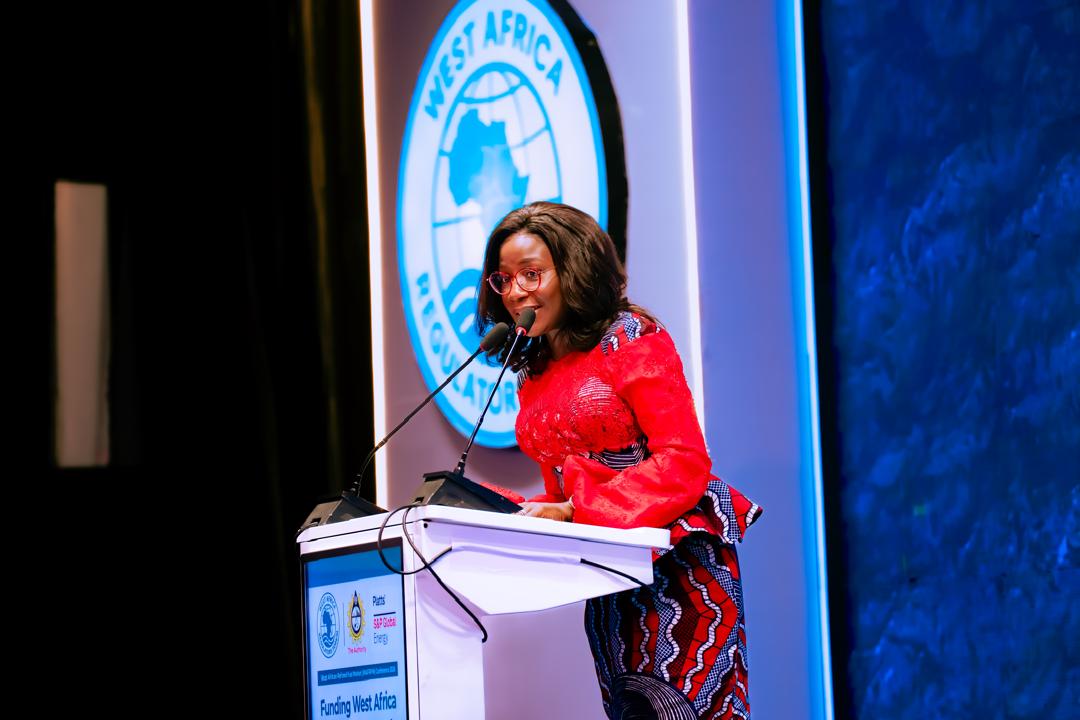
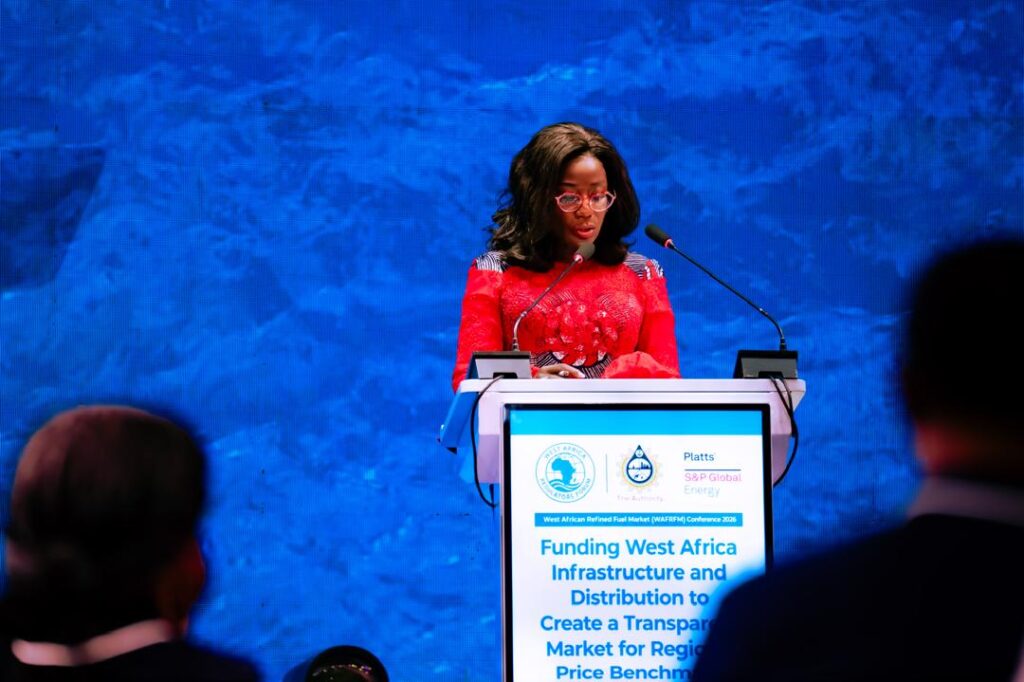
Verheijen made the call while representing President Tinubu at the Second West African Refined Fuel Market Conference, where stakeholders examined ways to improve the movement and trading of refined petroleum products across the region.
She said Nigeria’s growing refining capacity should serve as a platform for regional energy security and greater economic integration, rather than operate in isolation.
Read the full remarks by Verheijen:
REMARKS BY OLU AROWOLO VERHEIJEN
SPECIAL ADVISER TO THE PRESIDENT ON OIL AND GAS
REPRESENTING HIS EXCELLENCY, PRESIDENT BOLA AHMED TINUBU, GCFR
AT THE SECOND WEST AFRICAN REFINED FUEL MARKET CONFERENCEProtocols.
Distinguished guests, ladies and gentlemen,
It is my honour to join you at this distinguished gathering.
This conference is timely because West Africa’s energy challenge is entering a new phase.
The question before us is no longer simply whether our region has the resources or refining capacity to meet its energy needs. Increasingly, we do.
The more important question is whether we can build the infrastructure, financing systems, regulatory institutions and transparent markets required to move energy efficiently from where it is produced to where it is needed.
That is why the theme of this conference is so important.
West Africa is not short of demand. We are not short of resources. What has constrained us is the fragmentation of our markets and the absence of sufficient infrastructure to connect supply, demand and capital across the region.
Refining capacity alone cannot create energy security
Refining capacity alone does not create energy security.
A refined product only delivers economic value when it can be financed, stored, transported and distributed reliably. Without infrastructure, supply remains stranded. Without transparent pricing, investors price uncertainty rather than opportunity. Without regulatory coordination, borders become bottlenecks rather than gateways to trade.
Price transparency is therefore not simply a reporting exercise. It is essential market infrastructure.
A credible regional benchmark cannot be declared into existence. It must be built on actual transactions, reliable data, sufficient market liquidity and confidence in the institutions that support it.
Our ambition should be that a product refined in West Africa should not have to leave West Africa before the market can credibly determine its value.
Under President Tinubu’s leadership, Nigeria has undertaken difficult but necessary reforms to create a more competitive energy market, strengthen the investment environment and reposition energy as an engine for economic growth.
Today, Nigeria refines the majority of the petrol we consume domestically. Imports have fallen significantly, while refined products produced in Nigeria are increasingly reaching markets across Africa and beyond.
But increased refining capacity also creates a new responsibility.
We must build the pipelines, ports, storage facilities, coastal vessels, trucking networks and trading platforms required to move products safely and efficiently. We must expand access to trade and infrastructure finance. We must establish common product standards and strengthen cooperation between regulators, customs authorities and market participants.
Nigeria’s scale must become a platform for regional energy security—not a substitute for regional cooperation.
The President’s ambition is clear: Nigeria should serve as a dependable anchor for a deeper, more competitive and increasingly integrated West African energy market.
Every stakeholder has a role in regional energy security
To achieve this, every stakeholder represented here has a role.
Financial institutions must develop funding structures that recognise the long-term value of energy infrastructure and support credible projects across the distribution chain.
Industry must invest, execute and provide the reliable transaction data required to build confidence in regional price benchmarks.
Governments must create predictable policies and remove unnecessary barriers to cross-border trade.
And regulators must protect the public interest while enabling investment, innovation and competition.
In this regard, I would like to particularly commend the new Authority Chief Executive of the Nigerian Midstream and Downstream Petroleum Regulatory Authority and the leadership direction now emerging at the Authority.
We are seeing a welcome emphasis on transparency, collaboration, commercial pragmatism and constructive engagement with industry.
This approach matters.
Strong regulation is not measured by the number of obstacles placed in the path of investment. It is measured by the clarity of the rules, the consistency of their application, the quality and timeliness of regulatory decisions, and the confidence the regulator inspires in citizens and investors alike.
Investor confidence is not built by lowering standards. It is built by establishing clear standards, enforcing them fairly and ensuring that credible investors can make long-term decisions with certainty.
The task now is to institutionalise this approach and ensure that the market experiences it consistently.
West African energy market needs scale and execution
This conference has already demonstrated its ability to translate dialogue into tangible outcomes.
The West Africa Regulator Forum emerged from last year’s gathering. S&P Global Commodity Insights has established an office in Abuja, and Platts has introduced Naira-denominated assessments for refined products produced in West Africa.
These are important foundations. But the next phase must be about scale and execution.
We must move from isolated transactions to deeper market liquidity; from individual infrastructure projects to connected regional corridors; and from periodic regulatory cooperation to sustained institutional coordination.
Ultimately, the success of these efforts will not be measured only by the volume of products traded or the sophistication of our price benchmarks.
It will be measured by whether our industries become more competitive; whether businesses can access reliable energy; whether new investments and jobs are created; and whether families across West Africa can obtain the energy they need at more affordable and predictable prices.
That is the purpose of our reforms.
That is the promise of regional integration.
And that is the responsibility entrusted to all of us gathered here today.
I congratulate NMDPRA, S&P Global Commodity Insights, the West Africa Regulator Forum and all the partners who have convened this important conference.
I wish you productive deliberations—and, more importantly, concrete outcomes that advance investment, regional energy security and shared prosperity.
Thank you, and God bless the Federal Republic of Nigeria.
Verheijen’s remarks come as Nigeria seeks to position its expanding refining capacity as a driver of regional energy security and economic integration. The push will require sustained investment in infrastructure, stronger regulatory cooperation and deeper cross-border trade. The outcome, however, will depend on how effectively West African countries turn the commitments and initiatives discussed at the conference into functioning regional energy markets.