

CBN Governor Olayemi Cardoso says all naira denominations, including N100 and N200 notes, remain legal tender and must be accepted. He attributes their scarcity to increased digital payments and reaffirms the apex bank’s commitment to achieving single-digit inflation despite external shocks.
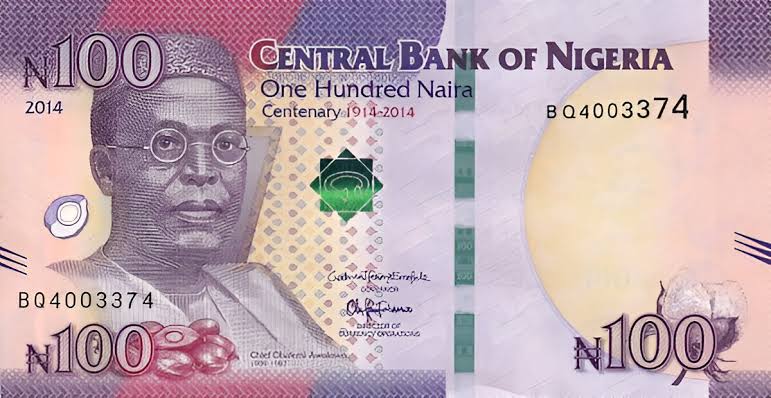
The Central Bank of Nigeria (CBN) has attributed the scarcity of N100 and N200 notes to the growing adoption of digital payment channels and the declining purchasing power of lower-value currency and is telling Nigerians that rejecting the notes is not an option, as no denomination has been withdrawn from circulation.
CBN Governor Olayemi Cardoso made the disclosure on Tuesday while speaking to journalists after the Monetary Policy Committee (MPC) meeting in Abuja.
What this means for Nigerians: the notes are still valid and must be accepted
Cardoso was unambiguous on the legal status of the scarce denominations and what it means for everyday transactions.
“Yes, they remain legal tender. Unless the central bank states otherwise, Nigerians should assume that all existing denominations remain legal tender,” he said.
The CBN’s position is clear: any individual, business or financial institution refusing to accept N100 or N200 notes is acting outside the law, as the apex bank has not withdrawn any denomination from circulation.
Digital shift and devaluation explain the shortage
Cardoso explained the twin forces behind the reduced availability of lower-denomination notes.
“As to why there appear to be fewer of these notes in circulation, it is largely a matter of demand and supply. The financial ecosystem is evolving in the direction we want it to, with greater financial inclusion and increased digitisation. As more people adopt digital payment channels, the demand for coins and lower-denomination notes naturally declines. If there is less demand for them, there is less need to print and circulate them in large quantities,” he said.
He also acknowledged the role of currency devaluation in eroding the practical usefulness of small-value notes.
“Of course, we must also acknowledge that currency devaluation has affected the purchasing power of lower-value notes. That is a reality. More importantly, however, as financial inclusion expands and digital payments become part of everyday life, fewer people will rely on these denominations.”
Single-digit inflation target intact despite external shocks
On inflation, Cardoso said the CBN remains committed to achieving single-digit inflation, even as unanticipated external pressures have slowed the pace of disinflation.
“It is important to remember where we are coming from. We recorded 11 consecutive months of disinflation and, from every indication, we expected that by early 2027 we would be where we wanted to be in terms of inflation, with a path towards single-digit inflation,” he said.
“Unfortunately, we have experienced external shocks that were not anticipated and have lasted much longer than anyone expected. As for our single-digit inflation target, we remain committed to it.”
CBN holds firm on market-determined exchange rate as IMF flags undervaluation

Responding to the IMF’s recent assessment that the naira is undervalued, with a fair value of approximately N1,150 to the dollar, Cardoso reiterated that the exchange rate must reflect market fundamentals rather than a fixed target.
“Our position remains the same. We will continue to ensure that Nigeria has a foreign exchange market that is transparent, liquid and based on a willing-buyer, willing-seller framework. Where the exchange rate eventually settles depends on market fundamentals. It is influenced by factors such as oil exports, foreign direct investment, domestic productivity and import substitution,” he said.
Cardoso said the CBN is satisfied with current conditions in the foreign exchange market, noting that Nigeria now has “a functional, transparent and open market” where “on some days, market turnover exceeds $1 billion, reflecting growing confidence.”