


Carlos Barragán spent six months in Lagos reporting on the Yahoo Boys. What he found will change how you see them.
Every week, we throw 10 questions at someone whose mind we find fascinating. The thinkers, founders, innovators, policymakers, builders, and culture-shapers quietly changing how we see the world and inspiring us to do things not just differently, but better-differently. First thoughts only.
This week, meet Carlos Barragán, reporter and researcher for the New York Times based in Madrid, and author of his book The Yahoo Boys (2026). His journey into the world of Nigerian internet fraud began personally, with a scammer who targeted his mother on Tinder. This took him all the way to the streets of Lagos, where he spent six months reporting a story that refused to fit the headlines he had been fed.
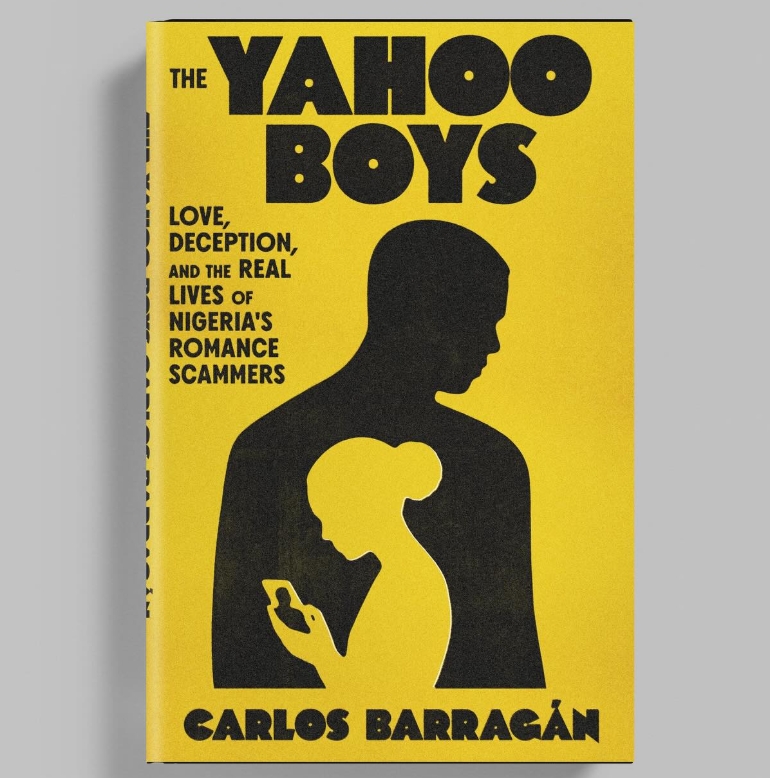
What he found was not a mafia. It was broke teenagers with phones, lonely victims on the other side of the world, and a web of historical, economic, and technological conditions that implicate far more than Nigeria. The Yahoo Boys is less a book about scammers and more an uncomfortable mirror held up to two worlds at once.
What does it take to tell a story about people who lie for a living, without becoming one more person who gets Nigeria wrong?
Read as Carlos shares his thoughts on fraud, loneliness, stereotypes, and why the most radical thing a young man can do is simply say no:
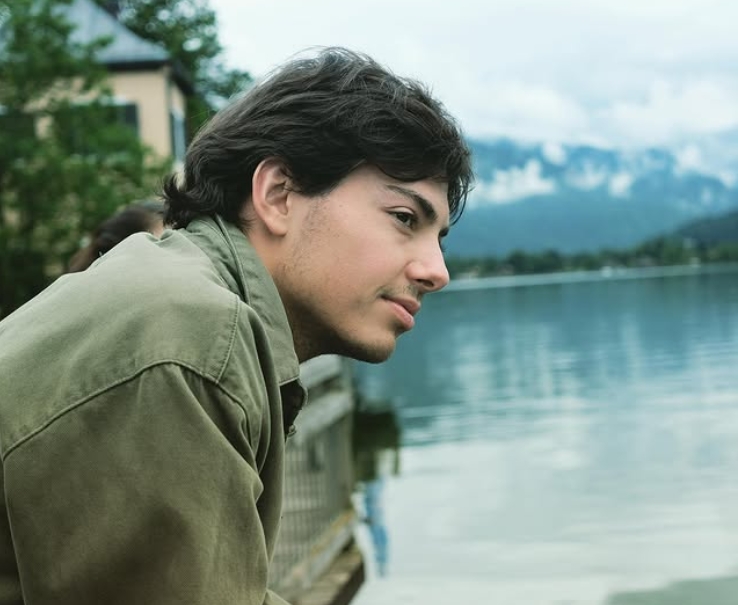
How a family scam led Carlos Barragaán to the Yahoo Boys of Lagos
1. Your search for the Yahoo Boys began with one man, “Brian,” the ‘American soldier’ who targeted your mother on Tinder before his emails led you to Lagos. When you boarded that first flight to Nigeria, what did you actually expect to find?
Perhaps it was my reckless youth, but I had not given much thought to who that person could be. Inevitably, I had in mind all the stereotypes I had consumed as a Western reader trying to find information about a Nigerian scammer, so I probably imagined someone dangerous and one-dimensionally evil.
2. You never did find “Brian.” Had you found him, what would you have wanted to ask him first?
Do you want to do a Netflix documentary together? Jokes aside, I would ask him about my mum. Why did he think she had fallen for it?
3. You’re a non-Nigerian journalist who wrote this largely for a Western readership. What kept you up at night worrying about whether or not you were, by writing this book, affirming/recycling every tired stereotype Nigeria already fights?
This did keep me up many nights, especially at the beginning. A white European man coming to Nigeria to write about the “Nigerian scammer.” A perfect scenario for failure and cliché! I was very aware that I was choosing a delicate subject. But the distance between what people in Europe and America thought about Nigerians living in Lagos and what my reporting was showing me was so wide that I decided it was worth it, especially when I discovered there was nothing specifically Nigerian about it—just the right set of historical, technological and economic conditions. I am convinced that, if you read the whole book, you will stop believing the stereotypical racist nonsense that Nigerians are scammers. Because how do you stop a stereotype? Just being human. It is all a matter of turning a stereotype (a one-dimensional view of reality) into a three-dimensional person with all its contradictions. A reader in Alaska or Shenzhen can suddenly relate to someone in Mainland Lagos, and then they are not “Nigerian scammers” but human beings trying to navigate the circumstances that oppress them.
Carlos Barragáan on reporting the Yahoo Boys: truth, lies, and six months in Lagos
4. You spent six months in Nigeria interviewing people who lie for a living. How does one report a true story out of professional liars?
It’s always hard to know when someone is lying to you. But when you report on something for so long, truth inevitably wins. You cross-check everything they tell you by interviewing people around them. You ask them for conversations with their victims (they cannot fake those). You ask the same questions in different ways over three years and, at some point, they surrender. Just in case, I always remained skeptical of their answers. By the end I realized these boys were not lying to me; they were lying to themselves.
6. The popular image is of slick, mafia-style syndicates, but you found something closer to broke teenagers, many working alone. Which version do you find more frightening?
The real one: small boys. Americans always want to believe a dangerous dark force is lurking in the shadows, and that it is only a matter of pouring more resources into the mightiest army in the world to solve the problem. But what do you do here? It is a harrowing image on both sides of the world. It means that a lot of Westerners are falling for kids—a sign of the devastating loneliness many of us experience. And it also tells you that, given the right conditions, many young people in Nigeria would not engage in this. I find this version more terrifying for one reason: you can clamp down on a syndicate, but how do you put a small boy on the right track? It requires societal change. I hope smarter people than me can come up with the right solutions after reading the book.
6. Of the young men at the centre of the book, is there one you still think about, or are still in touch with?
I am still in touch—thanks to Bukola Omoseni, my very good friend, an Ikotun local, and my partner on the book—with all of them except Miracle. Azeez, the youngest of the characters, is always in my mind. His story is heartbreaking, and I hope things work out for him. He started scamming but (spoiler alert) later quit after his grandmother, an illiterate Yoruba hawker, told him that if he kept doing it, she would disown him. Again, this story proves there is nothing particularly “Nigerian” about scams; it is the socioeconomic and historical conditions that make them easy. Still, some people, like Azeez’s family, even in the hardest circumstances, decide against them. I hope a Nigerian filmmaker makes a movie about him one day, in the vein of City of God. Happy to help.
Carlos Barragáan on Yahoo Boys, artificial intelligence, and the future of online fraud
7. The whole Yahoo Boy phenomenon traces back to the “Nigerian prince” emails of the 1990s. With AI now able to fake a face and a voice in real time, how much worse is this about to get?
It will depend on the tech platforms. In the end, all these crimes happen in their backyard. But as one of the characters in the book says, do you know how hard it is to remember ten victims’ backstories at once? AI can help you remember all of them.
8. The other side to the story is the loneliness of the targets / victims. After all of this, what do you understand about loneliness that you previously didn’t?
That the West—and inevitably the rest of the world, which will catch up in one way or another—is terribly lonely, mostly because tech companies have built golden cages that distance us from the people we love. We need physical connection. The idea that the internet was going to bring us closer was a myth. Stop staring at your phone. Hug your sister. Kiss your brother. Ask your parents if they need anything. Go for a walk with a friend. Smile at a stranger at the bus stop.
9. Having now researched and written this book, and become very familiar with Nigeria, what three books would you recommend to someone trying to better understand Nigeria?
Early in the project, I decided I would avoid books by Western writers on West Africa—I’m looking at you, Kapuscinski—and read as many novels as possible by Nigerian writers. I focused on Lagos because, unfortunately, I could not travel much on my slim budget. But Lagos is the perfect literary city, the same way New York is the perfect movie city. Everyone is, in a sense, a literary character and, at the same time, the author of their own novel: you have to wise up very fast and come with impossible plots all the time to keep up with reality. A strange feat.
Obviously, I would recommend every book by Chinua Achebe. Not just to understand Nigeria, but to understand the modern world and the conflicts that come with it. My favourite—and most underrated—is A Man of the People. Then I would add his conversation with Caryl Phillips about Joseph Conrad in The Guardian, who gets to write about whom, and why Western writers have so often failed when depicting lives that are not their own.
Chris Abani’s Graceland was an important inspiration for my book. I would rather have a Western reader read that book than mine if they want to understand what it is like to grow up in a slum in Lagos. It’s also a fascinating plot. And there are so many great female writers. From the obvious (Chimamanda) to the fabulous (Ayobami Adebayo). Both should feature on any list of the best contemporary writers in the world. But I would pick Nearly All the Men in Lagos Are Mad, by Damilare Kuku. Such a hilarious—and true—book.
10. The Daily Circular’s readers are primarily Nigerian. When a young man in Ikotun finally reads this book about himself, what do you most hope he feels by the last page?
A young man in Ikotun has enough on his plate without me telling him what to learn from this book. But I hope he understands that his life is shaped by political, economic, and technological decisions made by people far away from him, while also recognising that life always gives us choices. Sometimes it is easy to make the right decision; other times it requires a miracle. But our actions have consequences that, in one way or another, always come back to us.
Many of the young men in this book feel they have no power whatsoever beyond a phone in their hands. They are not wrong. They live in an oppressive environment marked by rampant poverty, aggressive policing, corrupt politicians, greedy international companies, and indifferent nations. To place all the responsibility on them would be unfair; it would mean blaming the last link in a very long chain.
But I hope they also learn that power takes many forms. Sometimes the most radical thing you can do is say “no.” That is a good place to start: redirecting your power, your energy, and your ambition elsewhere. Hurting others can never be the answer.
Connect with Carlos Barragán on IG: carlosjbarragan