


Every week, we throw 10 questions at someone whose mind we find fascinating — the thinkers, founders, innovators, policymakers, builders, and culture-shapers quietly changing how we see the world and inspiring us to do things not just differently, but better-differently. First thoughts only.
This week, meet Oreva Ode-Irri, a writer and celebrated spoken word artist whose debut spoken word EP, released in 2022, amassed thousands of streams worldwide. She is the author of multiple works including Avalanche, her most personal book, Absolution, the novel she considers one of her finest, and her latest, This Thing Called Love. Her words do not just sit on a page; they move, breathe, and perform, blurring the line between literature and music, between the written and the felt.
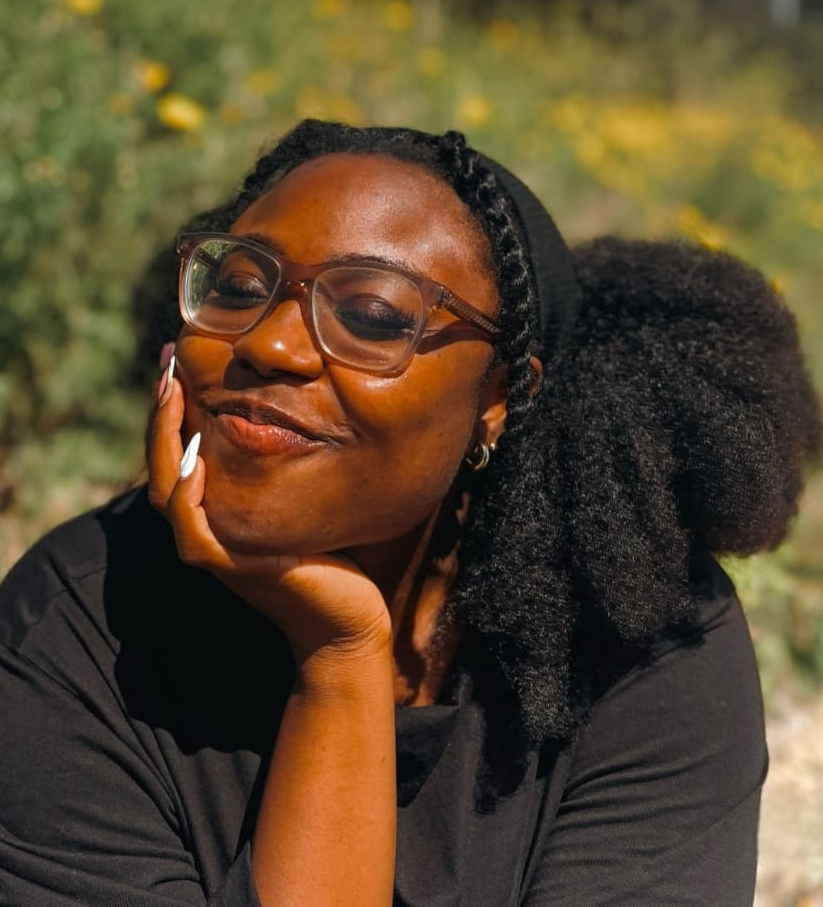
Driven by a motto as simple as it is powerful, one heart at a time, Oreva has built a body of work rooted in Nigerian identity, deep emotion, and the belief that art should make you think, or make you feel warm, or both.
What does it take to write words that people do not just read, but carry with them?
Read as Oreva shares her thoughts on writing, performance, and the art of turning feeling into something unforgettable:
- How do you decide whether a piece becomes a piece on a page or a performance on the mic?
I think it depends. Every piece on the page is a potential performance piece because for me, the writing always comes first.
- What made you want to preserve your voice on an album rather than just in print?
I love performing. I love putting words to paper and I equally love music. People might never open a poetry chap book but they’ll always listen to an album. Doing an album gave me the opportunity to fuse poetry and music in ways I would never have been able to do on print. That immersive experience was the goal for me.
- How do you prepare your body and mind before a spoken word performance?
Deep breaths. Affirmations (sometimes). Most times, I speak in tongues under my breath for a while to build confidence. Then repeat the piece till it’s burned into my brain.
- Which of your books felt the most like surgery to write — and why?
Avalanche. The theme I was exploring in the book was deeply personal to me and I was living through some of the feelings as I wrote them.
- What’s one thing you’ve written that you wish more readers would find?
Absolution. My second novel. To me, it’s one of my finest works. The themes, the story, the premise. My writing has definitely improved but the story still remains relevant.
- How much of your writing would you say is documentation, and how much is imagination?
Hmm. I try not to incorporate my personal experiences into the fiction that I write. So, I’ll say it is more imagination than documentation but with my poetry, it’s a little bit of everything.
- Who introduced you to the idea that your voice — literally — was an instrument?
I think I stumbled into it. I saw people perform, became enraptured with the art and practiced until I perfected my “voice”. It was like fire in my bones, I couldn’t rest until I devoured the art.
- How has your Nigerian identity shaped the rhythm of your work?
We are all a combined product of nature and nurture. It’s hard to live through a place like Nigeria and for it not to seep into the art that you create. It is a very unique experience to be Nigerian.
- Has an audience reaction ever completely changed how you understood one of your own pieces?
Yes. Art is so subjective and sometimes, I listen to someone talk about what a piece means to them and I think “omg. I never saw it that way” because when you write, you are limited to your own worldview. But worldviews are endless and interpretations would always abound.
- What do you want someone who has never read or heard you before to feel after they do?
I’m always after inspiration and sentiment. I want to provoke you to thought or make you feel warm/seen just by crossing paths with my art. One heart at a time is my forever motto.
Connect with Oreva Ode-Irri on IG: @rehviie