

With over 1.6 million invalid registrations removed and 54 officials implicated in alleged irregularities, INEC must demonstrate that its clean-up is thorough, transparent and fair to legitimate voters.
The credibility of Nigeria’s 2027 general elections is already facing a serious test, and not a single vote has been cast. The discovery of duplicate registrations, suspicious photographs and records belonging to deceased persons in the voters’ register raises troubling questions about the integrity of the system that determines who is eligible to vote.
The Independent National Electoral Commission (INEC) has now acknowledged the scale of the problem. On November 9, its chairman, Joash Amupitan, announced that the commission had removed 1,608,660 invalid registrations from the 2025/2026 Continuous Voter Registration exercise. Another 873 records belonging to verified deceased persons were removed separately.
More disturbing is the disclosure that 54 registration officials across 10 states have been identified for disciplinary investigation, including possible prosecution, over alleged manipulation of registration procedures.
These findings cannot be dismissed as routine administrative errors. They raise legitimate concerns about the safeguards protecting Nigeria’s electoral database and the conduct of officials entrusted with maintaining it.
INEC deserves recognition for identifying and removing invalid entries. But correcting a compromised register is only part of its responsibility. The commission must also explain how the irregularities occurred, who was responsible and what has changed to prevent them from happening again.
A clean voters’ register is the foundation of credible elections
According to INEC, its Automated Biometric Identification System initially flagged 1,545,052 of the 11,088,238 records collected during the three phases of voter registration for further examination.
Before publishing the preliminary register, the commission had confirmed 1,277,052 registrations as invalid. Following public complaints, another 268,000 records underwent review, resulting in the removal of 217,722 entries, while 50,278 were cleared as valid. Additional screening identified 113,886 more invalid registrations.
These figures demonstrate the importance of verification. They also show why public scrutiny remains essential.
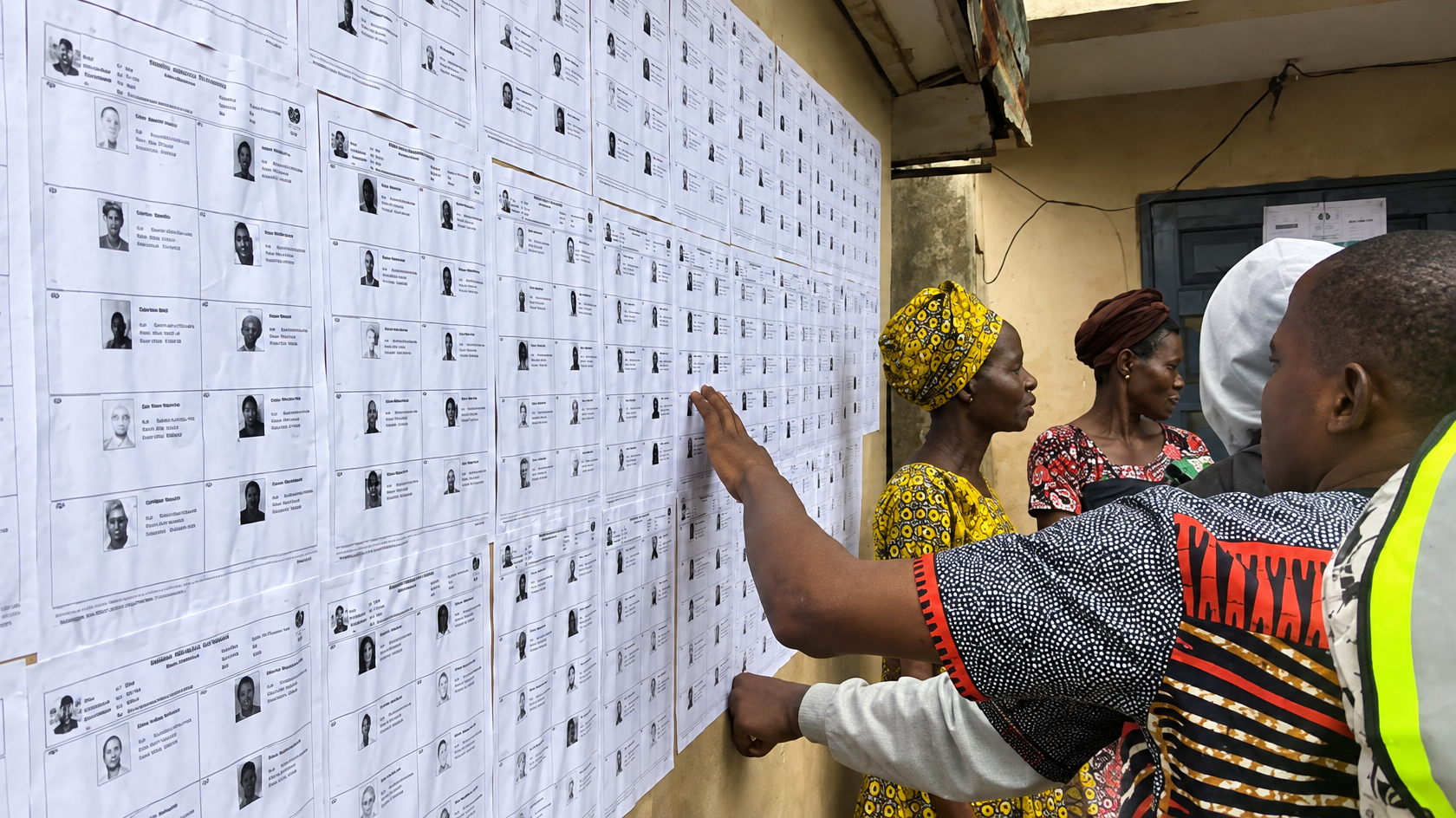
The irregularities attracted widespread attention after Nigerians examined the preliminary register published online in October and identified questionable entries, including photographs suspected to have been artificially generated or manipulated.
INEC has explained that the preliminary register was published to allow citizens to identify errors before final certification. That process is legitimate and necessary. However, the discovery of questionable records must also prompt an examination of the commission’s internal safeguards.
If registration officials could bypass established procedures or misuse provisions intended for persons with disabilities, how effective were the controls governing access to the system?
The commission must establish whether the breaches resulted from weak supervision, compromised credentials, deliberate misconduct or a combination of failures.
Technology alone cannot guarantee credible elections when those operating it can circumvent the rules.
The 54 officials must face a transparent investigation
INEC’s disclosure that 54 personnel have been identified in connection with registration irregularities is particularly serious.
The commission says some officials deliberately bypassed registration procedures and abused exceptional registration provisions. These are allegations that require proper investigation, not assumptions of guilt.
Nevertheless, the public deserves to know whether those responsible for maintaining the register acted negligently, abused their access or participated in deliberate manipulation.
INEC should disclose the states and registration centres involved, the nature of the identified breaches and the outcome of disciplinary investigations, without compromising due process or personal data.
Where evidence establishes criminal conduct, the appropriate authorities should prosecute those responsible.
The commission must also examine whether the misconduct extended beyond individual registration officers. Supervisory arrangements, access controls and internal audit procedures deserve scrutiny.
Removing suspicious entries without addressing the weaknesses that allowed them into the database would leave the electoral system vulnerable to further abuse.
Genuine voters must not become casualties of the clean-up
There is another danger INEC must avoid: removing legitimate voters while attempting to eliminate invalid registrations.
Amupitan acknowledged complaints from Nigerians who could not find their names on the preliminary register. According to him, some had registered previously but attempted fresh registration after relocating instead of transferring their existing records.
Their subsequent registrations were rejected as duplicates, while their original records remained at their former locations.
This distinction matters. A voter whose new registration is invalidated may still be eligible to vote but could face practical difficulties if the correct record remains in another state or polling unit.
INEC must make the process of checking and correcting registration details straightforward, accessible and properly publicised.
The commission should establish clear procedures for challenging wrongful exclusions, resolving duplicate registrations and transferring existing records where permitted.
It must also provide assistance to people in rural communities and those without reliable internet access.
An accurate register should prevent fraudulent voting without denying eligible citizens their constitutional right to participate in elections.
INEC must also confront irregularities in older records
One of the most troubling aspects of Amupitan’s announcement is his acknowledgement that significant problems remain in records created between 2011 and 2023.
The commission says many suspicious entries circulating online originated from earlier registration exercises conducted under different technologies and operational standards.
This means the latest clean-up, however extensive, does not settle every concern about the national voters’ register.
INEC must therefore explain how it intends to address historical irregularities before the 2027 elections without imposing a rushed revalidation exercise that could exclude legitimate voters.
Independent technical scrutiny would help strengthen public confidence. Credible election observers and qualified data specialists should be allowed to examine the commission’s verification procedures under appropriate security and privacy safeguards.
INEC should also publish a detailed audit report explaining the categories of invalid registrations, the corrections completed and the controls introduced to prevent further manipulation.
Even the figures announced require clarification. The commission stated that 1,608,660 invalid registrations and 873 deceased voters’ records had been removed, but reported a combined total of 1,609,553. The stated components add up to 1,609,533, leaving a discrepancy of 20 records.
The difference is small relative to the overall figure, but electoral records require precision.
Credible elections begin long before polling day
INEC has scheduled the publication of the final voters’ register for December 15, 2026. That deadline should be accompanied by a clear public account of what has been corrected and what remains outstanding.
The commission must demonstrate that its technology works, its personnel can be held accountable and eligible citizens have effective remedies when mistakes occur.
Political parties, civil society organisations and the National Assembly also have responsibilities to support transparency and demand compliance with electoral laws.
The credibility of the 2027 elections cannot rest solely on what happens at polling units. It begins with the integrity of the register used to identify voters.
INEC has taken an important step by removing invalid entries. It must now complete the harder work of establishing responsibility, correcting underlying weaknesses and protecting legitimate voters.
Nigerians should not arrive at polling units in 2027 only to discover that the system has failed them before voting even begins.