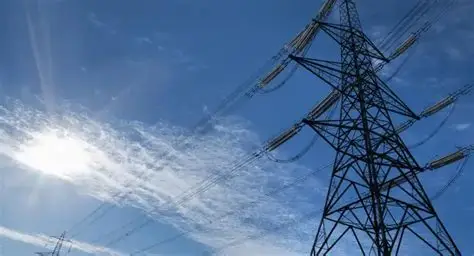
The Federal Government targets January 2027 to begin replacing ageing national grid infrastructure as a technical audit identifies faults across transmission facilities.
The Federal Government is targeting January 2027 to begin replacing ageing infrastructure across Nigeria’s national electricity grid, as part of efforts to address transmission bottlenecks and improve power supply.
Minister of Power, Joseph Tegbe, disclosed this on Monday during an interview on TVC’s Breakfast Show.
He said the replacement exercise would commence within the next one to two months, following a technical audit aimed at identifying faulty infrastructure and determining where government investment is most urgently needed.
“So in the next one or two months, we will commence infrastructure replacement across our grid…. President Tinubu is extremely supportive of what we are doing,” he said.
Tegbe identified electricity transmission as the biggest constraint in the power sector, noting that some of Nigeria’s transmission lines had been in operation for as long as 50 years.
He said the ministry had spent about a month conducting a technical audit of the entire power sector to identify facilities requiring repairs or replacement and ensure that available funds were directed towards the appropriate areas.
“I’m a systems person. So do a technical audit of the entire power sector. And today, we’ve gone about one month into the technical audit. We’ve seen some of the results,” he said.
According to the minister, preliminary findings have revealed faults across different components of the transmission infrastructure, including towers, insulators and conductor relays.
“There are places where it is towers that have issues. There are places where it’s insulators. There are places where it’s a conductor relay,” he said.
He explained that the audit was necessary to prevent the government from spending money on the wrong components when other parts of the infrastructure required more urgent attention.
“What you don’t want to do is start spending money on insulators when you are meant to fix a conductor relay. Now we’re getting a clear picture,” he said.
Gas supply constraints limiting power generation
Tegbe also said Nigeria had sufficient natural gas reserves to support electricity generation but faced constraints within the gas supply chain, including liquidity challenges and outstanding debts owed to electricity generation companies (GenCos).
His comments come amid differing explanations from power sector agencies over the factors responsible for the recent decline in electricity generation.
On November 5, the Nigerian Independent System Operator (NISO) attributed the decline partly to limited gas availability for thermal power stations and reduced water inflows into hydroelectric reservoirs.
The operator said the constraints had reduced electricity available for distribution companies (DisCos), resulting in shorter supply hours and increased load shedding across their networks.
However, on November 7, the Nigerian National Petroleum Company (NNPC) Limited said its gas transportation network had no operational constraints responsible for the decline.
In a statement, NNPC said the network operated by its subsidiary, NNPC Gas Infrastructure Company Limited, remained available to support gas deliveries to power-generating stations nationwide.
The company also clarified that the availability of its transportation infrastructure should be distinguished from gas production, commercial supply arrangements and actual deliveries to individual power plants.
Reacting to the differing positions, Tegbe said his priority was to ensure that Nigerians had access to electricity, urging relevant agencies to work together rather than focus on disagreements over gas availability and the state of the national grid.
He maintained that Nigeria had sufficient gas reserves but acknowledged that financial constraints within the supply chain were affecting its availability to power plants.
“We have gas as a nation. However, sometimes, that liquidity issue becomes a constraint,” he said.
“There’s availability of gas for us as a nation. It’s a comparative advantage. However, within the gas supply chain, there are constraints,” he added.
The minister identified the inability of generating companies to purchase gas, partly because of outstanding debts owed to them, as one of the challenges affecting supply.
He put the outstanding debt at N3.3 trillion, saying the Federal Government had begun settling the obligations with the support of President Bola Tinubu.
“In the last few months, we’ve paid down N1.23 trillion. We only have N2 trillion left. That N2 trillion, hopefully next year,” he said.
The N1.23 trillion payment represents part of the government’s efforts to address liquidity problems in the electricity market, which have affected the ability of generating companies to secure gas for their power plants.
Ageing power plants add to generation challenges
Beyond transmission infrastructure and gas supply, Tegbe identified the age of some electricity generation plants as another factor affecting power supply.
He said the government was replacing some ageing facilities with newer ones as part of efforts to improve generation capacity.
The minister said addressing financial constraints across the gas supply chain, upgrading transmission infrastructure and improving generation facilities would help strengthen electricity supply.
However, the planned infrastructure replacement will follow the ongoing technical audit, with the government expected to determine which facilities require repairs and which need complete replacement.
The success of the exercise will depend on the timely release of funds, execution of the identified projects and coordination among agencies across the electricity value chain.
For consumers, the January target is an indication of the government’s proposed intervention, but improved electricity supply will ultimately depend on whether the transmission, generation and distribution challenges are addressed together.