

The proclamation seeks to protect historic White House rooms from major structural changes, but it does not prohibit redecorating or prevent future presidents from reversing the designation.
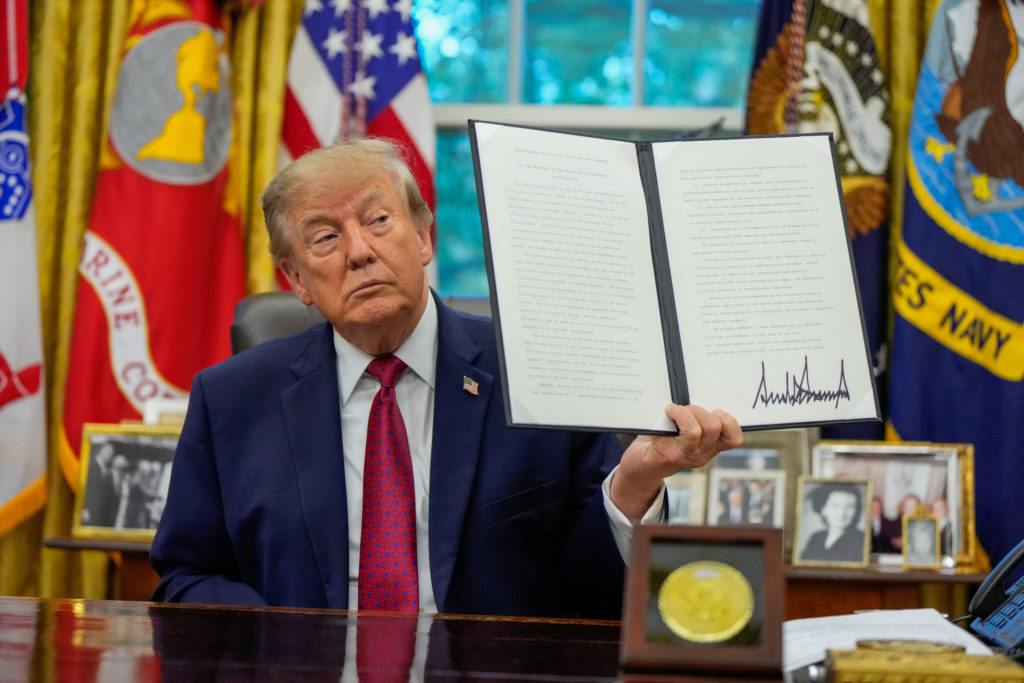
President Donald Trump has signed a proclamation designating the Oval Office and adjoining White House rooms as a national monument, aiming to prevent future administrations from substantially altering or demolishing the historic spaces.
Trump signed the proclamation on Thursday, November 5, 2026, two days after his Republican Party lost control of both chambers of Congress in the midterm elections.
The designation, issued under the Antiquities Act of 1906, covers the Oval Office, the Outer Oval Office and the Cabinet Room in the White House’s West Wing.
Trump said the decision would protect the rooms from major structural changes by future presidents.
“We’re making it a national monument, and it will not be allowed to be touched by anybody,” he told reporters during the signing ceremony.
However, the proclamation does not impose an absolute ban on alterations. It expressly permits future presidents to redecorate the rooms, replace furnishings and undertake routine operational or security modifications that do not substantially damage their historic character.
The legal extent to which the designation can restrict future administrations also remains uncertain.
What Trump’s Oval Office monument designation means
According to the proclamation published by the White House, the designation is intended to preserve the architectural integrity and historical significance of the Oval Office and Cabinet Room.
The order directs the US Secretary of the Interior, working through the National Park Service, to develop a management plan protecting the spaces.
Under the arrangement, any proposal to substantially alter or demolish the protected rooms must undergo documentation, review and consideration of alternatives.
The Interior Department must also assess whether proposed changes are consistent with the historical significance of the rooms and consult relevant White House preservation bodies.
The proclamation invokes the Antiquities Act, which authorises presidents to designate historically or scientifically significant sites on federally controlled land as national monuments.
The White House and its grounds already have National Historic Landmark status, but the administration argues that the Oval Office deserves additional recognition because of its central role in American political history.
The current Oval Office dates to the administration of President Franklin D. Roosevelt, although its distinctive oval design was first introduced in the West Wing under President William Howard Taft.
Can future presidents change the Oval Office?
Despite Trump’s assertion that the rooms would be protected against future alterations, the proclamation contains important exceptions.
It states that nothing in the designation restricts presidential authority to change decorations, select furniture or carry out ordinary security and operational work that preserves the rooms’ structural and architectural character.
This means future occupants of the White House could still replace portraits, furnishings and decorative features.
Trump suggested during the signing ceremony that significant changes would require congressional approval and that the proclamation would be submitted to Congress for ratification.
However, the published document does not establish a general requirement for Congress to approve every substantial modification.
The designation’s ability to bind future presidents is also disputed. Legal reporting by the Associated Press and The Washington Post indicates that a subsequent administration could seek to reverse or modify the proclamation.
The central distinction is between protecting the rooms against substantial architectural damage and permanently preventing future presidents from making changes.
Trump’s proclamation introduces preservation requirements, but it does not establish the absolute prohibition suggested by his public remarks.
Decision follows Republican losses in US midterm elections
The announcement came shortly after Democrats secured control of both the House of Representatives and Senate in the November 3 midterm elections.
The Associated Press called Democratic control of the Senate late on election night and the House early on November 4, delivering a significant political setback to Trump’s administration.
The results followed voter concerns over economic conditions, the cost of living and the consequences of the United States’ war with Iran.
Reuters reported that opposition to the administration’s policies, including the economic effects of the conflict, contributed to Democratic gains.
Rather than focusing primarily on the election results during his first public appearance afterwards, Trump highlighted progres