


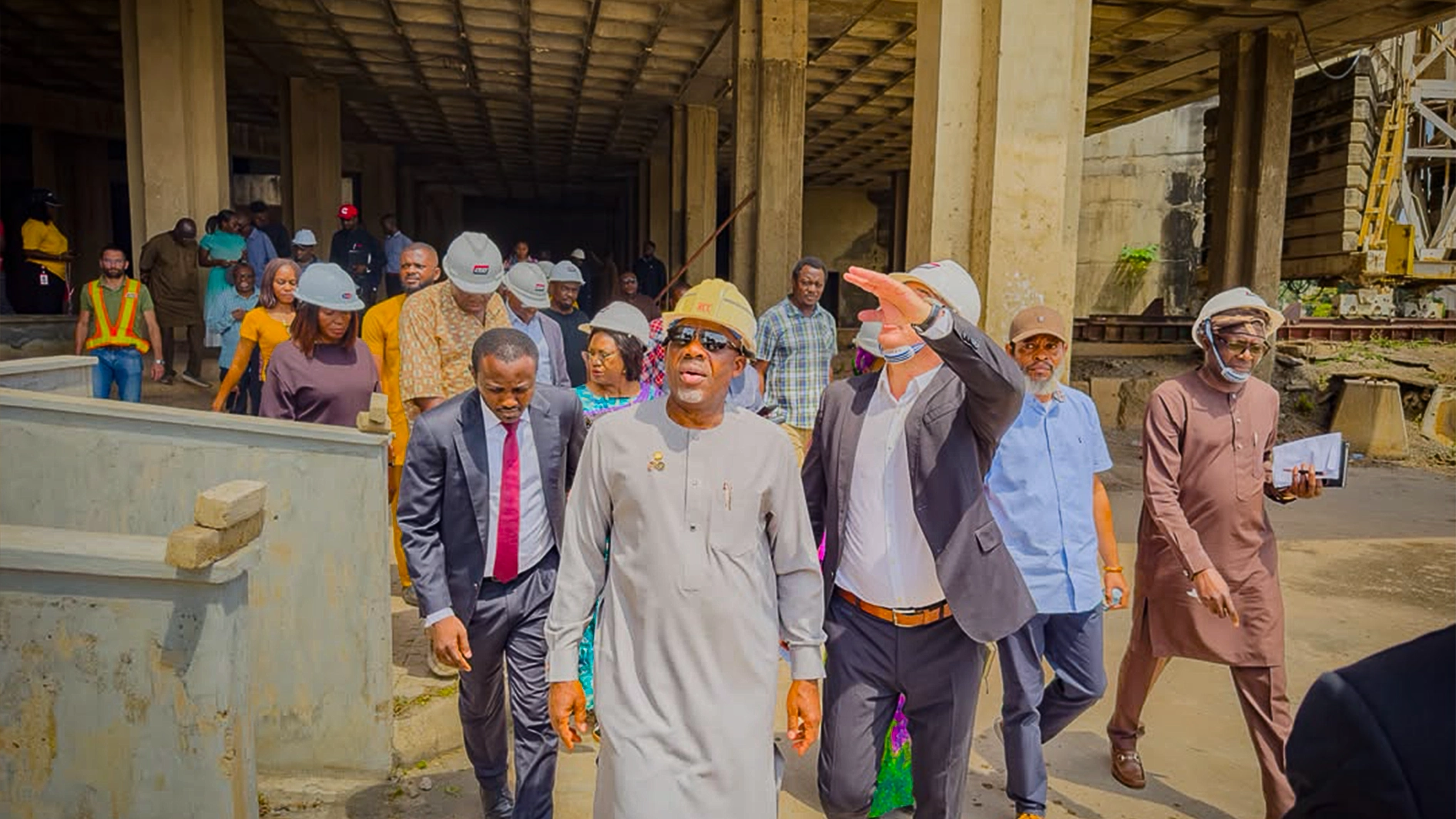
Education Minister Tunji Alausa promises uninterrupted construction and timely contractor payments as the government moves to complete the long-delayed Abuja headquarters.
The Federal Government has set a 24-month deadline to complete the National Library of Nigeria headquarters in Abuja, nearly 20 years after construction began on the project initially valued at ₦8.59 billion.
Minister of Education Tunji Alausa announced the renewed completion target during an inspection of the construction site on November 5, 2026, assuring that funding and administrative delays would no longer obstruct the project.
The government has approved approximately ₦155 billion for the construction and furnishing of the complex, with the latest deadline placing its expected completion in 2028.
The project, awarded to Reynolds Construction Company (RCC) in 2006, was originally scheduled for completion within two years. However, repeated funding shortages, contract variations and administrative delays left the structure unfinished through successive administrations.
Alausa said contractors had returned to the site and commenced work, while the Ministry of Education had established procedures to ensure prompt payments and prevent another interruption.
“Our own commitment at the Federal Ministry of Education is that work will not stop for one day until we get to the point where we commission this building,” he said.
National Library project cost rises from ₦8.59bn to ₦155bn
The National Library headquarters project was conceived in 1981, but construction did not commence until April 29, 2006, under former President Olusegun Obasanjo.
The original ₦8.59 billion contract had a completion period of approximately 22 months.
By 2010, the contract sum had been reviewed to ₦17.01 billion following adjustments linked to rising construction costs. Subsequent reviews and funding difficulties prevented the project from reaching completion.
In 2015, the estimated cost had risen further, with the contractor later submitting substantially higher figures for outstanding work.
By 2022, estimates for completing the project had reached approximately ₦100 billion.
In May 2024, The Guardian reported that the cost could exceed ₦200 billion, reflecting continuing concerns about inflation, contract revisions and the prolonged abandonment of the facility.
The latest intervention followed the Federal Executive Council’s approval in August 2026 of ₦118.309 billion to complete construction and approximately ₦37 billion for furnishing.
Together, the two amounts represent a funding requirement of about ₦155.3 billion.
The figure covers the latest approved completion and furnishing requirements and should not be confused with the project’s total historical expenditure.
Alausa promises uninterrupted funding and contractor accountability
During the inspection, Alausa said the ministry had introduced procedures to prevent payment delays and administrative bottlenecks.
“We have put processes in place on how the contractor will request additional payment. I am going to speak publicly to all contractors and consultants today. If there are delays in processing, I need to know,” he said.
The minister attributed the renewed construction efforts to President Bola Tinubu’s directive to mobilise resources for the project.
He also acknowledged the involvement of First Lady Oluremi Tinubu, whose fundraising initiative has contributed to efforts to revive the complex.
The Tertiary Education Trust Fund is among the institutions supporting the government’s financing arrangements.
In September, Alausa warned contractors that failure to meet agreed delivery targets could attract sanctions, with the ministry proposing performance measures to strengthen accountability.
The latest timetable follows earlier assurances by successive administrations that the headquarters would be completed.
Why completing the National Library matters
The National Library of Nigeria, established in 1964, is responsible for collecting, preserving and providing access to the country’s published intellectual and documentary heritage.
Its proposed headquarters in Abuja is designed to accommodate research facilities, reading rooms, exhibition spaces, digital information services, administrative offices and archives.
The prolonged delay has deprived the institution of a purpose-built national headquarters despite repeated government commitments and substantial public expenditure.
In 2024, RCC disclosed that the complex was approximately 44.6 per cent complete, illustrating the scale of unfinished construction nearly two decades after the contract was awarded.
The government has not publicly established a sufficiently detailed, independently verifiable construction schedule showing the milestones needed to meet the new 2028 deadline.
For the latest commitment to deliver results, attention will turn to the regular release of funds, contractor performance, quality assurance and transparent reporting on expenditure.
The First Lady is scheduled to formally flag off the renewed construction drive on November 19, 2026.
Whether the government can meet its latest deadline will depend on sustained funding and measurable progress at a project that has repeatedly missed its completion targets.