

The Nigerian National Petroleum Company (NNPC) Limited recorded a profit after tax of ₦509 billion in September 2026, up from ₦431 billion in August, as revenue increased and the company reported the commissioning of the Obiafu-Obrikom-Oben (OB3) gas pipeline’s River Niger crossing.
The figures were contained in NNPC’s September monthly report summary, released on Tuesday, November 3.
The company’s revenue stood at ₦4.608 trillion in September, compared with ₦3.737 trillion in August, representing an increase of about 23.3 per cent. Profit after tax rose by approximately 18.1 per cent over the same period.
NNPC also reported cumulative statutory payments of ₦11.14 trillion to the Federation Account between January and September, compared with ₦9.487 trillion recorded between January and August.
The company cautioned that its production, sales and financial figures were provisional and subject to reconciliation with relevant stakeholders.
OB3 pipeline crossing commissioned
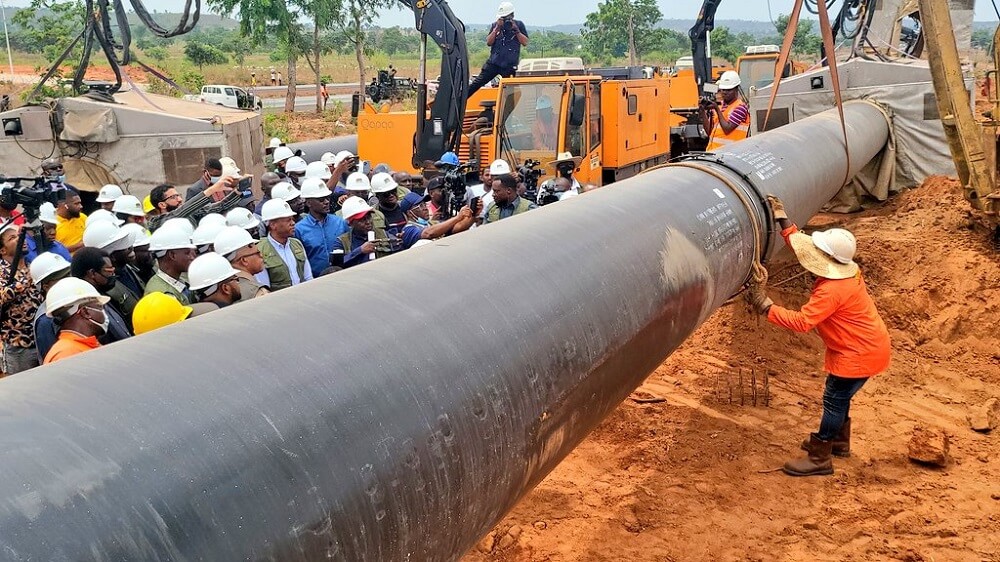
In its infrastructure update, NNPC said the River Niger crossing of the OB3 gas pipeline had been commissioned and operationalised.
The pipeline is designed to connect Nigeria’s eastern and western gas networks, addressing a major infrastructure gap in the country’s gas transmission system.
NNPC listed the OB3 pipeline as 100 per cent complete in its September report, while the Ajaokuta-Kaduna-Kano (AKK) gas pipeline stood at 95 per cent completion.
The company said it was continuing to work with stakeholders to accelerate construction and pre-commissioning activities on the AKK project, with the aim of delivering early gas supplies to Abuja in 2026.
The completion of the OB3 River Niger crossing is a significant infrastructure development, although the report does not provide details of the volume of additional gas expected to flow through the pipeline or its immediate impact on domestic supply.
Oil and gas production increases slightly
NNPC reported average crude oil and condensate production of 1.70 million barrels per day in September, compared with 1.69 million barrels per day in August.
Natural gas production also increased to 7,789 million standard cubic feet per day (mmscf/d), from 7,680 mmscf/d in the preceding month.
Total hydrocarbon production, measured in barrels of oil equivalent, rose to 3.04 million barrels per day from 3.01 million barrels per day in August.
The company attributed the improvement largely to the restoration of production from the Obodo field, located in Oil Mining Lease 150, and other assets.
Crude oil and condensate sales increased marginally to 24.63 million barrels in September, from 24.56 million barrels in August. Gas sales also rose to 4,793 mmscf/d, compared with 4,737 mmscf/d in the previous month.
Despite the improvement, NNPC said production remained affected by unplanned downtime arising from facility reliability problems, subsurface issues, flowline leaks, community protests and equipment failures.
Other constraints included storage and tank-top limitations, as well as disruptions to export infrastructure.
Petrol availability at NNPC stations remains at 54%
Despite the reported growth in revenue and production, petrol availability at NNPC Retail Limited stations nationwide remained at 54 per cent in September, the same level reported for August.
The figure measures availability across the company’s retail outlets and should not be interpreted as the proportion of petrol stations operating nationwide or as a measure of overall fuel availability across Nigeria.
NNPC said it was working to sustain production growth through the restoration of shut-in wells and facilities, production optimisation and well interventions.
It also listed preventive maintenance, improvements to facility reliability, repairs to subsurface and flowline integrity problems, and stronger engagement with host communities among its measures to reduce production disruptions.
The September report adds to the company’s monthly financial and operational updates as it pursues higher oil and gas output and the completion of key infrastructure projects.