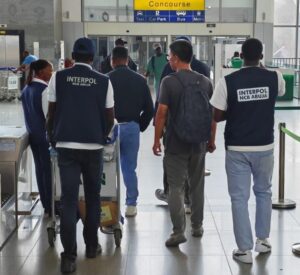



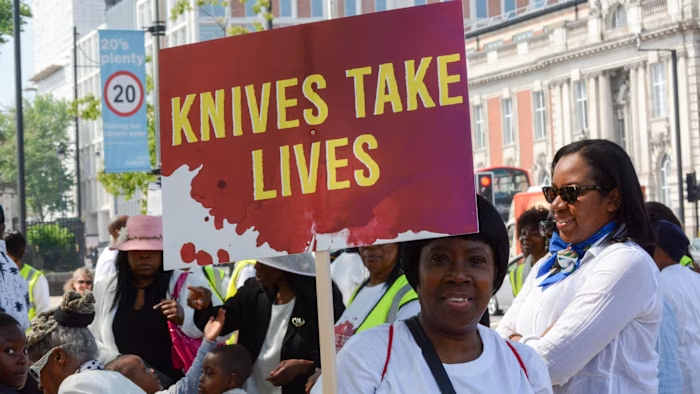
The UK has launched its ‘No Place for Knives’ campaign in parts of London and Birmingham, combining public awareness with stepped-up policing and facial recognition.
The Home Office has launched a knife crime prevention campaign called ‘No Place for Knives’ in parts of Westminster and Croydon in London, warning offenders of stepped-up police operations. The campaign is also being piloted in Birmingham city centre.
The Home Office announced the campaign on Monday, 2 November. It said the aim is to deter knife crime in identified hotspots and raise awareness of intensified police activity. Adverts will appear at tube stations, bus stops and on social media, and a mural will go up at Boxpark Croydon.
What the No Place for Knives campaign involves
The enforcement measures include “smarter metal detection, rapid-response electric bikes, additional foot patrols and live facial recognition”, according to the Home Office statement. The department said the campaign was developed with police and local authorities and targets people considered most at risk of committing knife offences.
Westminster, Croydon and 16 other Greater London boroughs have received more than £8.1 million through the Home Office’s Knife Crime Concentrations Fund, it said. The money pays for enforcement as well as prevention, including youth outreach and visible safety patrols in busy night-time economy areas.
Policing and Crime Minister Sarah Jones said: “Everyone in Westminster and Croydon deserves to feel safe on their streets. We know that hearing of knife crime incidents happening in your city can have the opposite effect and we want to stop that.”
She added: “‘No Place for Knives’ sends a clear message: action is being taken and we will not accept people putting young lives and our communities at risk.” The campaign forms part of the government’s aim to halve knife crime within a decade.
Commander Pete Stevens of the Metropolitan Police said: “Our officers work tirelessly to combat this senseless violence, proactively directing our resources towards the people who pose the most risk.” He said knife-enabled crime fell 14.9 per cent across London in the last financial year, and that hospital admissions after sharp-weapon attacks had dropped 29 per cent over five years.
Crimestoppers’ Director of Operations, Mick Duthie, urged people with information about knife carrying to report it anonymously. Patrick Green, chief executive of the Ben Kinsella Trust, welcomed the campaign.
“By listening to young people and reflecting their experiences in the campaign, the Home Office has created a stronger and more authentic platform for encouraging safer choices and preventing violence,” he said.
No Place for Knives: the figures and the facial recognition debate
The Home Office said knife crime has fallen 11 per cent since the general election, knife-related homicides by 25 per cent and knife-enabled robbery by 18 per cent. In London, it said, knife crime is down 14 per cent, knife-related homicides 34 per cent and knife-enabled robbery 19 per cent. These are Home Office figures, and I did not find independent confirmation.
Live facial recognition remains contested. Civil liberties group Big Brother Watch has called it “Orwellian”. In April, the High Court ruled the Metropolitan Police’s use of the technology lawful. Shaun Thompson, a knife crime campaigner who was wrongly flagged by the system, has pledged to appeal. The Home Office has also been consulting on a legal framework for police use of the technology.