

INEC says it has flagged 268 voter records over suspected AI-generated photographs and other irregularities, as opposition figures demand an independent probe before the December 15 certification.
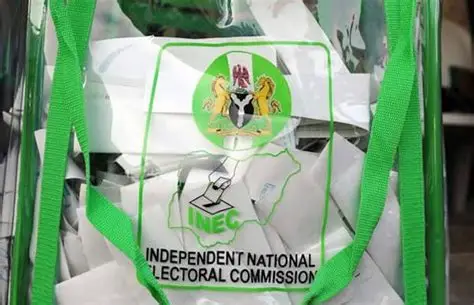
The Independent National Electoral Commission (INEC) says it has flagged 268 records in its preliminary Register of Voters over suspected artificial intelligence-generated photographs and other irregularities, and has begun removing them ahead of the 2027 general elections.
INEC’s Director of Information and Communication Technology, Lawrence Bayode, disclosed this in a television interview on Sunday. He said the commission’s Automated Biometric Identification System (ABIS) had identified the questionable records for further examination.
“What we are currently doing now is looking at all these 268 records that ABIS already flagged as AI-generated or even something of irregularities,” he said.
What INEC says about the voter register records
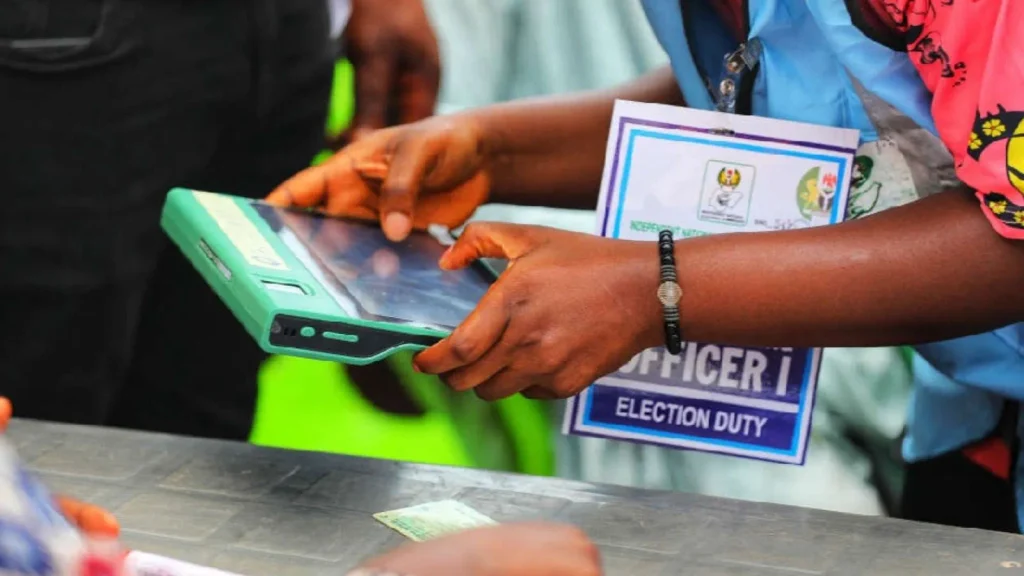
Bayode said some people exploited a special registration option designed for persons with disabilities who have incomplete fingers or no fingers, to create questionable voter profiles. He listed it among the loopholes behind the irregularities.
“Those that we have seen, we are cleaning up,” Bayode said.
He said photographs enhanced by phone applications would not lead to automatic exclusion, distinguishing them from images generated entirely by AI. “Those that we know it is the AI on the phone that helped enhance their pictures, we can’t exclude such people because it was the AI on the phone that does that. Such people will still be on the register but those AI-generated, those photographs, all these will be removed. We are already looking at them,” he said.
Bayode has also attributed some of the irregularities to registration officers who had login details giving them access to the registration system. “Some of these pictures are AI-generated. Some of them not AI-generated, but very bad registration,” he said.
His explanation is INEC’s own account, not an independent finding. The reports reviewed do not say whether any officer has been sanctioned or referred for prosecution.
The controversy began after INEC published the preliminary register online on 26 October. Screenshots circulated on social media showing suspicious photographs attached to voter records, particularly from Etsako West Local Government Area in Edo State. There were also concerns over alleged duplicate registrations, the names of deceased persons and complaints from registered voters that their details were missing. INEC has not confirmed that every photograph in the viral screenshots was AI-generated.
INEC said the online register was the same document displayed at Registration Areas nationwide from 9 to 15 October. In a statement, Mohammed Kudu Haruna, chairman of its Information and Voter Education Committee, said the online version did not reflect all the data-cleanup activities already under way. He said it was not the final certified document and that the Display, Claims and Objections exercise was designed to let the public report inaccuracies before certification. Chairman Joash Amupitan has said the commission would act on verified findings, and has said the register now stands at more than 103 million voters. INEC chairman Amupitan said earlier this month that the final ABIS cleanup had been completed. INEC has since reported more than 4,800 claims and about 600 objections.
Reactions to the INEC voter register controversy
Rabiu Kwankwaso, vice-presidential candidate of the Nigeria Democratic Congress, called for an independent investigation. “While I welcome INEC’s decision to investigate the matter, but Nigerians deserve more than assurances. The investigation must be thorough, transparent and independent (outside of INEC’s internal affairs), with its findings made public and any individuals found culpable held accountable in accordance with the law,” he said.
Political economist Pat Utomi wrote on X: “INEC cannot afford to be careless with the credibility of Nigeria’s electoral process. The presence of AI-generated images in a register meant to support our democracy raises serious questions about verification, transparency and accountability. Our democracy is at stake here!”
The Obidient Movement’s national coordinator, Moses Paul, wrote: “OUR DEMOCRACY IS UNDER THREAT! INEC must explain how AI-generated images found their way into a register meant to protect our electoral process. Who verified these records, and who is accountable?”
Clement Nwankwo, director of the Policy and Legal Advocacy Centre, questioned the rise in registered voters from more than 90 million to 103 million. “Technology has of course come forward, and now what we see is what is now referred to as AI-generated information and photographs that have been inserted into the voter register,” he said. He urged INEC to communicate better with political parties and warned that weaknesses in registration and polling unit transfers could disenfranchise eligible voters.
Former Vice President Atiku Abubakar, the African Democratic Congress candidate, has called for a forensic audit. His campaign council said more than 20 million AI-generated images may be involved. No evidence for that figure has been published, and INEC’s count is 268.
INEC says verification, adjudication and data cleanup will be completed before it certifies the final register on 15 December 2026.