


ABUJA, October 27, 2026.
MTN’s defence team explained how apps, background processes and network measurements affect data consumption, but the prosecution and audience pressed for clearer evidence of disputed deductions and independent checks.
MTN Nigeria’s data billing practices came under scrutiny at a courtroom-style public inquiry in Abuja, where a prosecution team challenged the company over subscribers’ complaints, MTN’s defence presented technical explanations, and audience members raised questions about unexplained deductions, failed downloads and the difficulty of verifying usage.
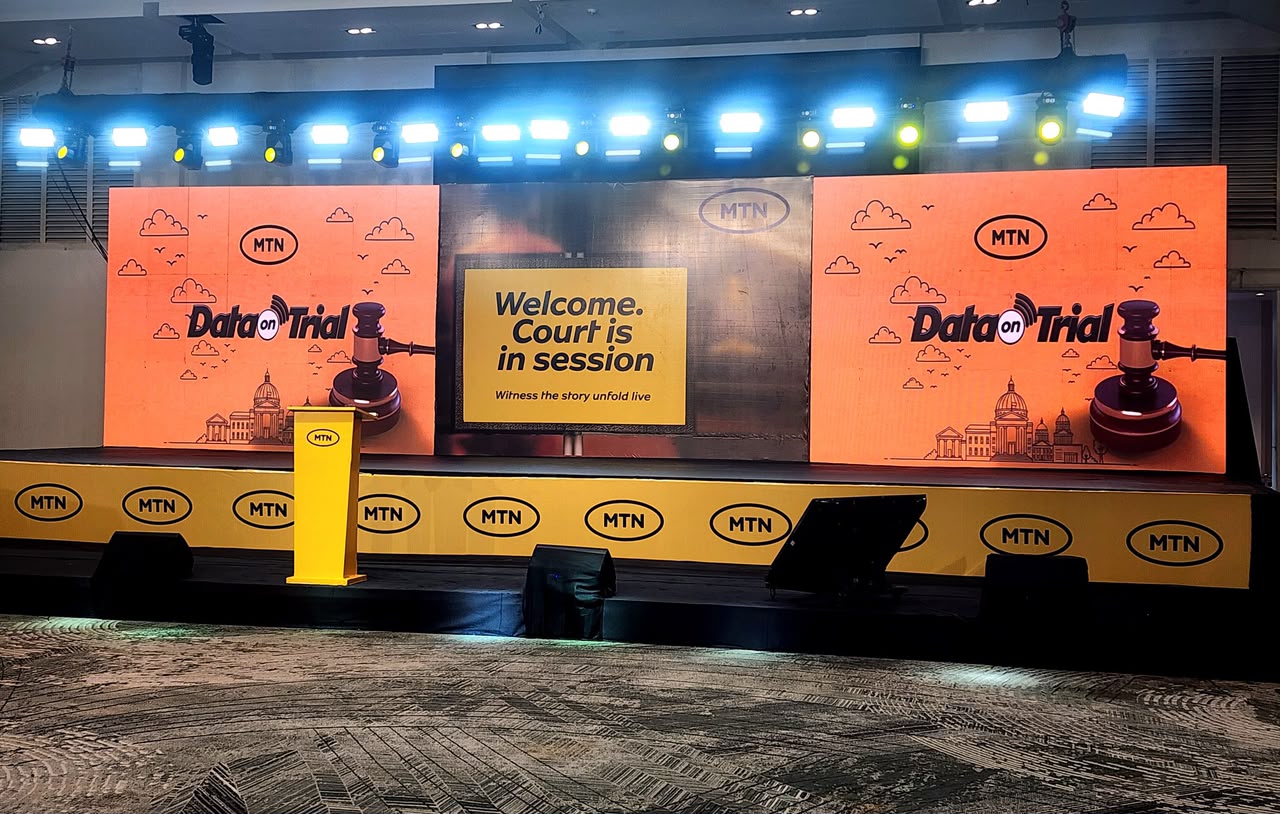
Television host Ebuka Obi-Uchendu led the courtroom-style proceedings, putting evidence and subscribers’ concerns before the public as MTN defended its billing practices and presented technical explanations for how background app activity, network processes and device settings can affect data consumption.
MTN Nigeria chief executive officer Karl Olutokun Toriola said the company wanted to address customers’ concerns directly and improve transparency. The company’s decision to put itself on trial was intended to build trust and help subscribers better understand how data is consumed.
The central question, however, extended beyond whether phones and applications consume data in the background. It was whether customers could independently establish what had been charged, when the consumption occurred and whether the network’s records matched their experience.
The prosecution puts subscribers’ complaints on trial
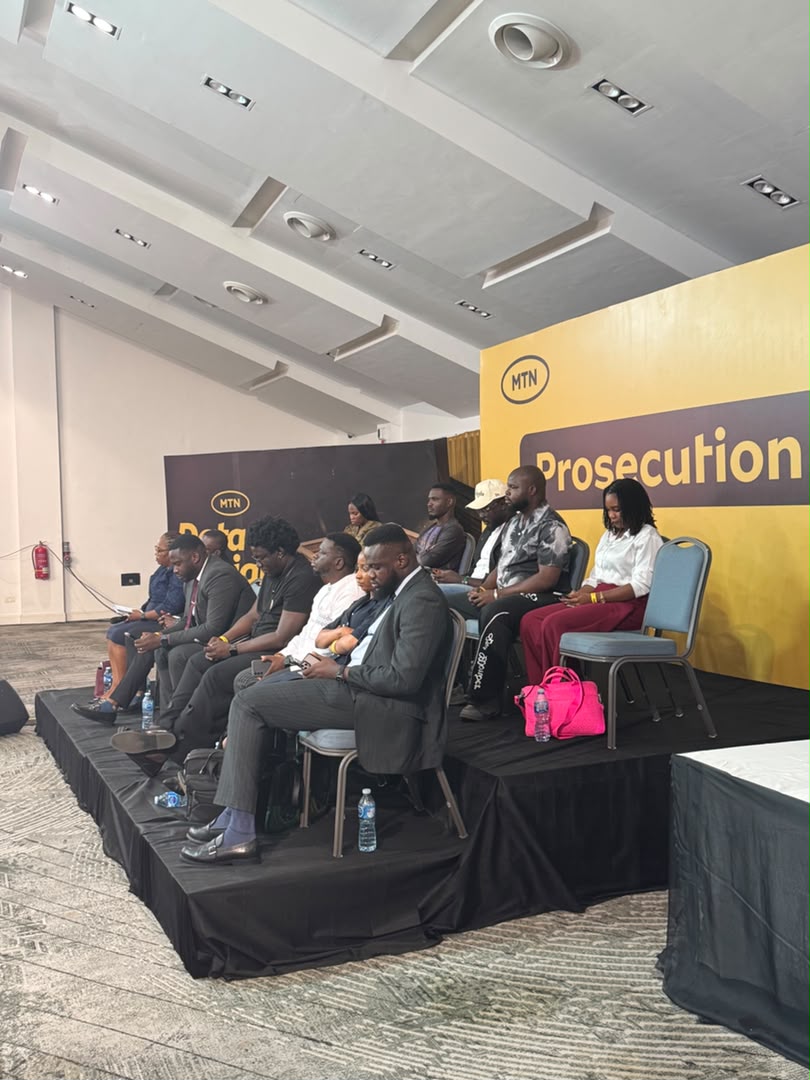
The prosecution team opened by presenting the practical consequences of data-related problems, including the possibility that unexpected deductions could leave customers without connectivity when they needed it for work, interviews or other important activities.
Its broader argument centred on consumer rights, including access to clear information, choice, safety and compensation where appropriate. The complaints raised a question of accountability: if subscribers believe their data has disappeared, what evidence can they obtain to establish what happened?
That challenge became more concrete during the audience session. One attendee said they had purchased 14.5GB of data on a Thursday, remained at home using Wi-Fi over the weekend and believed mobile data was switched off, only to receive a notification on Monday that the bundle had been exhausted.
The account was an attendee’s testimony, not an independently verified billing record. But it illustrated the kind of experience the inquiry was convened to examine: a subscriber who could see that a bundle had been depleted but could not readily explain the consumption.
Other questions concerned data deductions when a video or webpage failed to load, overnight losses of one or two gigabytes, and why apparently similar activities sometimes seemed to consume different amounts of data.
These questions put pressure on the defence to explain not only how data consumption works in theory, but how an individual customer could investigate a disputed transaction.
MTN’s defence blames more than visible activity

The defence team presented technical explanations for why a subscriber’s data consumption may exceed what they believe they have used.
Mike, introduced at the event as MTN Nigeria’s general manager of network performance, explained how a mobile data connection links a SIM or eSIM to the radio network and then to internet services through processes involving IP addresses, domain name resolution and secure connections.
The explanation was intended to show that data consumption is not limited to the activity a customer deliberately initiates. Applications may refresh in the background, synchronise files, download updates or load media automatically. Video quality, autoplay settings and automatic media downloads can also increase consumption.
Mike used examples to illustrate the difference between a small request and the data required to deliver the content. A brief action in an application may trigger a much larger download, particularly when video is involved. Watching high-resolution content on a 4G or 5G connection can therefore consume more data than a subscriber expects.
WhatsApp was another example. Text messages typically use little data, but videos, photographs, status updates, automatic downloads and cloud backups can add substantially to total usage.
The defence’s advice was practical: enable data-saving settings, disable autoplay where possible, limit automatic downloads, move updates and backups to Wi-Fi, and check individual applications’ data consumption through the phone’s settings. Subscribers were also directed to MTN’s MyMTN app to monitor their bundles.
The explanation gave customers possible reasons for unexpected consumption. It did not, by itself, establish what had happened in the case of a particular disputed deduction.
MTN explains the gap between app records and network billing

The speaker explained that network measurements and the figures displayed by applications may differ because of how data is measured, converted, rounded and recorded over time. Network traffic may also include overhead associated with establishing and maintaining connections.
He estimated that discrepancies could be in the range of 2 to 5 per cent, and said they could rise to 12 or 13 per cent in some circumstances. These figures were presented as part of MTN’s technical explanation and should not be treated as independently established benchmarks.
The distinction matters because a difference between an application’s usage display and a network operator’s records does not automatically prove that data was wrongly deducted. Equally, a technical explanation for possible differences does not establish that every disputed deduction was correct.
For subscribers, the unresolved issue is how to distinguish legitimate technical overhead from a billing error and how to challenge a charge when the available records do not tell the same story.
Data Monitor demonstration offers a window into usage
MTN’s defence also presented an internal monitoring tool called Data Monitor. Elvis, who demonstrated the system, said it could monitor data traffic without necessarily accessing the actual content being transmitted.
A sample displayed approximately 6.6GB of usage across 146 items, although the precise description of those items in the demonstration needs confirmation. The interface showed usage over time and identified applications associated with the traffic, including social media and messaging services.
The demonstration offered a glimpse of the kind of information that may help trace consumption. MTN also pointed subscribers towards the MyMTN app, which provides bundle-usage information.
But showing that an operator can monitor traffic is not the same as giving customers access to a detailed, independently verifiable record of their own deductions. The demonstration did not, on the information captured at the event, establish whether subscribers could obtain a transaction-by-transaction breakdown suitable for resolving individual disputes or whether an independent party could audit the figures.
That distinction became important as audience members asked for more detailed usage records, particularly for cases in which large amounts of data appeared to have disappeared overnight.
The audience challenges the defence on failed downloads and switched-off data
Questions from the audience tested the limits of the explanations offered by MTN’s experts.
On the issue of data apparently disappearing while mobile data was switched off, the response was that a disconnected phone could not consume mobile data during that period. However, queued uploads, backups or other application activity could resume when mobile data was switched back on. Features that automatically switch between Wi-Fi and mobile data could also lead to consumption that users did not notice.
This explanation points to settings subscribers can check, but it does not independently resolve the attendee’s account of a bundle running out after a weekend spent on Wi-Fi. Establishing what happened would require the relevant device settings and usage records for the period in question.
Another question concerned data charged when a video or webpage failed to load. The response was that data already transferred before a connection failed could still count towards usage, depending on the circumstances. The discussion did not establish a universal rule for every failed download or explain how customers could verify the amount charged in a specific case.
The audience also questioned why similar activities sometimes appeared to consume different amounts of data at different times. The panel suggested that background activity and changes in connectivity could be factors, but the recorded discussion did not provide a confirmed explanation for every scenario raised.
The exchange exposed the difference between explaining possible causes and investigating an individual complaint. Subscribers were given settings to check, but a customer with a specific disputed deduction would still need evidence linking the charge to actual network activity.
Affordability and service quality remain part of the case
The inquiry also moved beyond technical billing to the cost and quality of connectivity in Nigeria.
MTN’s defence cited price comparisons that it said showed Nigeria’s average cost per gigabyte was lower than in some other African markets. The figures mentioned included a comparison with South Africa and Zimbabwe, attributed during the discussion to international data-price rankings.
Such comparisons require care. A lower price per gigabyte does not necessarily mean data is affordable for people with different incomes, nor does it answer concerns about service quality, failed connections or whether customers receive the allowance they paid for.
MTN also cited the cost of operating its network, including power, diesel, foreign exchange and equipment. A company representative said MTN spent about ₦1.5 trillion on power in the previous year and that data accounted for around 70 per cent of revenue. These were company figures presented during the event and require independent verification before being treated as established facts.
Audience members raised questions about compensation when network outages prevent customers from using bundles before expiry, as well as the performance and price of MTN’s FibreX service. The discussion did not produce a definitive resolution to every issue.
What the trial established, and what remains unanswered

The courtroom-style inquiry gave MTN an opportunity to explain how data consumption works and why a phone’s visible activity may not reflect every process using a connection. Its defence team identified several settings that subscribers can review to reduce unintended usage and demonstrated an internal tool for monitoring traffic.
Yet the most consequential questions were about verification and redress. Can customers obtain sufficiently detailed records to trace disputed deductions? Can those records be reconciled with their device-level usage? Is there an independent mechanism to investigate disagreements between the operator’s billing records and a subscriber’s account?