

The former Anambra governor disputes the state government’s $123.77m loan figure, saying DMO records put the state’s external debt at about $30m when he left office.
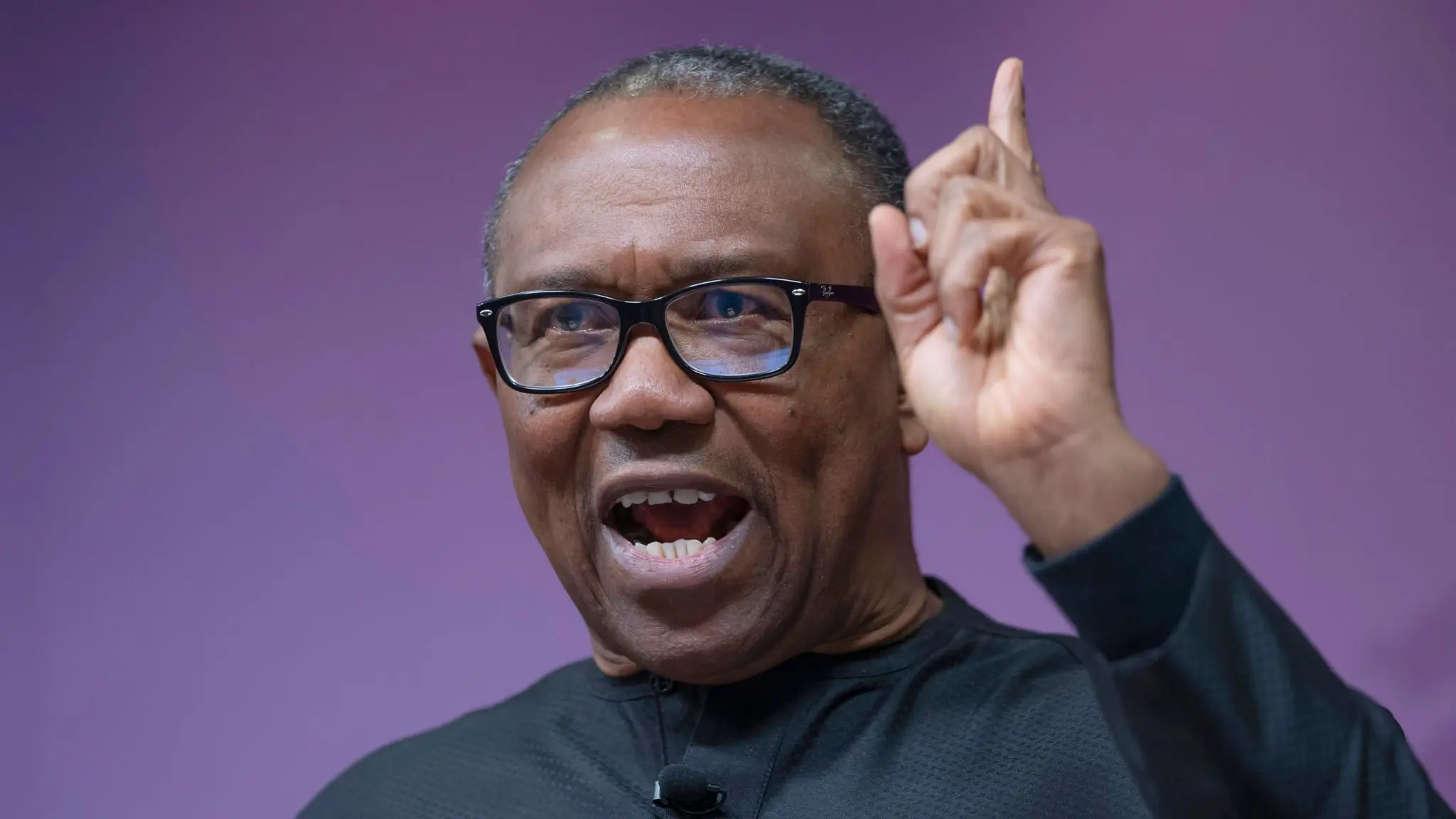
Former Anambra State Governor Peter Obi has rejected claims that he left the state with a $123.77 million debt burden, saying he handed over more than $150 million in dollar-denominated investments and savings.
Obi, the presidential candidate of the Nigeria Democratic Congress, made the claim on Thursday during an interview with Arise News, days after the Anambra State Government published details of eight external loan facilities it said were contracted during his administration.
The state government, through Commissioner for Information and Value Reorientation Law Mefor, said the eight facilities had a combined original value of $123.77 million and an outstanding balance of $92.35 million as of June 30, 2026.
The facilities were linked to projects covering education, healthcare, malaria control, erosion management, agriculture and community development.
Peter Obi challenges Anambra debt figures
Obi disputed the state government’s presentation, arguing that the $123.77 million figure represented the value of facilities rather than the actual debt outstanding when he left office in March 2014.
He said records from the Debt Management Office showed that Anambra’s external debt stood at about $18 million when he assumed office in 2006 and approximately $30 million when he handed over in March 2014.
He also cited a figure of about $45.15 million for December 2014, nine months after his departure.
“The clearest contradiction appears in the government’s own figures,” Obi said, arguing that the state needed to explain how it arrived at the $123.77 million figure attributed to his administration.
He said the facilities in question were primarily World Bank and International Fund for Agricultural Development programmes negotiated through the Federal Government, with participating states accessing the funds through subsidiary arrangements.
“This does not suggest that Anambra had no repayment responsibilities; rather, each facility must be examined in light of its approval, effectiveness, drawdown, and repayment record,” Obi said.
He also argued that an approved facility should not automatically be treated as debt incurred if the full amount was not drawn down.
Using a hypothetical example, Obi said if a government secured a N10 billion facility but drew only N500 million, it would be inaccurate to describe the entire N10 billion as money owed.
Peter Obi says $150m could cover alleged debt
Obi further maintained that he left more than $150 million in dollar-denominated investments for Anambra State when he left office.
According to him, the funds were invested in various bonds and were generating about $10 million in annual income.
“Assuming the worst-case scenario, which is false, that there was $123.7 million owed as of the time I left, I left over $150 million that was earning about $10 million,” he said.
He argued that even if the state’s debt figure were accepted for the sake of argument, retaining the investments and using the returns to service the obligation would have allowed the debt to be repaid while leaving the principal intact.
The former governor also maintained that his administration left no unpaid salaries, pensions or gratuities and no verified debts owed to contractors or suppliers whose work had been completed and certified.
The Anambra State Government, however, has maintained that the eight facilities were external borrowings associated with Obi’s administration and that the state remains responsible for servicing them.
The government said its figures were based on Debt Management Office records and that the outstanding balance of the facilities stood at $92.35 million, equivalent to about N127.37 billion, as of June 30, 2026.
The dispute therefore centres not only on whether Anambra had external debt during Obi’s tenure, but also on how the loans were structured, how much was actually drawn down, what was outstanding at the March 2014 handover and how the current $92.35 million balance relates to the original facilities.
Those questions remain contested, with both sides relying on different presentations of the state’s historical financial records.