
At MTN Nigeria’s Data on Trial forum in Abuja, subscribers questioned rapid data depletion, deductions during failed connections and the cost of internet services, while the telecoms operator pointed to changing digital habits and differences in data measurement.
MTN Nigeria has defended its mobile data billing practices amid renewed complaints from subscribers about rapidly depleting bundles, unclear deductions and the high cost of internet access at its Data on Trial forum in Abuja.
At the event on Monday 26 October, consumers and advocates questioned how data is measured and charged, why bundles sometimes run out sooner than expected, and whether subscribers should lose data when videos fail to play or webpages do not load properly.
MTN executives argued that data consumption is influenced by changing smartphone habits, high-resolution content and the way usage is measured across devices and networks. However, subscribers also raised concerns about service quality, pricing and the need for clearer explanations of their data usage.
The courtroom-style event, hosted by media personality Ebuka Obi-Uchendu, brought MTN representatives face-to-face with critics acting as prosecutors in a public discussion about data consumption and billing transparency.
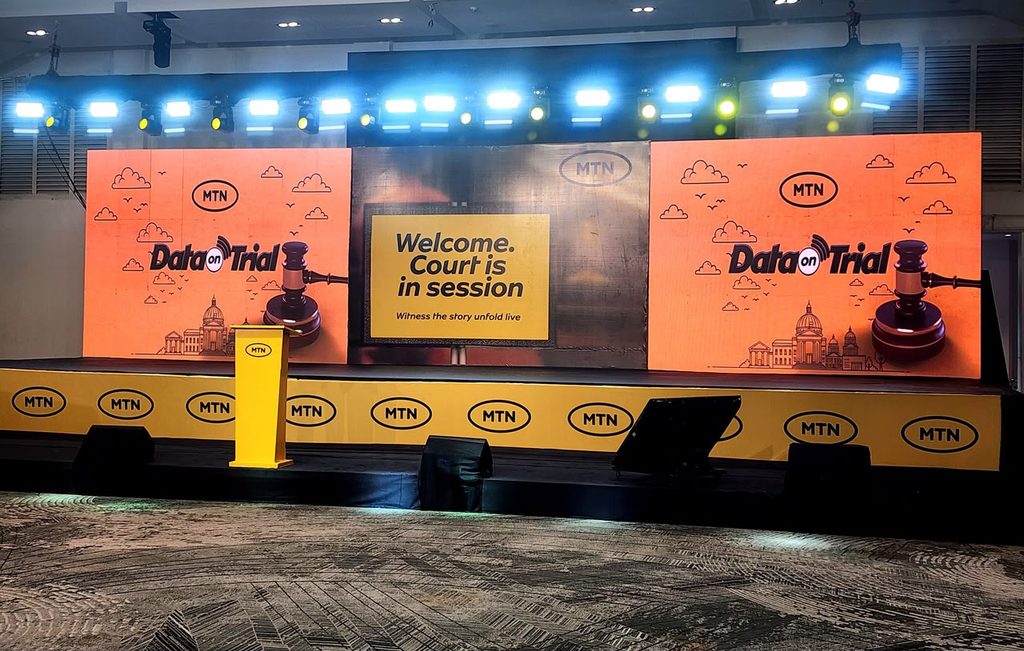

“We are here to understand the complaints and anger of customers, while also helping customers understand what is happening with their data,” Obi-Uchendu said.
He described the forum as an opportunity for the company to address customer concerns publicly.
MTN blames changing digital habits for rising data consumption
Mike Ndukwe, MTN Nigeria’s general manager of Network Performance and Quality Assurance, argued that high-resolution videos and faster 4G and 5G networks can increase data consumption by allowing users to access richer content more quickly.
Rejecting claims that MTN steals subscribers’ data, Ndukwe said: “When you stream, scroll, download or share, you are using data.”
Xiaomi Nigeria Sales Manager Kelvin Kojode also pointed to changes in how people use smartphones, including content creation, gaming, multiple messaging groups and constant internet connectivity.
“The more the usage, the more the demand,” Kojode said, adding that users increasingly go online and remain connected throughout the day.
He argued that modern smartphone habits differ significantly from those of previous years, when users had fewer applications and spent less time connected.
MTN explains differences in data measurement and billing
David Ogunsola, MTN Nigeria’s general manager of IT, explained how data is measured, charged and consumed across devices and networks.
He said the amount of data recorded by a device may differ from the volume transmitted across the network and the measurements used by an operator for billing. He attributed the differences to varying measurement methods and the data required to establish connections with online services.
The explanation formed part of MTN’s defence against complaints that subscribers’ bundles sometimes appear to deplete faster than expected.
An MTN representative also clarified that a bundle’s price, data allowance and validity period are separate components. A 30-day bundle, the representative said, does not guarantee that the allowance will last for the entire period. A subscriber could exhaust 20GB in less than 30 days, depending on usage.
On rollover, the representative distinguished between standard volume-based bundles and promotional offers. Eligible standard bundles can qualify for rollover when applicable purchase and renewal conditions are met, while promotional bundles may carry separate restrictions.
Some offers, including night bundles and YouTube add-ons, are limited to specified periods. The representative said promotional offers are structured around network traffic and value for customers, noting that morning traffic is high.
The representative also said MTN’s self-service app is zero-rated for purchasing data, allowing customers to access it without an active data bundle and buy a new plan.
Subscribers question deductions when connections fail
The prosecution raised concerns about data deductions when users attempt to stream high-resolution videos or open webpages but cannot access the content because of poor or slow connectivity.
One prosecutor compared the experience to a supercar that consumes fuel without moving, questioning why a subscriber should lose data when the intended service does not work.
The concern highlighted a key issue for customers: whether the amount deducted from a bundle can be clearly explained when a connection fails or an online activity does not complete.
The discussion did not establish that MTN had improperly charged subscribers in such cases. Instead, the questions formed part of the public scrutiny of how data use is recorded and billed.
Another prosecutor recounted arriving at work after spending the weekend using a home router and finding that his mobile bundle was no longer active when he tried to connect. He said his phone had automatically connected to the office Wi-Fi, leaving him questioning what had happened to his mobile data.
The account reflected the uncertainty subscribers say they experience when bundle balances change without an explanation they can readily identify.
Fibre customer raises concerns about price and speed


The discussion extended beyond mobile bundles to fixed internet service, with a customer identified as Sarkin Mota questioning the value of his organisation’s fibre connection.
He said the organisation pays about ₦200,000 monthly for a FiberX fibre-optic connection but has never received half the expected speed, despite continuing to pay the same monthly charge.
“Since I bought it, I have never gotten half the speed. But they keep charging me every month for the same. Why?” he asked.
The complaint raised a separate concern about whether the quality of internet service matches the amount customers pay. It was presented as the customer’s experience and was not independently verified during the forum.
Prosecutors also appealed to the government and the National Assembly committee overseeing telecommunications to consider measures that could improve data affordability and balance the commercial interests of operators with consumers’ needs.
“Please look into data and do some magic,” one prosecutor said, urging authorities to act on behalf of Nigerians who struggle with the cost of staying connected.
MTN faces calls for greater accountability

The event’s opening prosecutor argued that data-related frustrations can affect people’s work, opportunities and daily lives, calling for evidence-based answers to subscribers’ complaints.
At one point, a prosecutor urged the audience to declare MTN guilty, prompting a chant of “MTN guilty”. The exchange was part of the event’s courtroom-style format and did not constitute a legal finding against the company.
MTN chief executive Karl Toriola delivered the event’s welcome address, setting the stage for discussions on data consumption, billing transparency and customer concerns.
The forum provided a platform for MTN to explain its position and for subscribers to challenge the explanations. However, the questions raised by customers also underscored the importance of accessible usage information, clear billing explanations and effective responses when customers dispute deductions or service quality.
The event did not, in the material available from the session, establish a general finding that MTN had unlawfully deducted customers’ data. The central issue remains whether operators can make data consumption and billing sufficiently transparent for subscribers to understand and verify how their bundles are used.