

The UN health agency urges Nigeria to increase domestic health funding and strengthen outbreak preparedness as measles, poliovirus and cholera continue to test the country’s health system.
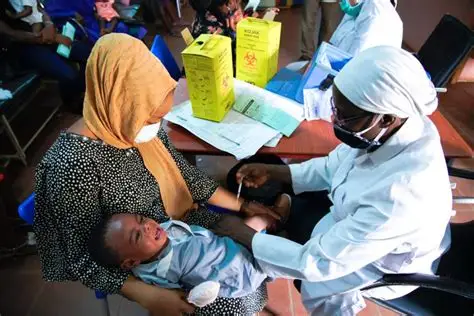
The World Health Organisation (WHO) has warned that gaps in routine immunisation are leaving Nigerian children vulnerable to preventable diseases, calling on the government to increase domestic health financing and strengthen disease surveillance and outbreak preparedness.
WHO Representative in Nigeria Pavel Ursu raised the concern on Tuesday during the organisation’s Health Diplomacy Dialogue in Abuja, where diplomats and health officials discussed disease outbreaks, global health financing, health security and antimicrobial resistance.
Ursu said Nigeria continued to face challenges in controlling vaccine-preventable diseases, including measles and circulating vaccine-derived poliovirus, despite support from international partners.
He stressed that sustaining immunisation coverage would require increased investment as the country works to reach children who have missed routine vaccines.
“If we want to maintain the same level of performance, we have to invest more,” he said.
WHO has previously reported that Nigeria records approximately eight million births annually, while about 2.1 million children have not received any routine vaccine. National routine immunisation coverage among children aged 12 to 23 months was estimated at 57 per cent, with coverage in northern Nigeria lower at 41.5 per cent.
Ursu acknowledged the contributions of Gavi, the Vaccine Alliance, and other international partners in supplying vaccines and related commodities. However, he said Nigeria needed to progressively increase domestic financing and assume greater responsibility for protecting its population.
He also pointed to changes in global health cooperation, including declining development assistance for health, arguing that African countries needed stronger domestic funding, more resilient health systems, expanded digital health services and increased local production of health commodities.
WHO links outbreak risks to immunisation and sanitation gaps
WHO emergencies adviser Alex Chimbaru said Nigeria’s recurring disease outbreaks reflected weaknesses in immunisation coverage, disease surveillance and access to safe water and sanitation.
He said more than 700 children had been disabled by circulating vaccine-derived poliovirus in previous years, warning that the actual number could be higher.
Circulating vaccine-derived poliovirus can emerge when weakened virus used in oral polio vaccines circulates for extended periods in under-immunised communities and undergoes genetic changes. It can cause paralysis, making high vaccination coverage essential to preventing outbreaks.
Chimbaru also identified cholera as a major public health concern, citing inadequate water and sanitation infrastructure, insecurity and population displacement as obstacles to prevention and response.
WHO surveillance data published in September 2026 showed that Nigeria had reported 69,263 cholera cases and 439 associated deaths between 1 January and 30 August. Borno State accounted for approximately 97 per cent of reported cases nationally during that period.
The figures highlight the pressure on communities where conflict and displacement can restrict access to healthcare, clean water and sanitation facilities.
Chimbaru said WHO, other United Nations agencies, Médecins Sans Frontières and additional partners had supported outbreak responses through surveillance, logistics, case management, vaccination, risk communication and infection prevention.
He called for sustained investment in water and sanitation, functional public health emergency operations centres, rapid response teams and stronger coordination across borders.
He also urged development partners to reinforce government-led health systems instead of establishing parallel structures, stressing that sustainable financing and stronger primary healthcare were essential to long-term health security.
Nigeria prepares to host global antimicrobial resistance conference
The dialogue also addressed Nigeria’s preparations to host the Fifth Global High-Level Ministerial Conference on Antimicrobial Resistance (AMR) in Abuja from 6 to 8 December 2026.
The conference, which will take place at Transcorp Hilton Abuja, is expected to bring together governments, scientists, international organisations and other stakeholders to strengthen action against drug resistance.
Mary Bartuo, WHO team lead for universal health coverage and life course, said the meeting would focus on translating international commitments into measurable action, stronger accountability and sustainable financing.
Antimicrobial resistance occurs when bacteria and other disease-causing organisms no longer respond effectively to medicines designed to treat them, making infections harder to manage.
Bartuo highlighted priorities under the proposed Abuja Compact, including responsible antimicrobial use, infection prevention and control, vaccination, access to water and sanitation, affordable medicines and diagnostics, research, local manufacturing and sustainable financing.
WHO has identified sub-Saharan Africa as a region with a particularly high burden of antimicrobial resistance. Its estimates indicate that bacterial antimicrobial resistance was directly responsible for approximately 1.14 million deaths globally in 2021, with the region experiencing some of the highest mortality rates.
Bartuo urged diplomatic missions to participate in the December conference and support coordinated national and international responses.
The WHO officials called for stronger cooperation among governments, diplomatic missions and development partners to close immunisation gaps, improve disease surveillance and strengthen the capacity to prevent, detect and respond to public health threats.