

A US federal judge has temporarily blocked Donald Trump’s revised order restricting birthright citizenship, calling it “almost certainly unconstitutional.
A US federal judge has temporarily blocked President Donald Trump‘s latest attempt to restrict birthright citizenship, marking the second time she has halted such an order.
In June, the US Supreme Court struck down Trump’s original executive order seeking to limit birthright citizenship, a policy he had introduced on his first day back in office.
In a 6-3 ruling, the court held that the Constitution guarantees citizenship at birth to children born in the country, including those whose parents are undocumented immigrants or are in the US on a temporary basis.
Trump’s Latest Bid to Restrict Birthright Citizenship
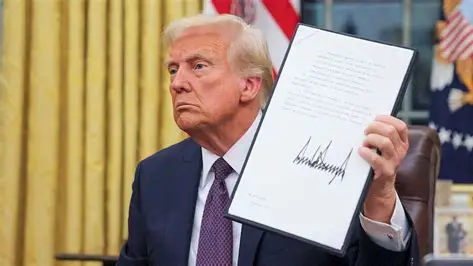
Last month, Trump signed a new executive order aimed at scaling back birthright citizenship in a more limited way. The revised order denies automatic citizenship not only to children of undocumented immigrants, but also to children of international legal workers including employees of foreign embassies and international organisations such as the United Nations and the World Bank.
It also withholds birthright citizenship from children of parents the government designates “alien enemies,” and from parents accused of “birth tourism” the practice of pregnant women travelling to the US on non-immigrant visas specifically to give birth so their children can obtain US citizenship.
Although the administration had yet to issue formal guidelines on enforcement, the State Department had proposed requiring parents to submit proof of citizenship or immigration status, such as a passport, birth certificate, I-94 form, or permanent residency card, when applying for a passport on their child’s behalf.
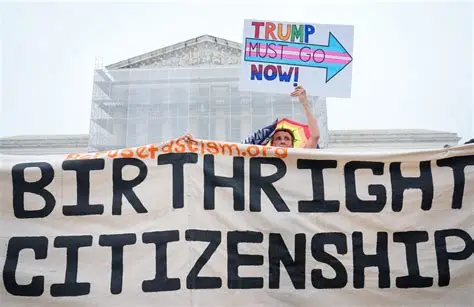
Immigrant rights groups and lawyers swiftly challenged the order in court.
Boardman’s Ruling
Ruling on Wednesday, US District Judge Deborah Boardman granted a preliminary injunction, describing the new order as “almost certainly unconstitutional.” Rather than reopen the constitutional question, she treated the Supreme Court’s June decision as settled precedent, writing that the administration was relying on a distorted reading of that ruling and that the justices had already made clear the children in question qualify as citizens at birth under both elements of the Constitution’s Citizenship Clause.
“This court must, once again, preliminarily enjoin enforcement of the president’s most recent attempt to strip the right to citizenship from them,” she said.
The case was brought by immigrant advocacy groups, including CASA and the Asylum Seeker Advocacy Project — the same organisations that succeeded in blocking Trump’s original 2025 order before it reached the Supreme Court.
What Happens Next
Justice Department lawyers had argued that an injunction was premature, noting that federal agencies had not yet issued public guidance on how the order would be implemented and that the policy itself was narrower than the one the Supreme Court rejected. Boardman was not persuaded, ruling that the harm to affected families would be immediate once enforcement began.
The White House has signalled it intends to keep fighting the ruling, with a spokesperson dismissing the decision as the product of an activist judge. The Trump administration is widely expected to appeal, setting up the prospect of a second Supreme Court showdown over the scope of the 14th Amendment’s citizenship guarantee.
Boardman previously blocked a similar executive order in February 2025, when she issued a nationwide injunction against Trump’s original attempt to end birthright citizenship — a ruling later followed by the Supreme Court’s own decision striking the policy down in June.