

South Africa has reaffirmed its opposition to xenophobia during talks with Nigeria in Abuja, as officials revealed 98 Nigerians have been killed in South Africa since 2022 and called for stronger protections.
South Africa’s Minister of International Relations and Cooperation Ronald Lamola met with Nigeria’s Minister of State for Foreign Affairs Sola Enikanolaiye in Abuja on Monday, delivering a message from President Cyril Ramaphosa and acknowledging Nigeria’s historic role in South Africa’s liberation from apartheid as both countries sought to address the diplomatic fallout from ongoing xenophobic violence against Nigerians.
The meeting was convened at the direction of President Bola Tinubu, who reportedly delegated the engagement to Enikanolaiye after Ramaphosa asked Lamola to personally deliver a message to the Nigerian president. The details of Ramaphosa’s message were reserved for a closed-door session.
“We remain deeply indebted to the people of Nigeria”
Lamola opened the meeting by grounding South Africa’s engagement in the deep historical ties between the two countries, describing Nigeria’s contribution to the anti-apartheid struggle as a sacrifice that the South African people have not forgotten.
“We remain deeply indebted to the people of Nigeria for their sacrifice,” he said, adding that Ramaphosa and his government remain firmly opposed to xenophobia, racism, discrimination, homophobia and all forms of intolerance.
Lamola said the visit was aimed at reaffirming the historic friendship and solidarity between the two countries while addressing concerns over violence against foreign nationals.
While acknowledging the violence, Lamola framed part of South Africa’s response within the context of its sovereign responsibility to enforce its immigration laws and combat irregular migration and criminal activities, including drug trafficking, internet fraud and other offences.
“We believe that Nigeria and South Africa have a shared responsibility to respond to these challenges within the African continent,” he said, describing migration as a continental challenge that required African countries to work together within the framework of the African Union’s protocols on orderly and regular migration.
98 Nigerians killed in South Africa since 2022

Enikanolaiye said Tinubu directed the meeting to address the persistent attacks against Nigerians in South Africa in a frank and honest manner, and used the occasion to place the human cost of the crisis on the record.
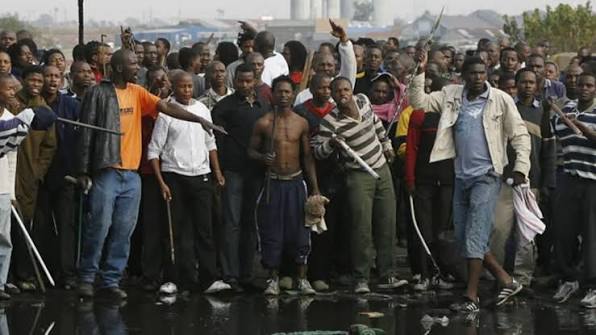
According to official figures cited by the minister, 98 Nigerians have been killed in mob and hate-related attacks in South Africa since 2022. Five Nigerians were reported dead this year alone, though some repatriated Nigerians have alleged the actual figures are higher than officially acknowledged.
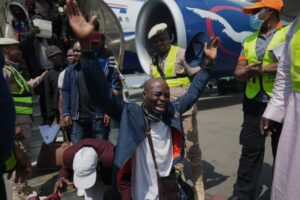
Nearly 1,500 Nigerians were repatriated from South Africa this year. Enikanolaiye described the experience of receiving the evacuees as personally devastating.
“I shed tears when I received the first batch of evacuees. I saw children, women and the elderly returning home with almost nothing after their properties had been looted and destroyed. That is not the Africa we want,” he said.
Nigeria draws a line between criminality and mob justice
Enikanolaiye said Nigeria does not condone criminal activity but insisted that due process must be followed for anyone accused of an offence.
“Nigeria will not support drug traffickers or any criminal activity, but those accused of crimes must be treated in accordance with the rule of law, South Africa’s Constitution and international human rights standards,” he said.
The minister noted that many of the victims were legally resident in South Africa and questioned the failure of security agencies to intervene during some of the attacks, saying such incidents raised concerns about state responsibility and the safety of foreign nationals.
He urged Pretoria to take urgent and concrete steps to end what Nigeria described as recurring Afrophobic attacks against Nigerians and other African nationals, warning that the violence threatens decades of strategic partnership between Africa’s two largest economies.
Enikanolaiye reaffirmed Nigeria’s commitment to maintaining cordial relations with South Africa and expressed optimism that both countries would strengthen dialogue, rebuild confidence and protect the ideals of African solidarity.